

Honda Pilot Maintenance Schedule by Mileage Essential Better 7 Guide
Looking for a reliable Honda Pilot maintenance schedule by mileage? You’re in the right spot! This guide will show you the essential maintenance tasks to keep your Honda Pilot smooth.
A mileage-based maintenance plan boosts your vehicle’s life and performance, avoiding surprises.
Discover the crucial times for regular maintenance in this guide. We’ll explain why it’s key to keep up with services like oil changes, tire rotations, and fluid checks.
Your car will stay in great shape. We consider both normal and tough driving conditions, so you can adjust based on how you drive.
Keep an eye on your Pilot’s mileage and follow a solid maintenance plan. This way, you make your car more reliable and maintain its value for the future.
Keep reading for more on the Honda Pilot maintenance schedule by mileage, and tips to keep your car at its best.
What is The Importance of A Maintenance Schedule?
A well-structured maintenance schedule is a must for every Honda Pilot owner. It keeps your vehicle in top shape and helps avoid surprise repairs and high costs.
Routine checks boost your car’s longevity and ensure safe driving. This part shows how staying up-to-date with maintenance can increase your car’s life and its value when you sell it.
The Role of Regular Maintenance in Vehicle Longevity
Following the right honda pilot maintenance guide is key. It reminds you when to do oil changes, fluid checks, and tire rotations.
These tasks are crucial for keeping your vehicle running well. Not doing these things can cause damage and lower your Honda Pilot’s dependability and life.
Regular maintenance stops problems before they start, keeping your car running smoothly for a long time.
How Maintenance Affects Resale Value
Keeping good records of your maintenance affects your Honda Pilot’s resale value.
Buyers want cars that have been looked after well. A solid maintenance history makes buyers more confident in their purchase.
The honda pilot maintenance guide helps prove that your vehicle was well cared for. This could mean getting higher offers when you decide to sell.
Honda Pilot Maintenance Schedule by Mileage
Creating a maintenance plan for your Honda Pilot is crucial for its performance and life.
Knowing the Honda Pilot maintenance schedule by mileage helps you keep up with needed services.
It ensures you follow the recommended intervals tailored for your vehicle as it gets older and drives more miles.
Key Maintenance Intervals Based on Mileage
Below are the major maintenance checkpoints for your Honda Pilot:
| Mileage Interval | Recommended Service |
|---|---|
| 5,000 – 7,500 miles | Oil Change and Filter Replacement |
| 15,000 miles | Rotate Tires and Inspect Brakes |
| 30,000 miles | Transmission Fluid Change and Coolant Replacement |
| 60,000 miles | Inspect Timing Belt and Replace if Necessary |
| 90,000 miles | Inspect Spark Plugs and Replace if Needed |
Guidelines For Normal vs. Severe Driving Conditions
How you drive significantly affects your maintenance needs. If you often drive short distances, in heavy traffic, or in harsh weather, you’ll need to adjust your maintenance schedule.
Here are some tips for those tough conditions:
- Change engine oil every 5,000 miles under severe conditions.
- Check your brake fluid and coolant levels more often.
- Get your tires rotated with every oil change to avoid uneven wear.
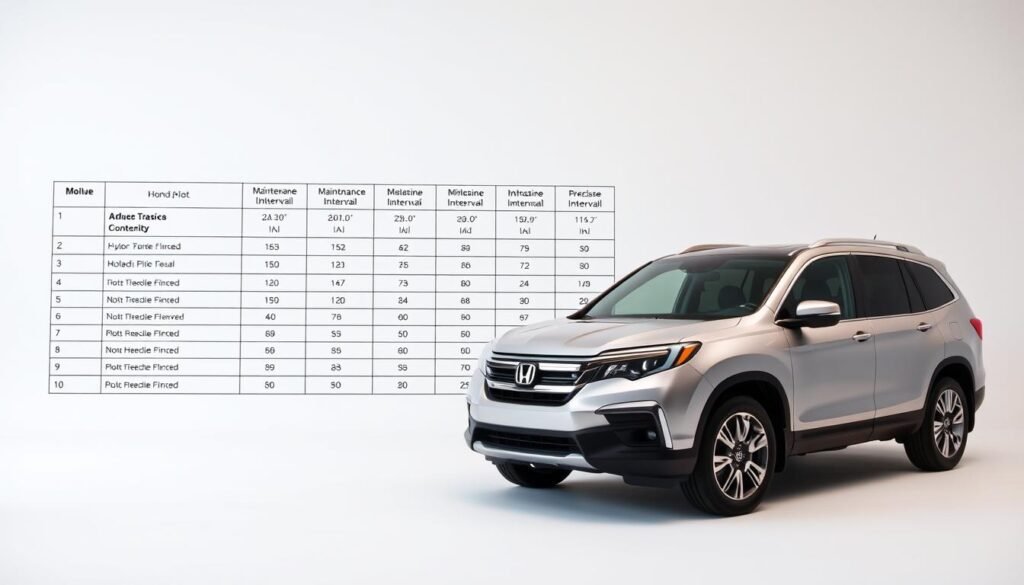
Honda Pilot Recommended Maintenance Intervals
It’s vital to maintain your Honda Pilot for its best run and long life. A proper honda pilot service schedule helps you monitor key maintenance at important mileage markers.
By sticking to this plan, you ensure your vehicle gets the care it needs. Here, you’ll find the essential maintenance tasks and services important at various milestones.
Regular Maintenance Tasks at Key Mileage Points
With each significant mileage point, there are certain tasks to keep your Honda Pilot running smoothly. Below you’ll see a list of these regular services and when they should happen.
| Mileage Point | Maintenance Task |
|---|---|
| 30,000 Miles | Change engine oil and filter, rotate tires, inspect brake pads |
| 60,000 Miles | Replace air filter, flush cooling system, inspect suspension components |
| 90,000 Miles | Change transmission fluid, replace timing belt, inspect exhaust system |
Common Services Required at Specific Milestones
Each significant milestone in your honda pilot service schedule demands a set of comprehensive services.
Tackling these tasks on time helps avoid future problems and keeps your car in top condition.
Look at the following services needed at these key points:
- At 30,000 miles: Tire alignment and brake system flush
- At 60,000 miles: Battery check and replacement if necessary
- At 90,000 miles: Exhaustive check of all fluid systems and belt replacements

The Maintenance Minder: What You Need To Know?
The Honda Pilot’s Maintenance Minder system is a key part of keeping your car in top shape. It checks things like how much gas you use, how you drive, and engine heat.
Knowing how to use the Maintenance Minder helps you take better care of your car and can save you money.
How The Maintenance Minder Works
The system tracks your driving and figures out when your car needs care. A light on your dashboard turns on when it’s time for maintenance.
You’ll get alerts for services such as:
- Oil change reminders based on engine performance
- Fluid checks tailored to your driving habits
- Filter replacements appropriate for your driving environment
Using The Maintenance Minder For Optimal Maintenance
To get the most out of the Maintenance Minder, always check the alerts. Sometimes, you might need more frequent check-ups, like if you often take short trips or tow.
A good honda pilot maintenance guide can help with this. Tips for best use include:
- Consult the owner’s manual for detailed recommendations.
- Regularly reset the Maintenance Minder after service to maintain accuracy.
- Keep track of any unusual vehicle performance to adjust maintenance schedules accordingly.
Creating A Honda Pilot Maintenance Checklist
For every Honda Pilot owner, making a detailed maintenance checklist is key. It helps ensure you don’t miss any crucial upkeep tasks.
This helps your car last longer and drive smoother. Plus, it could mean a better price when it’s time to sell.
Essential Items To Include in Your Checklist
- Oil changes (every 5,000 to 7,500 miles)
- Tire rotations (every 6,000 to 8,000 miles)
- Brake inspections (at least twice a year)
- Fluid level checks (engine oil, coolant, brake fluid, and transmission fluid)
- Battery health assessments (at least annually)
- Air filter replacements (approximately every 15,000 to 30,000 miles)
- Wiper blade replacements (when visibility is compromised)
- Timing belt replacements (check owner’s manual for specific mileage)
Adding these tasks to your honda pilot maintenance log keeps track of your vehicle’s condition and history. Doing so helps you stay on top of upkeep needs.
Tracking Your Maintenance Activities Over Time
Keeping a detailed honda pilot maintenance log is smart. It records all the service and repairs done. This is useful, especially when you want to sell your car.
Buyers like seeing that the car was well-cared for. You can use digital or paper logs to do this.
| Date | Service Performed | Mileage | Service Provider |
|---|---|---|---|
| MM/DD/YYYY | Oil Change | XX,XXX | Your Mechanic’s Name |
| MM/DD/YYYY | Tire Rotation | XX,XXX | Your Mechanic’s Name |
| MM/DD/YYYY | Brake Inspection | XX,XXX | Your Mechanic’s Name |
By regularly documenting maintenance, you stay informed about your vehicle’s needs. This helps keep your car running well for a longer time.

Honda Pilot Maintenance Costs: What To Expect?
Learning Honda Pilot maintenance costs is key for keeping your car in top shape without breaking the bank.
We’ll cover common expenses like oil changes, brake repairs, and tire replacements. These details help you plan and avoid unexpected costs.
Also, we’ll look at factors that might change these costs, to assist in your financial planning.
Breaking Down Common Maintenance Expenses
Your Honda Pilot needs regular check-ups to run well. Here are the average prices for some standard services:
| Maintenance Service | Average Cost |
|---|---|
| Oil Change | $50 – $100 |
| Brake Pad Replacement | $150 – $300 per axle |
| Tire Rotation | $20 – $50 |
| Engine Air Filter Replacement | $20 – $50 |
| Transmission Fluid Change | $100 – $200 |
Factors That Influence Maintenance Costs
Several things can change your Honda Pilot maintenance costs. Knowing these can help manage your money better:
- OEM vs. Aftermarket Parts: Picking between original parts and generic ones can change the price a lot.
- Service Location: Dealerships usually cost more than local mechanics, affecting how much you spend.
- Driving Conditions: Tough driving conditions mean your car wears out faster, raising maintenance costs.
- Vehicle Age: Older models often need more repairs, which can increase what you pay over time.
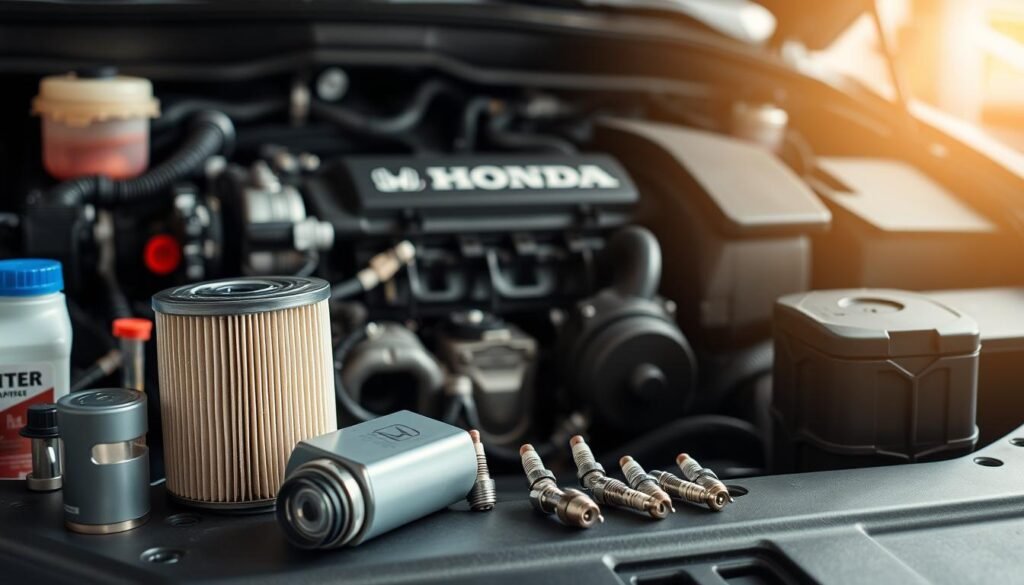
Honing Effective Honda Pilot Maintenance Tips
Keeping your Honda Pilot in good shape is key to its smooth operation and long life. It’s smart to figure out what maintenance tasks you can do on your own.
This can save you money and help you feel closer to your vehicle. Learning the basics and knowing when to get professional help can keep your car running its best.
DIY Maintenance: What You Can Handle Yourself?
There are many easy maintenance jobs for your Honda Pilot. Here’s what you can do:
- Regular fluid checks, including oil, coolant, and brake fluid
- Checking and maintaining tire pressure
- Replacing air and cabin filters
- Wiping down your battery terminals
- Inspecting wiper blades and replacing them if necessary
A Honda Pilot maintenance guide can show when to do each task. This will help you keep your vehicle in great shape, avoiding big bills for small problems.
When To Seek Professional Assistance
Some repairs should always be left to the experts. You’ll need special tools and knowledge for jobs like:
- Timing belt replacement
- Transmission repairs
- Brake system overhaul
- Complex electrical system issues
- Suspension repairs
Knowing what’s beyond your skill level is a key part of looking after your Honda Pilot. Staying up-to-date on your car’s needs lets you make smart choices about its care.
By using the best Honda Pilot maintenance tips and knowing when to seek help, you can improve your ride.
Establishing A Honda Pilot Maintenance Plan
Creating a personalized Honda Pilot maintenance plan is key to keeping your car in top shape.
Knowing your driving habits allows you to build a suitable plan. This should factor in how much you drive, your trip lengths, and driving conditions.
These details determine which maintenance tasks are critical and how often they’re needed for your Honda Pilot.
Customizing Your Plan Based on Your Driving Habits
How you drive your Honda Pilot shapes your maintenance plan. Important points include:
- Mileage Frequency: Monitor your monthly miles. More miles mean more frequent checks.
- Driving Conditions: City driving might wear your car faster than highway driving.
- Maintenance History: Track past services to predict future needs.
Benefits of Following A Structured Maintenance Plan
Sticking to a Honda Pilot maintenance plan has many perks:
- Enhanced Vehicle Lifespan: Regular checks prevent big repairs, making your car last longer.
- Improved Reliability: A well-cared-for car won’t likely break down unexpectedly.
- Enhanced Resale Value: Documented maintenance can boost your car’s selling price, appealing to buyers.
Conclusion
Keeping up with the Honda Pilot’s maintenance schedule is key for your car’s performance and long life.
By following the recommended service times, you can avoid big problems later. Regular check-ups improve your car’s safety, reliability, and longevity.
The Maintenance Minder system helps by reminding you when your car needs service. This is based on how you drive.
It helps keep your Honda Pilot in top shape, reducing the chance of unexpected repairs. This leads to a better driving experience.
Looking after your Honda Pilot also helps when you sell it or trade it in. Cars that are well cared for are worth more.
Good maintenance means your car will keep running smoothly. Every mile you drive will show how well you’ve taken care of it.
FAQs
Q: What is the recommended maintenance schedule for a Honda Pilot based on mileage?
A: For a Honda Pilot, you should change the oil every 5,000 to 7,500 miles. Change the transmission fluid when you reach 30,000 miles. Don’t forget to check your brakes and air filters at 30k, 60k, and 90k miles too.
Q: How does the Maintenance Minder system work for my Honda Pilot?
A: The Maintenance Minder system checks how you drive and uses that info to tell you when your car needs work. It looks at fuel use and how hot your car gets. Always pay attention to it, especially if you drive a lot in tough conditions.
Q: What are common maintenance tasks I should include in my Honda Pilot maintenance checklist?
A: Make sure to regularly change your oil and rotate your tires. Also check your brakes, fluid levels, and replace your air filters when necessary. A good checklist helps keep your car in top shape.
Q: How do maintenance costs for a Honda Pilot stack up over time?
A: Expect to spend on oil changes, fixing brakes, and getting new tires. Whether you choose original parts or aftermarket affects costs, as do your car’s specific needs.
Q: What DIY maintenance tasks can I safely perform on my Honda Pilot?
A: You can do simple checks and changes like fluids, tires, and filters on your own. Leave the big jobs, like timing belts and transmission work, to the experts.
Q: How can I develop a personalized maintenance plan for my Honda Pilot?
A: Base your maintenance plan on how much you drive and your driving conditions. This keeps your car running smoothly.
Q: Why is it important to maintain a log of my Honda Pilot’s maintenance history?
A: A log proves your car has been well cared for. This can make your car more reliable and raise its value if you sell.


