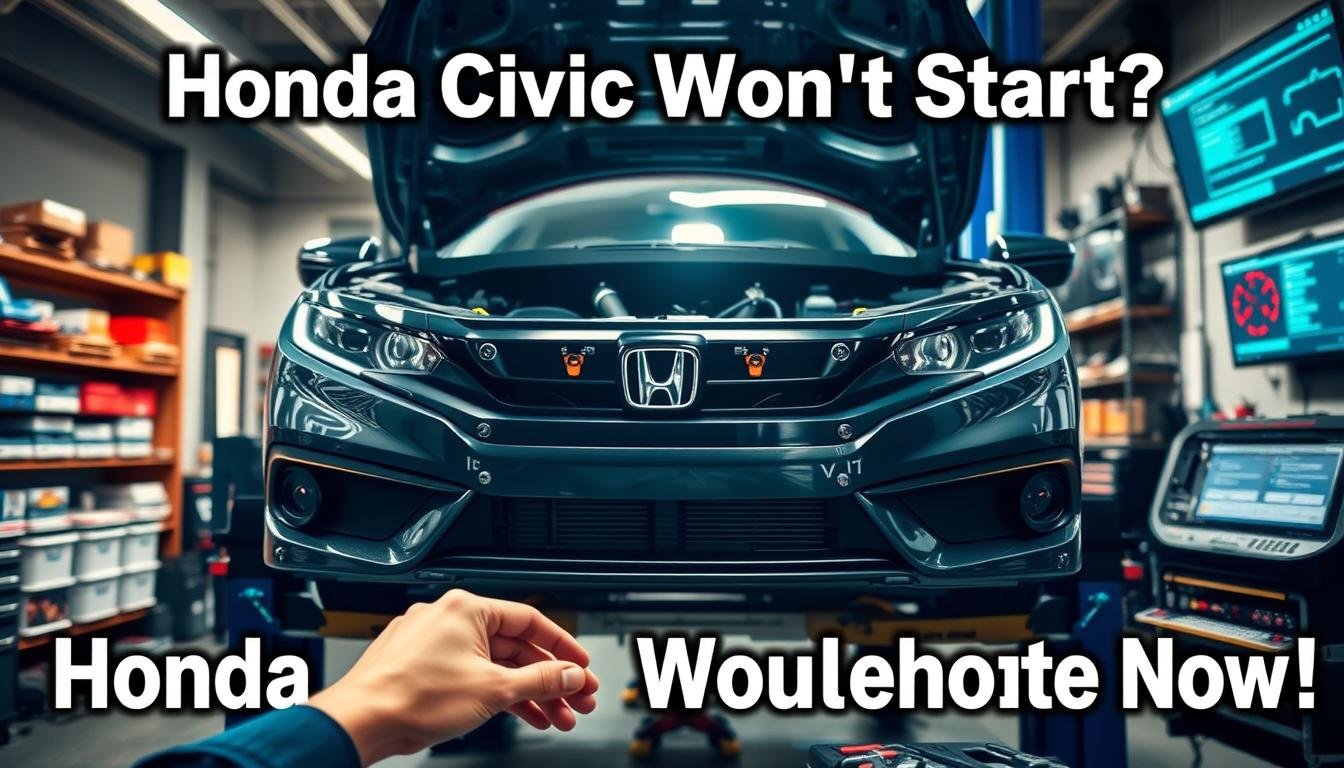
Honda Civic Won’t Start? Top 7 Troubleshoot Now
Having trouble getting your Honda Civic to start is a common problem. You’re definitely not the only one facing it.
We’ll show you common causes and how to fix them. Our guide will walk you through checking electrical parts and the fuel system.
We’ll teach you to check the battery, the starter, and ignition systems. By the end, you’ll know if you can fix it yourself or need to talk to a mechanic.
Let’s start troubleshooting your Honda Civic so you can hit the road again soon.
What is Starting Problems in Honda Civics?
Figuring out why your Honda Civic won’t start means spotting the symptoms early.
These issues might come from electrical problems, fuel delivery issues, or the ignition system not working right. Quick recognition of these problems is key to fixing them fast.
Often, these issues don’t just pop up; they come after signs like slow starting or your battery dying faster. These early warnings are important.
They help you know where to look so you can fix the problem quickly. This way, you can get your Honda Civic running smoothly again.
| Symptoms | Possible Causes |
|---|---|
| Slow Crank | Weak battery, faulty starter motor |
| Clicking Sound | Dead battery, poor electrical connections |
| No Sound | Faulty ignition switch, starter relay issues |
| Engine Won’t Turn Over | Fuel system blockage, ignition problems |
| Dim Dashboard Lights | Battery issues, alternator failure |
Common Symptoms of Honda Civic Starting Issues
If your Honda Civic won’t start, it’s important to know the typical signs of trouble. These clues can help figure out what’s wrong with your car.
- No crank or a clicking sound when attempting to start the engine.
- Slow engine cranking, which may suggest a weak battery or electrical issue.
- Dashboard lights illuminate, but the engine fails to start, indicating a possible starter or ignition problem.
- Odd sounds from the starter or intermittent starting, which could be related to more severe electrical issues.
Learning these symptoms is key to fixing your car’s starting issue. Paying close attention could lead to finding the issue, like a bad battery or starter problems.
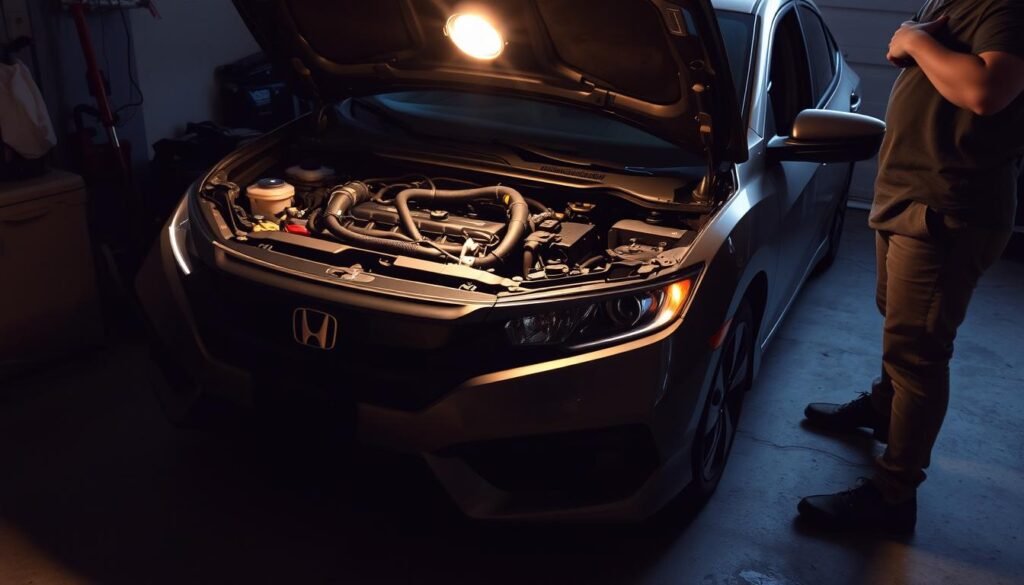
Potential Causes For Honda Civic Won’t Start
When your Honda Civic doesn’t start, it’s really annoying. There are a few reasons why this might happen. Knowing these reasons can make fixing the problem easier.
- Faulty Battery or Battery Connections: A bad battery often means your car won’t start. If the connections are bad or loose, the battery can’t work right.
- Malfunctioning Starter Motor: If the honda civic starter not working, it could be the starter motor. You might hear odd sounds or get no response when you try to start the car.
- Issues with the Ignition System: A broken ignition switch or bad wiring can stop your car from starting. It’s important for the electrical system to work well.
- Problems in the Fuel System: For the engine to start, the fuel system has to work right. Clogged fuel filters or bad fuel pumps can cause issues.
- Electrical Issues: Broken fuses or bad relays can mess up the car’s electrical system. This often leads to big problems with the honda civic engine.
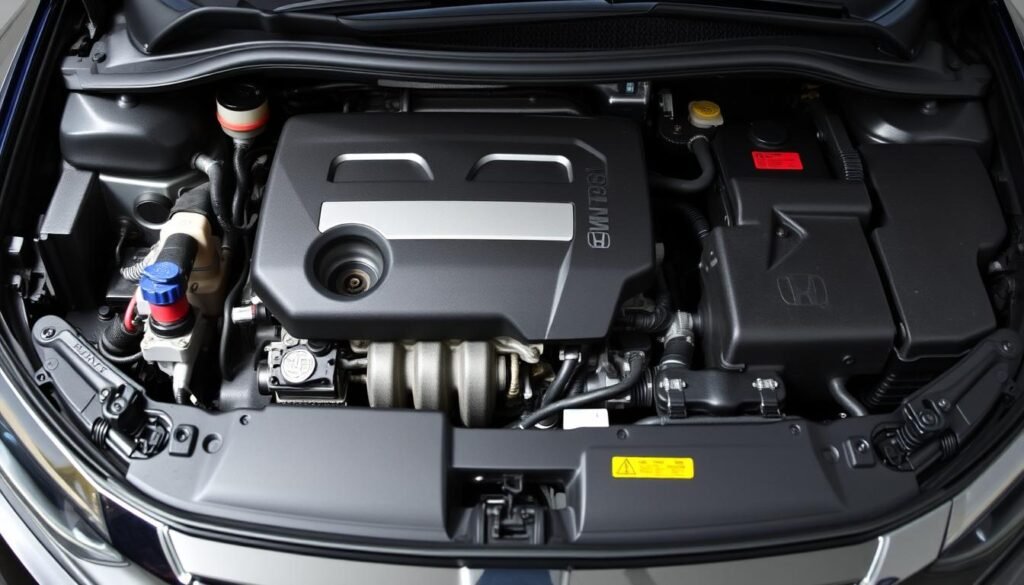
How To Diagnose Honda Civic Starting Problems?
To figure out starting problems in your Honda Civic, use a step-by-step method from this honda civic troubleshooting guide.
This way, you tackle components one at a time, which could be causing the trouble.
- Visual Inspection: Begin with a check for clear issues like frayed wires or not tight connections. Search for any damage or wear that might be related to honda civic electrical problems.
- Battery Test: Check the battery’s power level. Make sure the connections are clean and without rust, as it could impact the power.
- Starter Assessment: Try to start the engine and listen for clicking sounds. A constant clicking suggests a bad starter.
- Fuel Supply Check: Switch on the ignition and listen for the fuel pump’s noise. Not hearing it implies that the fuel system isn’t delivering the needed fuel for ignition.
- Ignition System Review: Look at the ignition switch and spark plugs. They must work right to light the fuel-air mix.
By taking these steps, you’ll better understand your Honda Civic’s starting system and figure out the problem’s source.
| Diagnosis Step | Possible Issues |
|---|---|
| Visual Inspection | Frayed wires, loose connections |
| Battery Test | Low voltage, corrosion |
| Starter Assessment | Faulty starter |
| Fuel Supply Check | Non-functional fuel pump |
| Ignition System Review | Defective ignition switch, worn spark plugs |
Inspecting Electrical Components
Your Honda Civic’s ability to start often relies on its electrical parts. Problems here can cause big starting troubles.
Start by checking the battery connections. This is key to making sure everything works right. Clean and tight connections can fix a lot of issues.
Checking Battery Connections
Over time, battery terminals can get corroded or loose. This interrupts electricity flow and causes problems. Here’s how to check your battery:
- Turn off the vehicle and remove the keys from the ignition.
- Look for signs of corrosion on the terminals, like a white, chalky substance.
- Use a wrench to tighten any loose connections.
- To remove corrosion, clean with a mix of baking soda and water.
Testing The Battery
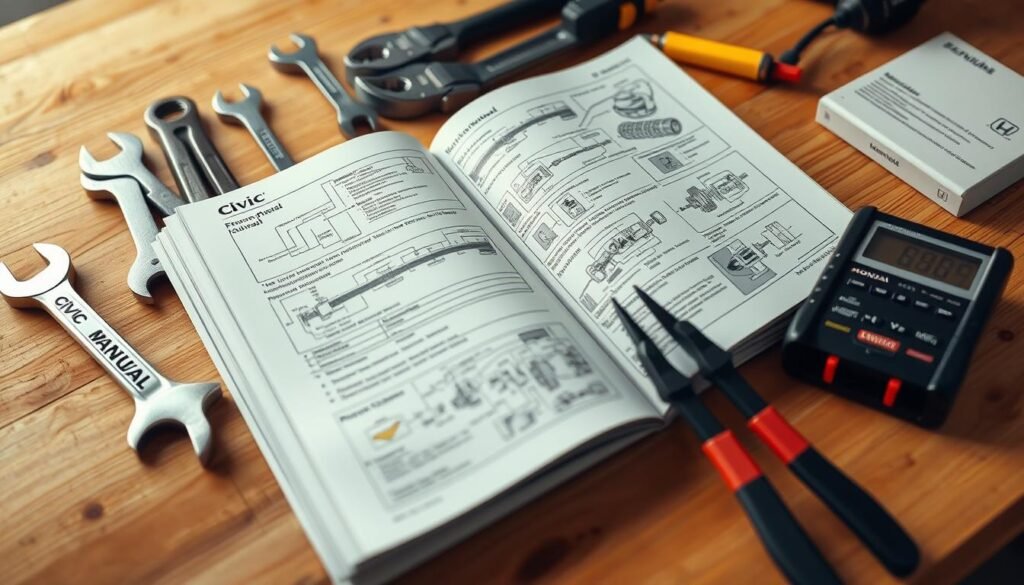
A good battery is vital for your Civic to start right. Use a multimeter to check the battery’s voltage. The car should be off, and the voltage should be at least 12.6 volts.
Here are the steps for a good test:
- Switch the multimeter to the DC voltage setting.
- Attach the red probe to the positive terminal, black to the negative.
- Look at the voltage level on the multimeter.
If the voltage is under 12.6 volts, the battery might be weak or bad. You might need to get a new one to fix starting problems.
Examining The Starter System
The starter system is crucial for getting your Honda Civic to start. It’s smart to start troubleshooting by checking this system.
First, listen for a click when turning the ignition. This sound usually means the solenoid works, but there could still be issues with the starter motor.
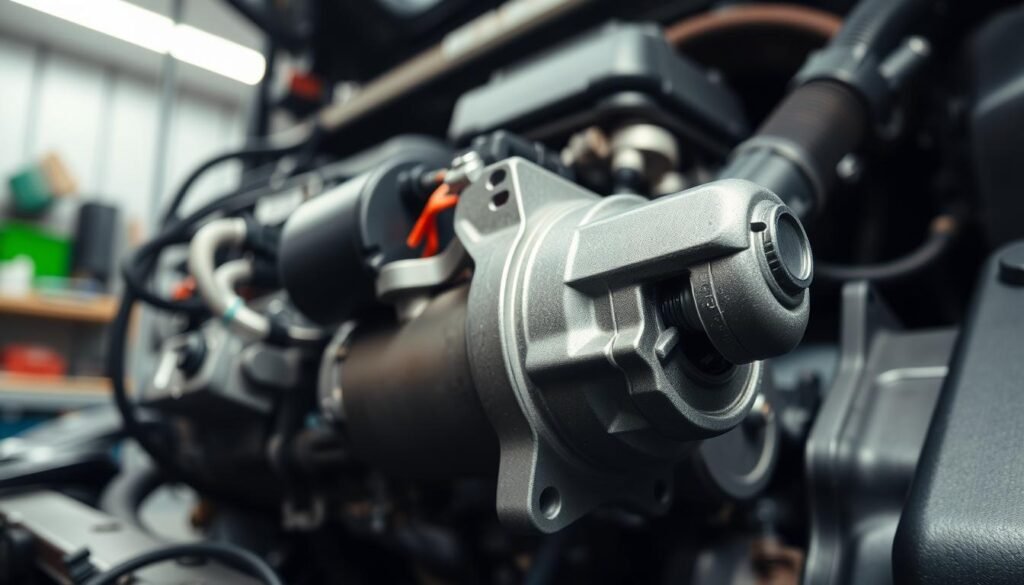
Then, inspect the wiring to the starter. Look for damage or wear that could stop electricity from flowing correctly.
Damaged wires are often the cause of start issues in a Honda Civic. If you’re okay with doing car repairs, you might want to test the starter motor on a workbench.
This test can show if the starter is fine or needs replacement. By carefully checking the starter system, you can avoid wasting time and money on unnecessary repairs.
Fuel System Troubleshooting
Having trouble with your Honda Civic‘s engine? Pay attention to the fuel system. It’s crucial for starting the car. First, turn the key to “on” but don’t start the engine.
Listen for the fuel pump’s hum to see if it’s working. If you can’t hear it, it’s time to inspect the fuel pump relay and fuses.
Listening For The Fuel Pump
The fuel pump’s sound tells you it’s working right. If it’s silent, there might be a power issue, causing startup failures. Make sure to double-check all connections for security and functionality.
Testing Fuel Pressure
It’s crucial to test fuel pressure next. Use a pressure gauge on the fuel rail to measure. Your engine needs enough fuel to start smoothly.
If the pressure is low, look into the fuel filter, lines, or injectors. This step is key in solving starting issues with your Honda Civic.
Addressing Ignition System Failures
The ignition system is key to fixing Honda Civic ignition troubles. It helps sort out starting issues. Start by checking the main parts for any errors.
First, try the ignition switch; it must click when moved to “start.” This lets power move through the system.
If your car struggles to start, the ignition switch may be at fault. Think about getting a new one if needed.
Evaluating The Ignition Switch
To test the ignition switch, do the following:
- Move the key to “start” and listen for a click.
- If you don’t hear anything, check the switch’s battery connection.
- Change the ignition switch if it’s not working right.
Inspecting The Distributor and Spark Plugs
Then, look at the distributor and spark plugs for issues. Make sure the distributor’s connections are clean and snug.
Also, examine the spark plugs for any wear or carbon buildup. Bad spark plugs can stop the engine from igniting fuel well. This adds to starting problems in a Honda Civic.
| Component | Signs of Failure | Recommended Action |
|---|---|---|
| Ignition Switch | No click sound when starting | Replace the ignition switch |
| Distributor | Loose connections or corrosion | Clean and secure connections |
| Spark Plugs | Worn or carbon buildup | Replace spark plugs if necessary |
Advanced Troubleshooting Techniques For Honda Civics
If your Honda Civic has trouble starting, look into advanced troubleshooting. Begin with a parasitic draw test to spot electrical drains with the car off.
Things like bad door switches may leak power from the battery, making the car hard to start. Next, use a scan tool to pull trouble codes from the car’s diagnostics.
These codes point out specific issues that aren’t always clear otherwise. Fixing these quickly helps avoid bigger problems later.
It’s also key to check and swap out any starting system fuses or relays that are blown or not working right. This careful check can reveal hidden issues stopping your Honda Civic from starting.
| Technique | Description | Purpose |
|---|---|---|
| Parasitic Draw Test | Checks for electrical drains while the vehicle is off. | Identify faulty components causing battery drain. |
| Scan Tool Diagnostics | Reads trouble codes from onboard diagnostics. | Uncover specific issues affecting the starting system. |
| Fuse & Relay Check | Examine and replace blown or faulty fuses/relays. | Ensure all components of the starting system are functional. |
When To Seek Professional Help
The honda civic troubleshooting guide is great for fixing many problems on your own. But, some problems need an expert’s touch.
For issues that are hard to figure out or involve complex parts like the engine control unit or transmission, it’s smart to get professional help.
Shops with special tools and skilled technicians can tackle tricky honda civic engine problems. They make sure the diagnosis and repairs are spot on.
There are clear signs when you should consider professional help:
- Persistent starting issues after performing basic checks
- Unusual noises coming from the engine during operation
- Warning lights on the dashboard that fail to turn off
- Fluid leaks from under the vehicle
If you notice these signs, it’s time to see a mechanic. They can offer deeper insights, especially with the electrical and fuel systems.
Conclusion
Knowing why your Honda Civic won’t start is key to fixing it. A step-by-step method to check the battery, starter, fuel, and ignition systems helps.
Often, you can find and solve the problem yourself. For complex issues, it’s smart to get help from a pro. A skilled mechanic can spot problems that aren’t obvious.
With the right info and tools, you can tackle your Honda Civic’s starting issues and keep it running well.
Being ahead of your car’s needs makes it more reliable. Learning about your car ensures it stays ready for any trip. This knowledge gives you confidence as a car owner.
FAQs
Q: What should I do if my Honda Civic won’t start?
A: Start by checking common signs like clicking noises, dashboard lights, and the battery’s power. Use a step-by-step method to examine the battery, starter, fuel, and ignition systems.
Q: How can I tell if my Honda Civic has a weak battery?
A: Use a multimeter to check the battery’s voltage. It should show 12.6 volts or more if it’s fully charged. If it shows less, the battery might need to be replaced.
Q: What could cause a clicking sound when starting my Honda Civic?
A: A clicking noise often means the starter solenoid works, but the motor doesn’t. You might need a new starter.
Q: How do I check if my fuel pump is working?
A: With the car off, turn the key to “on” but don’t start the engine. Listen for a humming noise from the fuel tank. This sound means the fuel pump is working.
Q: What are some common electrical issues that can prevent my Honda Civic from starting?
A: Common electrical problems include bad battery connections, blown fuses, and faulty relays. Check the connections at the battery and inspect the fuses for the starter system.
Q: When should I consider consulting a mechanic for starting issues?
A: If you’ve tried to find the problem but can’t, or if the issue is with complex systems, get professional help. It’s best to consult a mechanic then.
Q: What are the steps to perform a parasitic draw test?
A: To do a parasitic draw test, measure the current with a multimeter when the car is off. Remove fuses one at a time to find any components draining the battery too much.
Q: Are there specific trouble codes I should look for related to starting issues?
A: Yes. An OBD-II scanner can show trouble codes that point out which parts of the starting system aren’t working right. This helps fix the problem more efficiently.