
Common Ford 7.3 Gas Problems Explored
The Ford 7.3 gas engine is powerful and reliable. But, it has its own set of challenges. As a vehicle owner, you might face problems that could change how your car drives.
Knowing about these issues Ford 7.3 gas problems is key to keep your car running well. This article will dive into the common issues you may see, like wiring harness failures, transmission problems, and troubles starting your car.
We’ll help you figure out these problems. This means you’ll learn how to spot symptoms, understand what these problems could mean, and how to fix them.
By regularly checking your engine and fixing issues early, you’ll make your engine run better. You’ll also avoid expensive repairs later.
With our help, you can deal with the Ford 7.3 gas engine’s challenges. This way, your car will keep running great.
Overview of The Ford 7.3 Gas Engine
The Ford 7.3 gas engine shines for its high efficiency and power. It’s tailored for those heavy-duty needs.
With its strong V8 setup and 7.3 liters of displacement, it offers up to 430 horsepower and 468 lb-ft of torque.
These notable numbers make it a top pick in trucks like the F-250 and F-350, giving a solid alternative to those diesel versions.
This engine incorporates cutting-edge fuel management technology. This doesn’t just boost its performance but also meets the demands for power and efficiency.
Hence, the Ford 7.3 V8 engine is designed to perfectly balance high performance with efficiency. It’s built to fulfill the demanding needs of large vehicles efficiently.
| Specification | Details |
|---|---|
| Engine Type | V8 |
| Displacement | 7.3 liters |
| Horsepower | Up to 430 hp |
| Torque | 468 lb-ft |
| Application | F-250, F-350 |
Background and Specifications
The ford 7.3 gas engine started as a need for reliable heavy-duty trucks. This engine is strong, offering up to 430 horsepower.
It’s a top choice in Ford’s options, especially for those who like gas engines. This engine is available for Super Duty and some E-series vehicles.
It’s designed to work hard under big loads. This makes it great for jobs and fun activities. Here’s a table with important specs of this engine.
| Specification | Detail |
|---|---|
| Displacement | 7.3 liters |
| Horsepower | Up to 430 hp |
| Torque | Maximum torque of 475 lb-ft |
| Fuel Type | Gasoline |
| Application | Super Duty and E-series vehicles |
Key Features of The Ford 7.3 Gas Engine
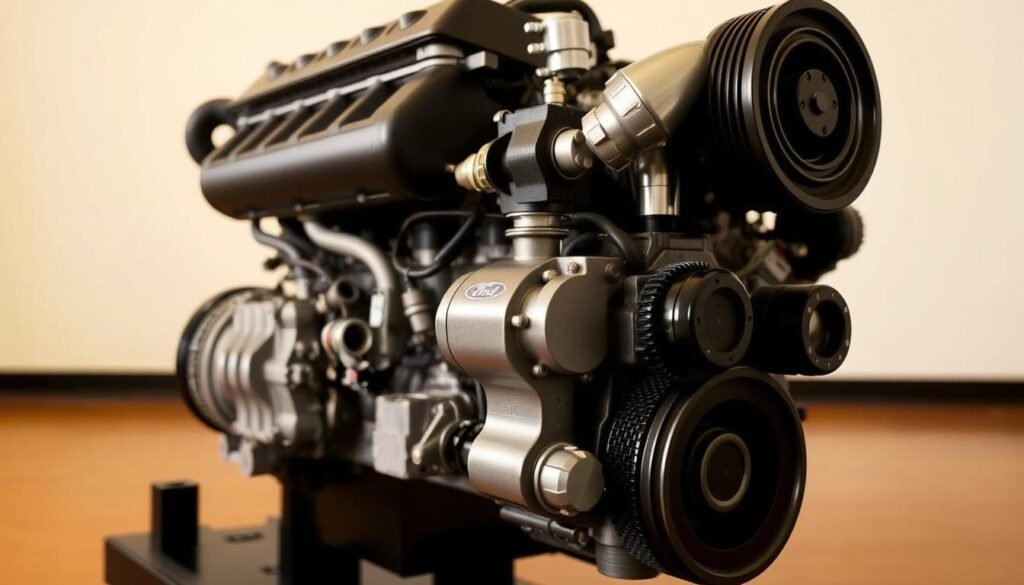
The Ford 7.3 gas engine is known for its sturdy design and innovative qualities. It focuses on reliability and high performance.
One key feature is its pushrod configuration, which makes upkeep simpler. This makes it easier for you to maintain the engine’s best condition by streamlining repairs.
The engine also has a variable-displacement oil pump. This pump adjusts oil flow based on how the engine is being used.
It helps the ford 7.3 engine run smoothly under different conditions, boosting its efficiency.
The use of a cast-iron block with a forged steel crankshaft adds to the engine’s strength. These materials allow for high torque outputs while keeping the engine reliable.
Together, these features enhance fuel efficiency and towing power. This makes the Ford 7.3 engine a top pick for truck lovers.
Specific Issues with The Ford 7.3 Gas Engine
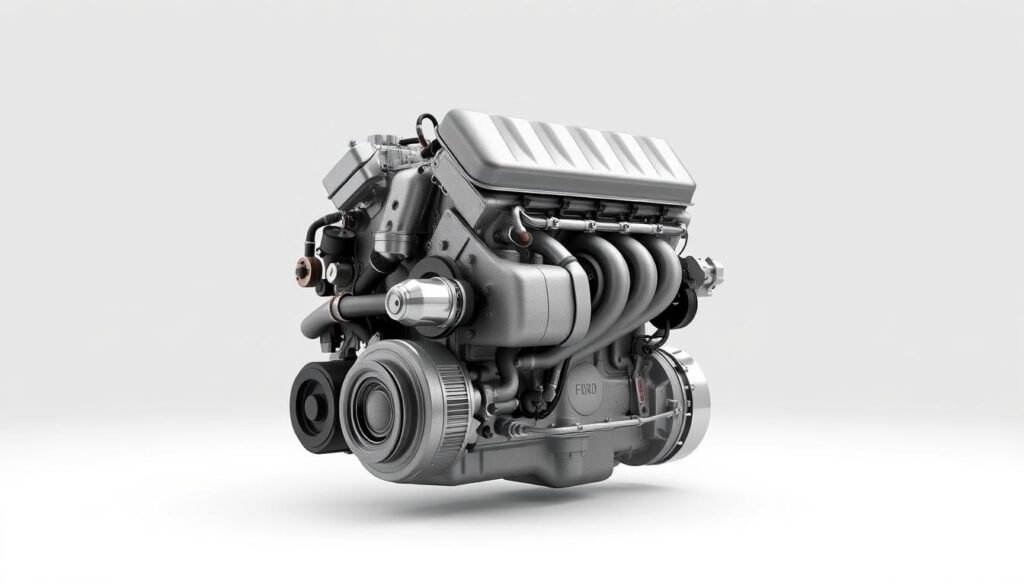
The Ford 7.3 gas engine is strong and usually reliable. But, it does have its own set of challenges. It’s important to know about these potential problems.
They might be due to design issues or defects from making it. Understanding them helps you fix them early. This keeps the engine running well for longer.
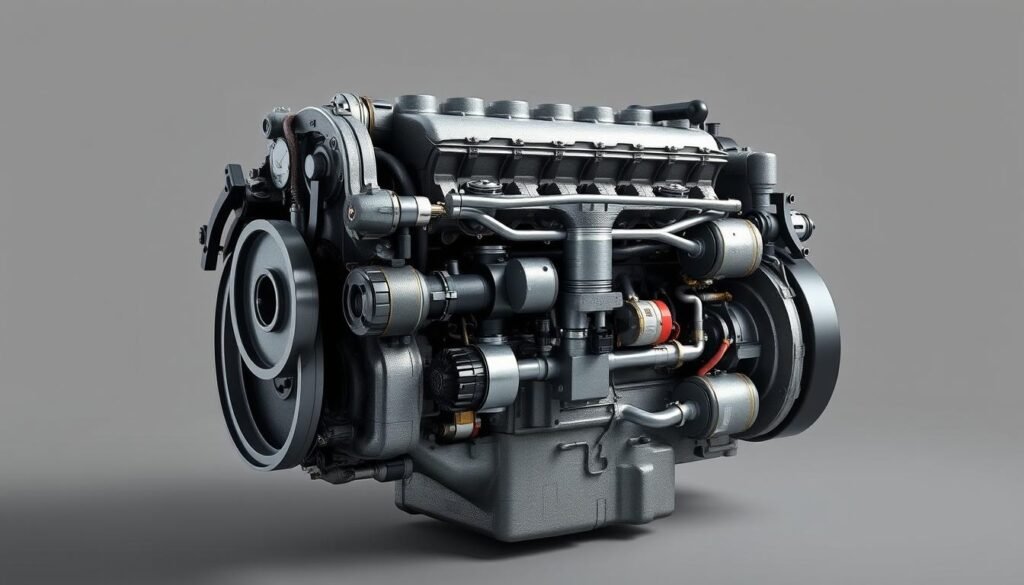
Owners have reported several common issues with the Ford 7.3 gas engine. These include:
- Wiring harness failures, which can lead to electrical issues and affect engine performance.
- Transmission problems that might result in rough shifting or slipping.
- Oil leaks caused by worn seals or gaskets, leading to a loss of lubrication.
- Starting issues that can stem from a weak battery or faulty ignition components.
Knowing these problems helps you stay ahead in keeping your engine in tip-top shape.
With the right care and quick action, you can make your Ford 7.3 gas engine last much longer. Regular checks and fixing issues quickly are key to keeping it reliable.
| Issue | Description | Common Symptoms | Possible Solutions |
|---|---|---|---|
| Wiring Harness Failures | Electrical wiring issues affecting engine functions | Erratic performance, warning lights | Inspection and replacement of damaged wires |
| Transmission Problems | Issues with the gearbox affecting shifting | Delayed or harsh shifting | Fluid change or transmission rebuild |
| Oil Leaks | Leaks from seals or gaskets causing oil loss | Oil spots under the engine | Seal replacement or gaskets replacement |
| Starting Issues | Complications in starting up the engine | Engine cranks but doesn’t start | Battery check, ignition repairs |
Wiring Harness Failures and Their Implications
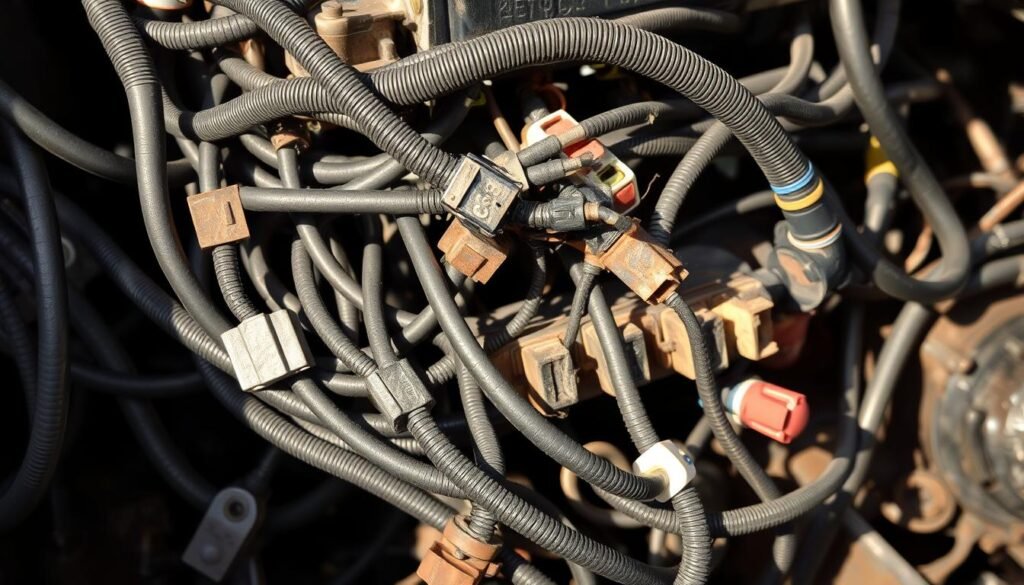
The wiring harness is key in your Ford 7.3 gas engine. It manages electrical signals. Faulty wiring can cause big issues, impacting how your vehicle runs.
Catching these problems early can save a lot of time and money.
Learning Wiring Harness Functions
The wiring harness connects wires and connectors. It sends power and signals to parts of the engine. This includes the ignition and fuel injectors.
If it works right, your engine runs smoothly. But if it fails, you might face engine misfires and bad fuel efficiency.
Signs of Wiring Harness Problems
Knowing the signs of wiring harness failures is crucial. Here are common symptoms:
- Flickering dashboard lights
- Inconsistent or unresponsive gauges
- Engine misfires or stalling
- Persistent check engine light
- Electrical components that function intermittently
Seeing these issues might mean your ford 7.3 wiring harness needs checking. Ignoring them can lead to bigger problems, even putting your safety at risk.
Possible Solutions and Repairs
Fixing wiring problems means looking closely at the wiring harness. Look for:
- Fraying wires
- Corrosion at connectors
- Loose connections
- Burnt or melted insulation
Finding any damage usually means you need a new wiring harness. Always choose a quality replacement to keep your Ford 7.3 running well.
Regular checks can spot issues early, helping keep your vehicle in great shape.
Transmission Problems with The Ford 7.3
The Ford 7.3 gas engine works with a strong TorqShift 10-speed automatic transmission. This setup handles the engine’s power well.
However, owners often report issues with the Ford 7.3 gas transmission. They face problems like rough shifts, gear engagement failures, and lags that hurt the driving experience.
These transmission troubles usually come from its complex system. It needs close attention. Neglect and lack of maintenance make things worse.
It’s important to always check the transmission fluid level and its condition. Doing so helps avoid overheating and keeps the performance up.
Spotting early signs of trouble is key to avoiding big problems. Look out for:
- Delayed gear engagement
- Unusual noises when shifting
- Fluctuating RPM levels
- Warning lights on the dashboard
Quick action on these issues helps keep the transmission smooth and extends your vehicle’s life.
Regular fluid changes and checks can really cut down future ford 7.3 gas transmission issues.
Common Ford 7.3 Gas Problems
It’s crucial to know the common Ford 7.3 gas problems to keep your car running well and safely. Spotting these issues early can help fix them quicker. This saves both time and money.
Symptoms of Issues
Knowing what signs to look for can really help manage your car better. Key symptoms to watch out for include:
- Lower gas mileage
- Engine runs roughly at idle
- Weird noises from the engine, like knocking
- Trouble getting the engine to start
- The car often stalls when speeding up
Importance of Timely Repairs
Fixing problems as soon as they pop up can stop them from getting worse. It’s good to check your car regularly for any issues.
Doing this keeps your Ford 7.3 engine running longer, safer, and more reliably.
Starting Issues: Troubleshooting The Ford 7.3
Ford 7.3 gas engine start-up issues can cause annoying delays and worries about reliability.
Problems often come from the fuel system, parts that ignite the engine, or the battery’s health.
You may experience long cranking times or the engine not starting occasionally. These signs mean you should not delay fixing the problem.
To troubleshoot effectively, follow a step-by-step process to find the problem’s root. First, ensure the fuel filters are clean and not clogged.
A blocked fuel filter can stop gas from flowing properly, making your Ford 7.3 hard to start.
Then, look at the ignition parts, like the spark plugs and coils, since these can also prevent the engine from starting.
Don’t forget to check the battery’s condition. It should be fully charged and the terminals clean and corrosion-free.
A weak battery can make it hard to start your car. Also, look at the battery cables and connections for wear or damage.
Here’s a table that outlines what to check when dealing with start issues in a Ford 7.3:
| Component | Checkpoints | Symptoms of Failure |
|---|---|---|
| Fuel Filter | Cleanliness and blockage | Prolonged cranking, stalling |
| Ignition Components | Spark plugs, ignition coils | Hard starting, misfires |
| Battery | Charge level, terminal cleanliness | Slow cranking, no-start |
| Battery Cables | Visual inspection for wear | Intermittent starting issues |
Taking early steps and keeping an eye on these parts can prevent start-up problems in your Ford 7.3 gas engine. Keeping these key parts in good shape boosts your vehicle’s reliability.
Addressing Poor Gas Mileage Concerns
Owners of the Ford 7.3 gas engine often face poor gas mileage. Many factors, like the vehicle’s design, affect gas mileage.
Knowing these will help improve your car’s performance. Adopting certain driving habits can fight fuel inefficiency.
For example, smooth driving and keeping a consistent speed help. Also, avoiding heavy loads and not idling too much make a big difference.
Keeping your car in top shape is key to good gas mileage. This means regular oil changes, replacing air filters, and checking tire pressure.
Using high-quality fuel also boosts the ford 7.3’s efficiency. It’s important to keep an eye on your fuel use.
Tracking your mileage helps spot trends or sudden decreases. By looking into these factors, you can better the fuel economy of your Ford 7.3.
Detecting Gas Fumes in The Cab
Noticing gas fumes in your Ford 7.3’s cab signals a serious issue. Detecting this early is vital for safety and to keep your vehicle running well.
If you smell gas, leave the vehicle quickly and air it out. Being around gas fumes too long is bad for your health, so take care of it fast.
Begin checking for gas leaks in your Ford 7.3 with a careful look at the fuel lines and exhaust parts.
Watch for any signs of damage or wear that might mean there’s a leak. Places to examine include:
- Fuel lines and fittings
- Injector seals
- Exhaust manifold connections
If you find any strange smells or signs of leaking, get a skilled mechanic to check it out. Dealing with these issues quickly can prevent bigger problems and improve how your car drives.
Conclusion
The Ford 7.3 gas engine stands out for its power and performance, loved by many truck owners.
Yet, it’s key to watch for common issues like wiring harness failures and starting problems.
Knowing these problems helps you fix them fast, keeping your vehicle at its best.
Keeping up with maintenance on your Ford 7.3 gas engine is vital for your vehicle’s longevity.
By addressing problems early, you avoid bigger issues later. Follow the troubleshooting tips shared here to keep your engine running smoothly.
Being aware of potential issues with the Ford 7.3 can save you both time and money. It makes the truck ownership experience better.
Use this knowledge to ensure your Ford 7.3 stays reliable, turning potential troubles into easy fixes.
FAQs
Q: What are common Ford 7.3 gas engine problems?
A: The Ford 7.3 has issues like wiring harness failures and transmission problems. Oil leaks, hard starts, and low gas mileage are also common. Keeping up with maintenance can reduce these issues.
Q: How can I troubleshoot Ford 7.3 gas engine issues?
A: Check if there’s rough idling, less fuel efficiency, or warning lights. Look at the wiring harness, transmission fluid, and ignition parts. Using diagnostic tools helps find specific problems.
Q: What causes starting issues in the Ford 7.3 gas engine?
A: Problems starting can result from fuel system, ignition, or battery issues. Checking fuel filters, batteries, and ignition can help find the cause.
Q: How does the wiring harness impact my Ford 7.3 performance?
A: The wiring harness controls the engine’s electrical signals. If it fails, it can cause misfires and performance drops. Regular checks are key to keeping your engine reliable.
Q: What should I do if I smell gas inside my Ford 7.3 cab?
A: Smelling gas means you should get out and air the place out. Look for leaks in the fuel system or exhaust. Then, get a skilled technician to fix it.
Q: What can I do to improve gas mileage in my Ford 7.3 gas engine?
A: For better fuel efficiency, drive carefully and do regular oil changes. Use good quality fuel. This keeps your truck running better and improves mileage.
Q: Are there any specific maintenance tips for the Ford 7.3 gas engine?
A: Always check your oil and replace it with the filters. Keep an eye on transmission fluid and the wiring harness. Fix any engine lights right away to stay efficient.
Q: How reliable is the Ford 7.3 gas engine overall?
A: The Ford 7.3 is powerful but needs good care and quick fixes of common problems. Regular care makes it more reliable.


