
Ford F250 Diesel MPG: Real-World Fuel Economy
The Ford F250 diesel MPG typically ranges from 15 to 20 miles per gallon. This varies based on things like how you drive and the engine specifics.
It’s vital for both potential buyers and current owners to understand this truck’s fuel economy. This knowledge aids in getting the best performance out of the F250.
We’ll look into the engineering of the F250 and factors that affect its MPG. Plus, we’ll share tips on boosting your truck’s mileage.
If you want to cut down on fuel costs or are curious about your truck’s performance, this guide is for you.
We’ll examine diesel MPG and how to better your fuel efficiency through proper maintenance.
Welcome to the Ford F250 diesel efficiency world. Let’s learn how to enhance your driving enjoyment.
What is The Ford F250 Diesel Engine?
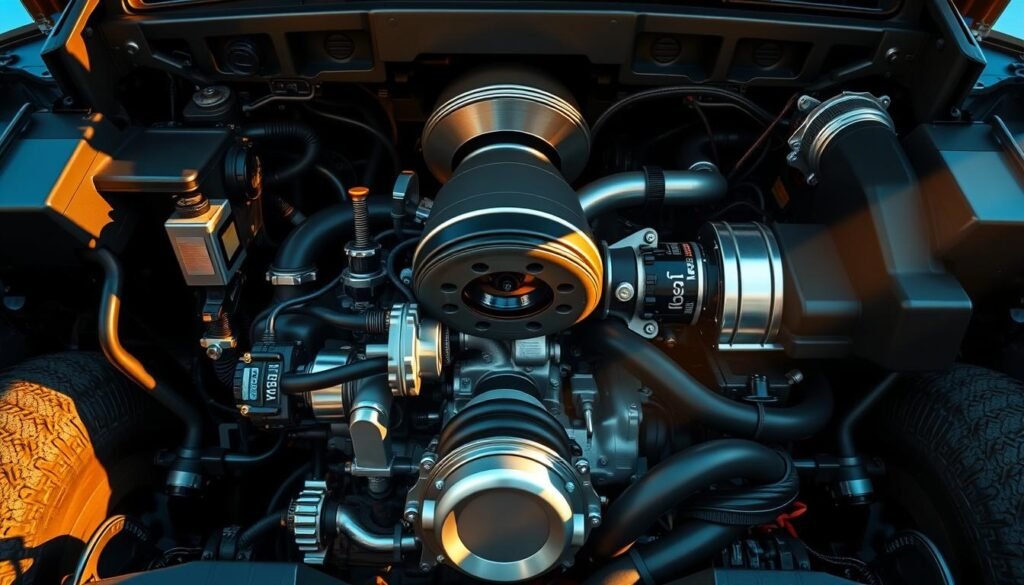
The Ford F250 diesel engine is a powerhouse with the 6.7L Power Stroke V8. It offers incredible power and efficiency.
With up to 500 horsepower and 1,200 lb-ft of torque, it shines in tough situations. You can count on it when pulling heavy loads or driving off-road.
The engine features a water-cooled turbocharger. This boosts airflow and performance, perfect for heavy-duty jobs.
It also has a cutting-edge fuel system for better fuel use and power. The result? A great balance between performance and care for the environment.
Delving into the ford f250 diesel engine’s turbocharging and injection systems is enlightening. It shows why it’s so fuel-efficient.
These advanced technologies meet the demands of truck lovers while being reliable and durable.
| Engine Model | Horsepower | Torque (lb-ft) | Fuel System |
|---|---|---|---|
| 6.7L Power Stroke V8 | 500 hp | 1,200 lb-ft | Advanced Common Rail |
Ford F250 Diesel MPG Performance
The Ford F250 Diesel has great MPG performance, thanks to its diesel engine efficiency. The 6.7L Power Stroke engine gets about 19.6 MPG on average.
This is better than the gas model, which gets around 16.6 MPG. Diesel engines are great for heavy loads like towing.
The ford f250 mpg performance shows how good Ford’s engineering is. They made the fuel system and combustion better, so it uses gas efficiently.
This means the Ford F250 Diesel does great on gas without losing power. It’s a great choice for saving on fuel costs.

Factors Affecting Ford F250 Fuel Consumption
Many factors can change how much fuel your Ford F250 uses. Some key aspects are the vehicle’s load, how you drive, tire upkeep, and the fuel quality.
Knowing these can help manage your truck’s fuel consumption better. When your truck carries heavy items, its fuel efficiency drops.
Towing often also lowers miles per gallon (MPG), making it key to think about how you use your truck.
Here is a table showing how different loads affect fuel efficiency:
| Load Type | Estimated MPG |
|---|---|
| No Load | 18 MPG |
| Light Load (1,000 lbs) | 16 MPG |
| Moderate Load (2,500 lbs) | 14 MPG |
| Heavy Load (5,000 lbs) | 12 MPG |
Keeping your tires properly inflated is crucial for fuel economy. Low tire pressure means more rolling resistance, making your Ford F250 use more fuel.
Regularly checking tire pressure helps cut down on this resistance and saves fuel. Using good-quality fuel affects your MPG too.
Research shows high-quality fuels could boost your MPG by up to 2 compared to lower grades. This teaches us the importance of choosing the best fuel for better fuel economy.
Best MPG Ford F250 Diesel Models
The 2023 Ford F250, with its strong 6.7L Power Stroke engine, leads in heavy-duty trucks. They are known for top mpg in diesel performance.
Especially on highways, they save a lot of fuel. Knowing about these trucks helps buyers choose wisely.
When comparing these diesel models, we look at their setups. This includes engine tunes and axle ratios, which help with fuel use.
The ones with new tech and optimized parts offer better mpg. They are great for those who want to save on fuel but still need strength and utility.
| Model | Engine | Transmission | Best MPG (City/Highway) |
|---|---|---|---|
| F250 XL | 6.7L Power Stroke V8 | 10-Speed Automatic | 21 / 28 |
| F250 XLT | 6.7L Power Stroke V8 | 10-Speed Automatic | 20 / 26 |
| F250 Lariat | 6.7L Power Stroke V8 | 10-Speed Automatic | 19 / 25 |
| F250 King Ranch | 6.7L Power Stroke V8 | 10-Speed Automatic | 18 / 24 |

Ford F250 Diesel MPG: Efficiency Unveiled
Choosing between diesel and gas Ford F250 has big effects on fuel economy and performance.
It’s key to know these differences for a smart choice. This is vital for your towing needs and how much it will cost in the long run.
Comparative Analysis of Diesel vs. Gas Engines
The Ford F250 Diesel stands out by offering more torque and towing ability. This makes it the better choice for heavy lifting.
When we talk fuel efficiency, diesel engines are the winners. They typically offer 12 to 18 MPG, while gas engines do 8 to 14 MPG.
The table below shows important differences between these engines. It looks at their performance and how they’re used.
| Aspect | Ford F250 Diesel Engine | Ford F250 Gas Engine |
|---|---|---|
| Fuel Efficiency | 12-18 MPG | 8-14 MPG |
| Towing Capacity | Higher (up to 20,000+ lbs) | Lower (up to 13,000+ lbs) |
| Engine Longevity | Longer lifespan, often exceeding 300,000 miles | Shorter lifespan, typically around 200,000 miles |
| Maintenance Costs | Generally higher but offset by fuel savings | Lower maintenance costs |
Diesel engines offer more than just towing power. They keep performing well, even under heavy loads. Knowing this can help you decide on diesel vs gas for your Ford F250.

Improving Ford F250 MPG
Maximizing your Ford F250’s fuel efficiency involves more than just how you drive. It’s also about how well you maintain your truck.
Regular maintenance can boost your truck’s performance. This helps with improving its miles per gallon (mpg).
We’ll discuss key maintenance tips, tire pressure, and weight management. All these factors are critical for better fuel economy.
Maintenance Tips For Optimal Fuel Efficiency
To improve your Ford F250’s fuel efficiency, follow these maintenance tips. Changing the oil regularly helps the engine run smoothly.
Monitoring fuel injector health ensures efficient fuel delivery. Using high-quality diesel improves combustion.
Replacing air filters helps with airflow. Make sure the exhaust system works well to avoid back pressure.
Impact of Tire Pressure and Weight
Tire pressure and vehicle weight greatly impact your mpg. Keeping tires properly inflated improves traction and lowers drag.
This enhances fuel efficiency. Here are some tips:
- Check tire pressure often and follow the manufacturer’s recommendations.
- Remove unnecessary weight from your truck to reduce engine strain.
- Avoid heavy aftermarket accessories that add more weight.
Real-World Ford F250 Diesel MPG Ratings
For those thinking about buying or who already own a Ford F250 Diesel, knowing how it really performs is key. How you drive each day can change the mpg you’ll see.
People have tested it in different ways, like the Denver 100 loop, and shared what they found.
Loads of drivers have shared their MPG numbers, showing how things like the way you drive, what you’re carrying, and the roads impact gas mileage.
Here’s a look at what kind of MPG you might expect, based on what lots of users have said.
| Driving Condition | Average MPG | Details |
|---|---|---|
| Highway Driving | 18-20 | Consistent speed, minimal load |
| City Driving | 14-16 | Frequent stops, variable speeds |
| Towing Conditions | 10-12 | Heavy loads, steep inclines |
| Mixed Driving | 15-17 | Combination of highway and city |
Looking at this data helps set true-to-life mpg expectations for the Ford F250 Diesel. By understanding actual performance, you can adapt how you drive and look after your truck to get better MPG.
Fuel Additives and Their Effect on Ford F250 Mileage
Fuel additives are a hot topic for Ford F250 owners aiming to boost their truck’s function and gas mileage.
The debate is lively, with truck fans discussing if these additives really help save on gas.
Some drivers see clear f250 mileage improvement and better engine performance with certain products.
Here are the common fuel additives:
- Detergent Additives: They clean the fuel system, keeping injectors clean.
- Octane Boosters: They improve fuel quality and make combustion better.
- Fuel System Cleaners: They help remove gunk from the injectors and combustion chamber.
- Diesel Additives: They are made to boost diesel engine’s performance, stability, and efficiency.
The benefits for your Ford F250 can be big:
- Burning fuel better, which means you use less gas.
- Cutting down on bad emissions, so it’s better for our world.
- Keeping fuel consistent, even when driving under different conditions.
Some users tell stories of real f250 mileage improvement. Let’s see how different additives stack up in terms of mpg gains and user happiness:
| Additive Type | Reported MPG Improvement | User Satisfaction Rating |
|---|---|---|
| Detergent Additive | 1-3 MPG | 4.5/5 |
| Octane Booster | 0.5-2 MPG | 4/5 |
| Fuel System Cleaner | 1-2 MPG | 4.7/5 |
| Diesel Additive | 2-5 MPG | 4.6/5 |
Conclusion
The Ford F250 Diesel stands out for its fuel efficiency among heavy-duty trucks. In this article, we’ve looked into what makes this vehicle efficient, from its engine to how you take care of it.
It’s vital to know these factors to get the most out of your truck and make your fuel investment worthwhile.
To improve your Ford F250 Diesel’s miles per gallon, pay attention to tire pressure, how much it carries, and staying on top of maintenance.
Taking care of these details is key. It greatly improves how your truck drives and its fuel usage.
This summary on the Ford F250 Diesel’s mpg points out that understanding your truck’s fuel use is essential.
Knowing more allows you to make better choices to boost its efficiency. This makes your truck a more reliable part of your daily routine.
FAQs
Q: What is the average MPG for the Ford F250 Diesel?
A: The Ford F250 Diesel, with a 6.7L Power Stroke engine, gets about 19.6 MPG. The model that uses gasoline averages 16.6 MPG.
Q: How can I improve my Ford F250’s fuel efficiency?
A: You can get better fuel efficiency by doing regular oil changes and checking the fuel injectors. Also, keeping your tires at the right pressure and not carrying unnecessary weight helps.
Q: What factors affect the fuel consumption of the Ford F250?
A: The load it carries, how you drive, tire upkeep, and fuel quality all play a part. Heavy loads or towing drastically lowers MPG.
Q: Are diesel engines more fuel-efficient than gasoline engines?
A: Indeed, diesel engines, such as the one in the Ford F250, usually get between 12-18 MPG. Gas engines achieve 8-14 MPG.
Q: Which Ford F250 models have the best MPG?
A: The 2023 models with the high-output Power Stroke engine are top for fuel economy in heavy-duty pickups.
Q: What are some tips to maximize Ford F250 MPG performance?
A: To get the best MPG, use top diesel fuel, keep your tires right, lose extra weight, and maintain your vehicle regularly.
Q: Do fuel additives improve Ford F250 Diesel MPG?
A: High-quality fuel additives might boost MPG. However, effectiveness varies by user.
Q: How do driving conditions impact Ford F250 mileage?
A: Traffic, terrain, and how much you carry affect your MPG greatly, causing it to change.