Ford Transit Battery Location Guide Quick Find
Are you trying to find where your Ford Transit battery Location? Knowing its location is key for good maintenance and for when you need to get to it quickly.
In this guide, we’ll quickly tell you where the battery is, how to take it out, and how to keep it working well.
If you own a Ford Transit, finding the battery can sometimes be tricky. This is especially true if you’re having power problems or need a new battery.
We’ll show you where your battery is in different models, how to get to it, and how to take care of it.
Ready to check on your battery or need to replace it? This guide will give you all the tips and steps you need. Let’s dive in. This guide will make managing your battery simple.
What is The Ford Transit Battery?
The Ford Transit series uses different battery types to work well and reliably. By learning about Ford Transit battery types like Absorbent Glass Mat (AGM) and regular lead-acid batteries, you can make smart choices about upkeep and replacing them.
Each kind has its own features and expected life, important for how your vehicle runs.
Overview of Battery Types
Ford Transit batteries come as AGM and lead-acid types, each with its advantages. AGM batteries are tough and shake off vibration, perfect for heavy use.
Regular lead-acid batteries are more common but need frequent care to stay in good shape. Knowing about these batteries helps you pick the best one for your drives.
Importance of Battery Maintenance
Keeping up with battery maintenance greatly helps your vehicle last longer. Routine checks can spot problems early, before they cause a breakdown.
Make sure to look at the terminals for rust, secure the connection, and clear off any dirt. These maintenance steps extend your battery’s life and keep your vehicle dependable.
| Battery Type | Benefits | Maintenance Needs |
|---|---|---|
| AGM Battery | Durable, vibration resistant, longer lifespan | Minimal maintenance; check connections |
| Lead-Acid Battery | Widely available, lower cost | Regular checks for corrosion, clean terminals |
Where To Find The Ford Transit Battery Location
It’s important to know where your Ford Transit’s battery is for upkeep and fixing it. Most Ford Transits have the battery under the driver’s seat which makes checking it easy.
However, some models, like the Transit-350 HD, might place the battery in the engine bay, trunk, or fender.
Knowing your model’s specific battery location is key to taking good care of your vehicle.
Location Under The Driver’s Seat
In many Ford Transits, you’ll find the battery under the driver’s seat. This makes it easy to get to and check on the battery’s state, clean its terminals, and do important upkeep.
Just be careful when taking out the seat to not harm your vehicle’s inside.
Location in Engine Bay For Different Models
Different Ford Transit models may have the battery in various places. For example, models like the Transit-350 HD usually have the battery in the engine bay.
Always check your owner’s manual for accurate info to find your Transit’s battery in the engine bay.
| Model | Battery Location |
|---|---|
| Ford Transit 150 | Under Driver’s Seat |
| Ford Transit 250 | Under Driver’s Seat |
| Ford Transit 350 | In Engine Bay |
| Ford Transit 350 HD | In Engine Bay |
| Ford Transit Connect | Under Driver’s Seat |

Accessing The Ford Transit Battery
When you need to get to the Ford Transit battery under the driver’s seat, you have to be ready.
You must follow certain steps to do this safely and correctly, using the right tools for the job. This guide will make accessing the battery easy for you.
Steps To Remove The Driver’s Seat
- First, disconnect the battery from the power source to avoid any electric shock.
- Take out any floor mats or coverings to clear the way to the seat bolts.
- Find the bolts that hold the driver’s seat down. They are usually in front and behind the seat track.
- With a socket set, unscrew and keep these bolts in a place where you won’t lose them.
- After taking out the bolts, carefully lift the seat. Watch out for any wires under the seat.
- Unplug any wires connected to the seat and move the seat to a secure spot.
Tools Required For Battery Access
To start with the battery access, you need the right tools. Here’s a list of tools you’ll need for removing the battery:
| Tool | Description |
|---|---|
| Socket Set | Used for removing bolts that secure the driver’s seat. |
| Screwdrivers | Useful for disconnecting any clips or harnesses that may be present. |
| Gloves | Protects your hands from any debris or electrical contacts. |
| Flashlight | Assists in illuminating dark areas under the seat during the removal process. |

Ford Transit Battery Removal Guide
Removing the battery from your Ford Transit can be straightforward if you follow the right procedures. This battery removal guide focuses on ensuring safety and efficiency.
Start by taking essential precautions before proceeding with the removal process to avoid any potential hazards.
Precautions Before Removal
Before starting the ford transit battery removal, remember these important precautions:
- Always wear safety gloves and goggles to protect yourself from acid and debris.
- Disconnect the negative terminal first to prevent electrical short circuits.
- Avoid using metal tools that could create sparks when near the battery terminals.
- Ensure the vehicle is parked on a flat surface and the ignition is turned off.
- Keep a fire extinguisher nearby in case of emergency.
Step-by-Step Removal Process
Follow these steps for a successful battery removal:
- Open the hood and locate the battery in the engine bay or remove the driver’s seat if the battery is beneath it.
- Use a wrench to loosen the negative terminal; remove it and secure it away from the battery.
- Repeat the process for the positive terminal, ensuring no tools touch both terminals simultaneously.
- If applicable, remove any brackets or clamps securing the battery in place.
- Carefully lift the battery out of its compartment, keeping it upright.
- Dispose of the old battery according to local regulations to prevent environmental harm.

Ford Transit Battery Replacement Tips
Choosing the right battery for your Ford Transit is critical. It’s not just about compatibility. You also need to know about capacity and reliable brands.
This guide will help you pick the right battery. It also covers the best ways to install it. This ensures your van runs well.
Choosing The Right Replacement Battery
Keep these points in mind when searching for a new battery:
- Size: Make sure the battery fits well in its spot.
- Capacity: Look at the amp-hour (Ah) rating your van needs. This affects starting the engine and running electronic devices.
- Brand recommendations: Choose well-known brands like Optima, DieHard, or Motorcraft for peace of mind.
Installation Best Practices
Installing the battery correctly is key to its life. Here are the top tips for installation:
- First, remove the negative terminal to avoid sparks.
- Before attaching them to the new battery, clean the terminal connections.
- Make sure terminals are tight to prevent any wobble.
- Ensure the battery is firmly in place so it doesn’t move around.
Ford Transit Battery Capacity Explained
Knowing how much power your Ford Transit battery can hold is key to keeping your van running well.
It’s all about amp-hours and cold cranking amps. These help make sure your van starts up right and runs smoothly.
Learning Amp-hours and Cold Cranking Amps
Amp-hours show the energy a battery can keep and give out over time. If your Ford Transit battery has a high amp-hour rating, it means it can run gadgets longer without needing a charge.
Cold cranking amps tell us how well the battery can start the van in cold weather. You need a battery with a high cold crank rating to ensure your van works well, even when it’s freezing outside.
Matching Capacity To Vehicle Requirements
Picking the right battery means knowing its capacity fits your van’s needs. Always check your owner’s manual or the maker’s guide to find the right amp-hours and cold cranking amps.
The right battery keeps your Ford Transit running well, extends the battery’s life, and boosts dependability.
| Battery Specification | Amp-Hours (Ah) | Cold Cranking Amps (CCA) |
|---|---|---|
| Ford Transit 150 | 75 Ah | 650 CCA |
| Ford Transit 250 | 80 Ah | 700 CCA |
| Ford Transit 350 | 90 Ah | 800 CCA |
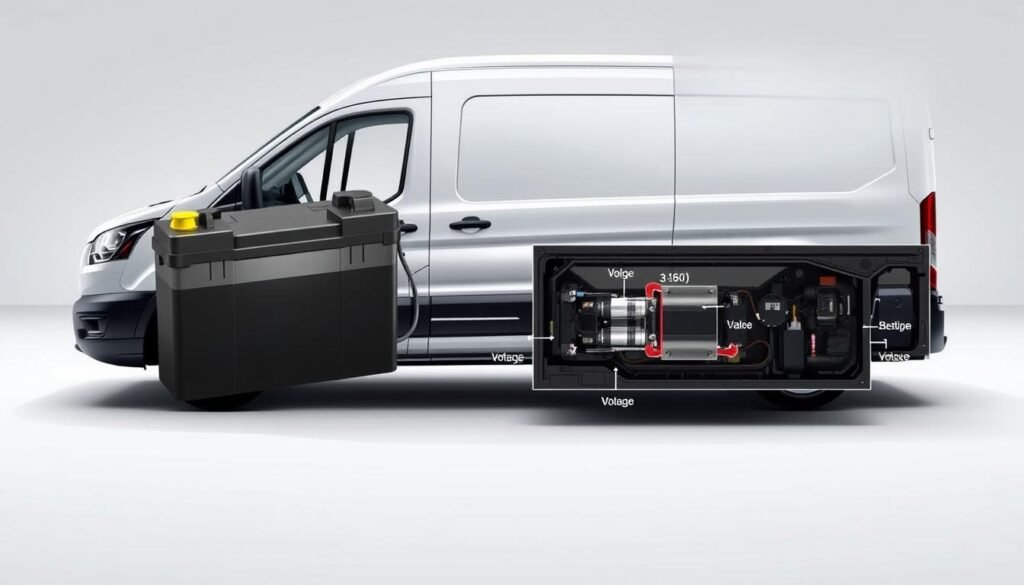
Ford Transit Battery Maintenance Best Practices
Taking care of your Ford Transit’s battery is crucial for a smooth ride. Regular checks can make your battery last longer. This saves you both time and money.
Adding simple battery health checks to your daily routine helps catch issues early. This way, you can avoid bigger problems later.
Routine Checks To Ensure Battery Health
To keep your battery in top shape, do these checks:
- Look at battery terminals for corrosion; use a baking soda and water mix to clean.
- Make sure water levels are right in batteries that aren’t sealed; fill up with distilled water if low.
- Use a multimeter for voltage tests; a good battery shows 12.6 volts or more.
- Check for any loose connections or worn-out cables.
- Do a load test on the battery to see if it holds power when in use.
Common Signs of Battery Wear
Watch out for signs that your battery might have issues:
- Headlights that get dim, especially when the car is idling.
- The engine starts slowly.
- Warning lights on the dashboard that don’t make sense.
- Bad smells or leaks near the battery area.
- Needing to jump-start often or having electrical problems while driving.
What is The Ford Transit Battery Compartment?
Knowing how the Ford Transit’s battery compartment is laid out is key to good maintenance.
This knowledge is useful for fixing battery problems or when doing upkeep. The layout ensures that different battery types fit well and work as they should.
Layout of The Battery Compartment
The battery compartment in a Ford Transit is easy to get to and safely placed. You’ll often find the battery under the driver’s seat.
But, some models might have it in the engine bay. This setup allows for different kinds of batteries, such as lead-acid and AGM batteries, to be used.
- Driver’s Seat: Common in many models, the battery compartment under the driver’s seat allows for easy access.
- Engine Bay: Some versions place the battery in the engine compartment, providing a central power source for the vehicle.
Importance of Proper Ventilation
It’s critical to understand the need for good ventilation for batteries. Especially AGM batteries need the right venting to prevent dangerous gases from building up.
Bad ventilation can cause overheating, less efficiency, and battery failure. Making sure your battery compartment is well-ventilated helps your battery last longer and keeps your Ford Transit running smoothly.
Common Issues Related To Ford Transit Battery
Knowing the issues your Ford Transit battery might face is crucial. It saves time and prevents pricey fixes.
This part covers the common signs of battery trouble you might see. Catching these symptoms of battery failure early is key to handling ford transit battery issues well.
Symptoms of Battery Failure
There are several signs that your Ford Transit’s battery may be failing. Getting to know these indicators allows for early action:
- Dim or flickering dashboard lights
- Difficulty starting the engine
- Frequent electrical system malfunctions
- Unusual battery swelling or physical damage
- Strange smells, such as rotten eggs
Troubleshooting Basic Battery Problems
If you spot any symptoms listed above, here’s how you can troubleshoot:
- Check battery connections for corrosion and ensure they are tight.
- Use a multimeter to check the battery’s voltage. Anything under 12.4 volts suggests an issue.
- Look for any cracks or leaks on the battery case as they indicate a problem.
- Make sure the charging system works as it should.
Conclusion
Knowing where your Ford Transit battery is and how to look after it matters a lot. This guide has shown you the battery location and tips to keep it healthy.
By using these steps, your Ford Transit will last longer and be more reliable. Checking the battery often and replacing it when needed help avoid surprises.
These tips will make you better at taking care of your Ford Transit’s battery. You’re now ready to keep your vehicle in top shape.
FAQs
Q: Where is the battery located in a Ford Transit?
A: In many Ford Transit models, the battery sits under the driver’s seat. However, for certain versions like the Transit-350 HD, it may be in the engine bay, trunk, or fender. Check the manufacturer’s guide for your model’s exact location.
Q: How do I access the battery if it’s under the driver’s seat?
A: First, you must remove the driver’s seat to reach the battery. Use a socket set to unscrew the bolts. Then, carefully lift the seat out. Remember to follow safety steps during this process.
Q: What tools do I need for Ford Transit battery removal?
A: You’ll need a few tools: a socket set, screwdrivers, and gloves. A battery terminal puller might also be necessary. Make sure to gather these tools before you begin.
Q: What precautions should I take before removing the battery?
A: Start by disconnecting the negative terminal to avoid electrical shorts. Don’t let your tools touch any metal. Also, ensure the vehicle is off and on a flat surface.
Q: How do I choose the right replacement battery for my Ford Transit?
A: Look for a battery that fits your Transit’s size and capacity needs. Pay attention to amp-hours and brands that are recommended. The right battery ensures your vehicle runs well.
Q: How can I maintain my Ford Transit battery’s health?
A: Keep the terminals free from corrosion and check the water level in batteries that are not sealed. Also, test the voltage to ensure it’s correct. Look for any signs like dim headlights which suggest the battery might be wearing out.
Q: What are the symptoms of a failing battery in a Ford Transit?
A: Watch out for flickering lights, trouble when starting the engine, and the battery losing charge quickly. These are signs your battery might be failing. Check the connections and test the battery if these occur.
Q: What is the importance of battery compartment ventilation?
A: Ventilation is key for the battery compartment, especially with AGM batteries. They need the right venting to work safely and well. It prevents the battery from getting too hot and potentially failing.