How To Easily Honda Transmission Fluid Change? Exclusive 9 Guide
Wondering how to change the transmission fluid in your Honda? It’s pretty simple and very important for your car’s health.
This guide gives you step-by-step instructions for a smooth ride. Changing your transmission fluid improves shifting and saves you from big repair bills later.
It’s crucial to know when and how to change your transmission fluid for your car’s care.
You’ll learn about the importance of transmission fluid, the best types to use, and when to change it. We’ll also show you how to do it yourself, so you can keep your Honda in top shape.
Let’s jump into everything you need to know about changing Honda transmission fluid. Your car will thank you for keeping it in great condition. Ready to start?
Introduction To Honda Transmission Fluid Change
Changing your Honda’s transmission fluid is crucial for keeping your car in top shape. This fluid acts as both a lubricant and coolant for the transmission system.
It helps with smooth gear changes and ensures the car runs well. But over time, this fluid loses its effectiveness, which can impact your car’s performance and life.
Getting a regular Honda transmission service can make your car last longer and avoid expensive repairs.
By learning how to change the transmission fluid, you can improve how your car drives and its overall health.
Importance of Regular Honda Transmission Service
Keeping your Honda’s transmission in good shape is key for its best performance and long life.
Regular care, especially of the transmission fluid, is crucial for ensuring your vehicle runs well for years.
Sticking to regular service helps your vehicle last longer and avoids serious issues that could get expensive to fix.
Enhancing Vehicle Longevity
Regularly checking and changing the transmission fluid removes unwanted dirt and particles. This keeps your transmission working well and helps your vehicle last longer.
A transmission in good condition means better performance and a longer lifespan for your car.
Preventing Costly Repairs
If you skip regular transmission service, your vehicle might face big mechanical problems later.
Issues caused by old or dirty fluid can get worse quickly, making repairs much more expensive than regular upkeep.
Keeping up with transmission fluid changes saves you money and protects your car investment.

Recommended Honda Transmission Fluid Type
Selecting the right Honda transmission fluid is very important for your car’s health and performance.
For new models, particularly with a CVT, it’s crucial to use CVT-specific fluid. This fluid ensures the system works smoothly, providing the right lubrication and cooling.
ENEOS ECO CVT fluid comes highly recommended. It’s compatible with many Honda models and works well with CVT systems.
Choosing the best fluid keeps your car shifting smoothly and reduces wear and tear.
In short, picking the correct Honda transmission fluid, like ENEOS ECO CVT fluid, is key. It helps your Honda run well and prevents problems from the wrong fluid type.

When To Change Honda Transmission Fluid
It’s important to know when to change your Honda’s transmission fluid. Experts say you should do it regularly. This keeps your car running smoothly and can stop big repairs later.
Manufacturer Recommendations
Usually, you should change the fluid every 25,000 miles or every 36 months. Following these suggestions keeps your car in top shape. It also stops problems caused by old fluid.
Symptoms of Deteriorating Fluid
Knowing the signs of bad fluid helps you fix problems early. Watch out for:
- Rough shifting between gears
- Slipping gears
- Unusual noises while driving
Keep an eye on these signs and change your fluid early. This can prevent big transmission issues later.

| Fluid Change Interval | Mileage | Time Frame |
|---|---|---|
| Recommended Change | 25,000 miles | 36 months |
| Signs of Fluid Deterioration | N/A | N/A |
Steps To Successfully Change Honda Transmission Fluid
Changing your Honda’s transmission fluid is key to keeping it running well. Doing it right makes the process quick and effective.
Learn the steps below to save both time and money while ensuring your vehicle runs smoothly.
Starting with Undertray Removal
Start by making sure your car is on a flat surface. Then, take off the undertray with a wrench or socket set. This is crucial to reach the parts needed for changing the fluid.
Working with Warm Fluid
It’s best to warm up the fluid before draining it. Warm fluid is thinner, so it drains out easier. Drive your car briefly to warm the fluid, then park it level.
Draining Old Fluid and Checking Drainage
Find the drain plug on the transmission pan and loosen it with a wrench. Drain the old fluid into a clean container.
While draining, look for debris or metal bits that could mean transmission problems. After everything’s drained, put the drain plug back tightly.
Refilling with New Fluid
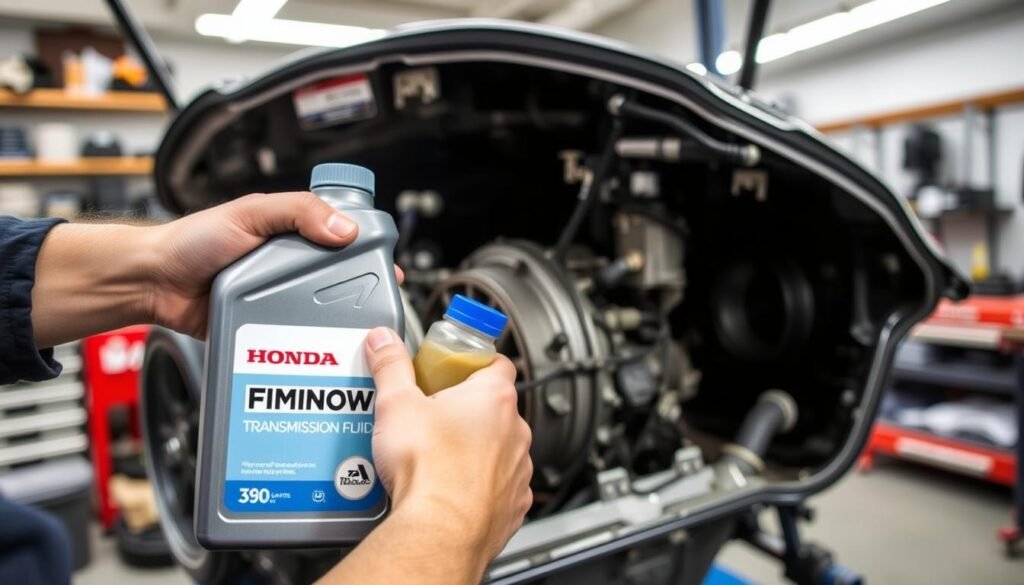
With the drain closed, it’s time to add new fluid. Pour the right fluid type and amount into the fill port using a funnel. Following your car’s fluid requirements ensures it runs best.
| Fluid Type | Capacity (Quarts) | Change Interval (Miles) |
|---|---|---|
| Honda ATF Z1 (or DW-1) | 9 | 30,000 – 60,000 |
| Honda CVT Fluid | 7.4 | 30,000 – 50,000 |
| Honda ATF+4 | 8.5 | 30,000 |
These steps will help you successfully change your Honda’s transmission fluid. By following this guide, you’ll keep your car’s transmission in great shape.
Best Honda Transmission Fluid Options
When choosing honda transmission fluid for your car, always check the manufacturer’s advice for your model.
The right fluid choice is key for your car’s performance and long life. ENEOS ECO CVT fluid is often the top pick for Honda owners due to its compatibility and effectiveness.
Choosing high-quality fluid is crucial for keeping your transmission in top shape. The best fluids not only meet Honda’s standards but also provide extra protection and efficiency.
Choosing the right transmission fluid is essential for your car’s reliability. If you want top performance, the correct fluid makes a huge difference in driving smoothly.
What is The Cost of Honda Transmission Fluid Change?
Changing your Honda’s transmission fluid involves several factors that affect the cost.
The honda transmission fluid cost varies based on whether you go to a dealership or do it yourself. Dealerships usually charge more due to labor costs and markups.
Choosing to change the fluid yourself saves on labor costs. However, consider the fluid type.
High-quality fluids cost more but improve and extend your transmission’s performance. Costs differ by location and the availability of parts.
On average, service shops charge between $100 and $200 for fluid changes. Those who do it themselves might spend $50 to $150. This depends on the fluid type and any extra supplies needed.
| Service Option | Estimated Cost | Advantages |
|---|---|---|
| Dealership Service | $150 – $250 | Professional service, warranty on work |
| DIY Fluid Change | $50 – $150 | Cost-effective, control over fluid quality |
Knowing these factors helps you choose wisely for your Honda transmission fluid change. It’s all about balancing cost with the quality of service.
How A CVT Transmission Works
A Continuously Variable Transmission (CVT) doesn’t work like normal automatic transmissions.
Instead of set gears, it smoothly changes through a range to speed up without jerks. Knowing about a CVT lets you see the smart design and hard work that make it.
The Role of Fluid in Performance
The fluid in a CVT is key for it to work right. It makes sure everything moves smoothly and shifts well. The right fluid cuts down wear and tear, making the CVT last longer.
Changing the fluid often keeps it working its best. This helps your car run well and stay reliable, showing how important upkeep is.
Honda Transmission Fluid Change Process Explained
Changing the honda transmission fluid is key to keeping your car running well and lasting longer.
It involves a few steps to make sure everything works right. After you change the fluid, don’t forget to check things are working as they should.
Detailed Steps of The Change
- Start by checking the car carefully. Look for leaks near the transmission.
- Heat up the engine to the right temperature. This makes it easier to drain the old fluid.
- Take out the drain plug to let the old fluid out. Let it pour into a proper container.
- After draining, look at the fluid for any debris or bad smells. These can mean there’s a problem with the transmission.
- Put the drain plug back in place tightly to avoid leaks.
- Fill up with new transmission fluid through the dipstick tube. Make sure to use the kind that’s right for your Honda.
Post-Service Checks and Maintenance
Once the honda transmission fluid change is done, there are important checks to do.
Turn on the engine and switch through the gears for a few minutes. This moves the new fluid around.
Use the dipstick to check the fluid level; add more if you need to. Lastly, make sure there are no leaks, especially around where you worked.
Conclusion
Changing the transmission fluid regularly is key to keeping your Honda in top shape. It helps you understand how important fluid is for your car’s performance.
Following the car maker’s advice and watching for wear signs can avoid expensive fixes and keep your ride smooth.
Learning how to change the transmission fluid puts you in control of your car’s condition. This smart move boosts your Honda’s life and its performance.
Making informed choices about upkeep leads to a dependable car that lasts longer. So, always remember to check on your Honda’s transmission fluid schedule.
Paying close attention to this part of car care is more than just routine. It’s a vital way to protect your investment and drive worry-free.
FAQs
Q: What is Honda transmission fluid change?
A: Changing Honda transmission fluid means taking out the old fluid and putting in new fluid. This keeps the transmission working well and lasting longer.
Q: How often should I change my Honda transmission fluid?
A: You should change the fluid every 25,000 miles or every 36 months for best results. But, the exact time can change depending on your car model.
Q: What type of transmission fluid do I need for my Honda?
A: Newer Honda cars mostly need CVT fluid, like ENEOS ECO CVT fluid, which fits what the manufacturer requires. Make sure you check your owner’s manual to know the right fluid type.
Q: What are the signs that my Honda transmission fluid needs changing?
A: If your car shifts rough, gears slip, or you hear odd noises when driving, your transmission fluid may need changing. These signs show it’s time to switch the fluid.
Q: Can I change Honda transmission fluid myself?
A: Yes, you can change the transmission fluid yourself if you follow the right steps and have the tools. Doing it yourself can save you money over going to a dealership.
Q: What is the cost of a Honda transmission fluid change?
A: The cost can vary. It depends on if you do it yourself or go to a dealership, what fluid you use, and where you live. Dealerships usually charge more than doing it yourself.
Q: Why is regular Honda transmission service important?
A: Keeping up with your Honda’s transmission service is key. It helps your car last longer, prevents breakdowns, and makes sure your ride is smooth. This is done by keeping the transmission fluid clean and full.
Q: What should I check after changing my Honda transmission fluid?
A: After the change, look for any leaks and make sure there’s enough new fluid. Then, take your car through its gears to help the new fluid spread properly.