Are Honda Cvt Transmissions Reliable?
Are Honda CVTs Transmissions reliable known to be in general. Honda’s engineering has made their CVT technology very durable.
But, like all things, some problems have come up, mainly in models from 2014. We’ll explore Honda CVT reliability in detail, looking at both good and bad points.
You’ll learn how these transmissions work and how they stand up against others. We’ll also cover common issues, maintenance advice, and tips to keep your Honda CVT running well.
Wat is Honda CVT Technology?
Honda’s CVT tech is a big leap in car engineering. It aims to boost both performance and efficiency.
Using a continuously variable transmission (CVT), it’s different from regular automatic transmissions. The CVT changes smoothly, giving the best power based on how you drive.
What is A Continuously Variable Transmission (CVT)?
A CVT makes cars work better without fixed gears’ limits. Usual transmissions have set gears that can slow acceleration and use more fuel.
But, a CVT changes the gear ratio all the time. This means cars drive smoother and use less gas. Honda uses this technology to make their cars even better.
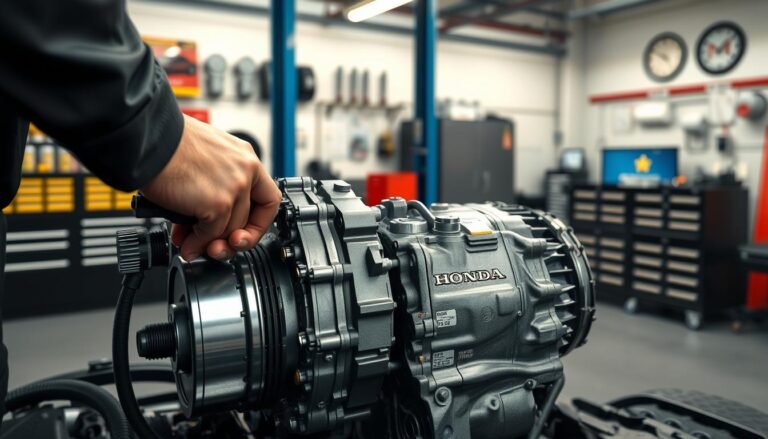
The mechanics behind Honda’s CVT system
Honda’s CVT has a smart setup with pulleys and a belt. This lets the engine stay at the best RPMs, no matter the speed.
It means cars speed up better and use less fuel. With Honda’s CVT, you won’t feel the gears changing.
| Feature | Honda CVT Technology | Traditional Automatic Transmission |
|---|---|---|
| Gear Ratio Range | Infinite | Fixed Stepped |
| Driving Experience | Smooth and Linear | Variable, with noticeable shifts |
| Fuel Efficiency | Higher | Moderate |
| Maintenance | Less Frequent, specialized | More Frequent, standard |
Are Honda CVT Transmissions Reliable?
Honda CVT transmissions have a mixed reputation. Several Honda owners are happy with their choices, like the Civic, CR-V, and Accord.
They note the reliable performance across different models. However, this can change based on the year made and model specifics.
General reputation For reliability
Honda is known for its reliable vehicles. Many people believe Honda CVT transmissions are more reliable compared to other brands.
Despite some early models having issues, Honda has improved their CVT designs. Now, newer models tend to run smoothly without big problems.
Real-world performance in popular models
The performance of Honda’s CVT varies by model. For instance, the 2014 Civic had some challenges. Drivers mentioned transmission failures and performance drops.
On the other hand, newer Hondas are showing better reliability and efficiency. It helps to watch for any system warnings to keep the transmission in good shape.

Common Honda CVT Transmission Problems
Honda is known for reliable cars, but some users have had issues with Honda’s CVT.
These problems include overheating, leaking fluids, and jerky movements during braking. It’s important to spot these signs early to avoid bigger issues.
Identifying symptoms of CVT issues
Spotting transmission troubles early can save you both time and money. The common signs of CVT issues are:
- Overheating during extended operation
- Fluid leaks noticeable under the vehicle
- Bucking or jerking when accelerating or braking
- Unusual noises, such as grinding or whining sounds
Case studies of reported issues
Early models like the 2014 Honda Civic have had their share of problems. Drivers reported engine issues that needed big repairs.
One major sign was jerking after hard braking, pointing to CVT troubles. For some, replacing the CVT during the warranty became necessary.
Knowing these past issues is vital for anyone thinking about buying a Honda.

Honda CVT Transmission Maintenance Tips
Keeping your Honda CVT in top shape is key for the best performance and long life. It’s important to change the fluid regularly, as suggested.
Doing this stops problems that could hurt the transmission and your car’s performance. Following these steps makes for smoother rides and could make your CVT last longer.
Importance of regular fluid changes
The transmission fluid is essential—it works as a lubricant and coolant for your CVT. Changing the fluid often stops dirt buildup that can reduce how well it works.
If you change the fluid every 25,000 to 40,000 miles, you’re protecting the inside parts. This can keep you from facing costly repairs later.
Recommended maintenance intervals
It’s crucial to follow maintenance schedules to keep your Honda CVT reliable. Honda’s Maintenance Minder system tells you when to change your fluid based on how you drive.
Don’t ignore its alerts. Sticking to these schedules prevents overheating and issues with how your car runs, making it more dependable.

Comparing Honda CVT Reliability with Other Brands
When looking at Honda CVTs, we compare them to other big names. It’s important to see how Honda’s transmissions do next to Nissan’s.
We also look at other brands to understand market trends and what’s considered reliable.
How Honda CVTs stack up against Nissan CVTs?
Honda CVTs are known to be more reliable than Nissan’s, especially the JATCO CVTs. Nissan often faces issues like early failures and uneven performance.
Honda, on the other hand, uses its own systems and has learned a lot from real-world use.
This experience has helped Honda make its CVT technology even better. This has earned Honda a good reputation among car experts.
Other competitors in The market
Subaru and Toyota also use CVT technology, but face different reliability issues. Subaru’s CVTs have their own problems, while Toyota’s are generally good but not without complaints.
Knowing about these different experiences can help you pick the right car transmission. With the focus on Honda CVT reliability, you can make a smarter choice.

The Lifespan of Honda CVT Transmissions
Honda CVT transmissions are known for their durability, playing a crucial role in their long life. With the right care, a Honda CVT can last 200,000 miles or more.
The lifespan can be influenced by how you drive, keeping up with service, and checking the transmission regularly.
Taking good care of your transmission can make it perform better for longer.
Average lifespan and factors influencing durability
Many Honda CVT owners find that regular maintenance helps their transmissions last longer.
Doing things like changing the fluid and checking the transmission can prevent future problems.
Here are some important factors that affect how long these transmissions last:
| Factor | Impact on Lifespan |
|---|---|
| Driving Habits | Aggressive driving can lead to premature wear. |
| Maintenance Frequency | Regular fluid changes lead to improved performance. |
| Environmental Conditions | Extreme temperatures can affect transmission efficiency. |
| Usage Type | City driving may cause more strain compared to highway driving. |
Success stories of high-mileage Honda CVTs
There are many high-mileage Honda CVTs that show how durable they can be. Owners often share their stories online, with some cars going over 300,000 miles without major transmission issues.
These success stories prove Honda’s ability to make transmissions that last a long time. They also show the importance of taking care of your car with regular checks.
Honda CVT Transmission Performance
Honda’s continuously variable transmission (CVT) brings a smooth ride while boosting fuel efficiency.
This makes Honda stand out in their class, giving lots of perks to those who drive them.
Smooth driving experience and fuel efficiency
The Honda CVT technology makes gear changes feel seamless, raising comfort levels when you drive.
As you speed up, there’s a smooth boost instead of harsh shifts seen in other autos. This smoothness helps save fuel because the engine stays at the right speed, showing off Honda’s great fuel efficiency.
Real-world user testimonials on driving performance
Honda drivers really like how their cars perform thanks to the CVT. Folks driving models like the Accord and CR-V talk about how well the power kicks in.
They also love how it handles different roads while using less gas. This blend of power and economy makes daily trips better and the car more dependable.
| Model | Fuel Efficiency (City) | Fuel Efficiency (Highway) | User Satisfaction Rating |
|---|---|---|---|
| Honda Accord | 30 MPG | 38 MPG | 4.7/5 |
| Honda CR-V | 28 MPG | 34 MPG | 4.6/5 |
| Honda Civic | 31 MPG | 40 MPG | 4.8/5 |
Innovations in Honda CVT Technology
Honda leads in CVT technology with big improvements. They focus on making cars perform better and last longer.
Honda’s work makes sure drivers have the best experience on the road.
Recent advancements in CVT design
New techniques and materials have improved CVT designs. These changes make cars run better and use less fuel.
Important improvements include:
- Improved belt design for smoother transitions between gear ratios.
- Upgraded hydraulic systems that facilitate quicker response times.
- Advanced cooling systems to prolong transmission life.
Future trends and developments
In the future, CVTs will likely focus on hybrid cars. This change will help the environment.
Adding electric drivetrains will make cars more powerful and efficient. As cars evolve, Honda will keep leading with new ideas.
Conclusion
Honda CVT transmissions are known for being reliable, especially the newer models. These have benefited from major tech improvements.
While the first versions had some troubles, Honda worked hard to make them better. Now, they meet drivers’ needs well.
If you’re thinking about getting a Honda with a CVT, regular upkeep is key. Also, keeping up with CVT tech updates helps a lot.
Doing these things will make your experience owning the car better and keep it running smoothly.
This overview should help you trust Honda’s CVT transmissions more. Remember, following the right care plan and driving sensibly are important. They help your car last longer and perform its best.
FAQs
Q: Are Honda CVT transmissions reliable?
A: Yes, Honda CVT transmissions are known for their reliability, especially when they’re well taken care of. They have improved a lot thanks to new designs.
Q: What are some common Honda CVT transmission problems?
A: Overheating, leaks, and jerky motions while stopping are some issues. The 2014 Honda Civic had early transmission failures.
Q: How often should I perform maintenance on my Honda CVT?
A: Change the transmission fluid every 25,000 to 40,000 miles for best performance. Honda’s Maintenance Minder system will help you keep track of this.
Q: What is the average lifespan of a Honda CVT transmission?
A: With good care, a Honda CVT can last over 200,000 miles. Some have even gone beyond 300,000 miles without major problems.
Q: How do Honda CVTs compare to other brands?
A: Honda CVTs are more reliable than Nissan’s JATCO CVTs, which fail more often. Subaru and Toyota also have their own reliability challenges.
Q: What factors influence the durability and lifespan of Honda CVTs?
A: Driving habits, keeping up with maintenance, and getting regular check-ups are key. Ignoring these can lead to issues and a shorter lifespan.
Q: Do Honda CVTs provide a good driving experience?
A: Yes, Honda CVTs offer a smooth ride and better gas mileage. Many drivers love how effortlessly they switch gears and respond to power.
Q: What innovations are being made in Honda CVT technology?
A: New improvements aim at better efficiency and performance. They’re designing it to respond better and last longer without as much wear and tear.