

What Is Chevy 5.3 Cam Sensor Location? Better 7 Guide
Curious about where the Chevy 5.3 cam sensor is? It’s key for your engine’s smooth running. It helps with timing and boosts performance.
Knowing where the camshaft is, is important for fixing car problems. In this guide, we will show you how to find the camshaft position sensor fast.
This will help keep your Chevy 5.3 running well. Knowing where the cam sensor is placed is really important.
It makes taking care of your car easier and helps you handle problems quickly. We will give you tips to spot it easily in your engine area.
This makes fixing your car less scary. If you like to fix your car yourself or are just learning, this guide is for you.
We’ll help you quickly find the camshaft position sensor in your Chevy 5.3. Let’s learn how to find this key part and make your car run better!
What is The Camshaft Position Sensor?
The camshaft position sensor (CPS) is key in your car’s engine system. It checks the camshaft’s position, which helps keep the engine’s timing right.
This lets the engine control unit (ECU) set fuel injection and ignition timing well. Without a good CPS, your Chevy 5.3 might not run smoothly and could pollute more.
For the Chevy 5.3, the CPS is important. It gives the ECU the data it needs to make the engine run better.
This means better fuel use and less pollution. But, if the CPS doesn’t work right, your car might have big issues.
To wrap up, a working camshaft position sensor is crucial for your Chevy 5.3. It helps your car run well, making your drive smooth and efficient.
Symptoms of A Failing Cam Sensor
It’s important to know when your cam sensor is not working right. Symptoms of a chevy 5.3 cam sensor failing can vary.
These signs could mean your engine’s health is at risk. Spotting these early helps avoid bigger problems later.
Common Signs To Look Out For
- Erratic engine behavior, such as stumbling or misfiring.
- Poor acceleration and overall sluggishness.
- Frequent engine stalling during operation.
- Illumination of the check engine light on your dashboard.
- Inconsistent fuel economy due to improper fuel injection timing.
Noticing these signs could mean your camshaft sensor needs checking. Getting them checked early can prevent costly repairs and engine trouble.
Learning Error Codes
Using an OBD-II scanner is key for figuring out camshaft position sensor problems. A
code like P0340 points to a specific issue with the sensor. Knowing chevy 5.3 error codes can help you fix problems fast.
Below is a table outlining some common diagnostic trouble codes for cam sensor issues:
| Error Code | Description |
|---|---|
| P0340 | Camshaft Position Sensor A Circuit Malfunction |
| P0341 | Camshaft Position Sensor A Circuit Range/Performance Problem |
| P0342 | Camshaft Position Sensor A Circuit Low Input |
| P0343 | Camshaft Position Sensor A Circuit High Input |
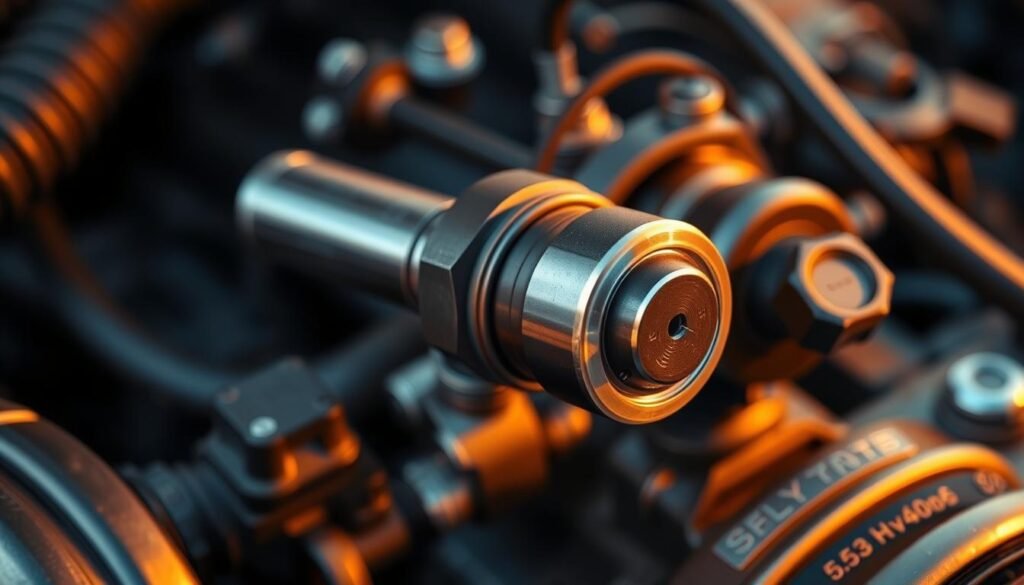
Importance of Camshaft Position Sensor in Chevy 5.3
The camshaft position sensor plays a key role in how the Chevy 5.3 engine works. It gives the engine control unit (ECU) vital camshaft position details.
This information is critical for setting the right fuel injection and ignition timing, boosting engine power. If the CPS isn’t working right, your vehicle might run poorly or waste fuel.
The camshaft sensor is super important for a smooth and efficient engine. It’s a big part of keeping your car in top shape.
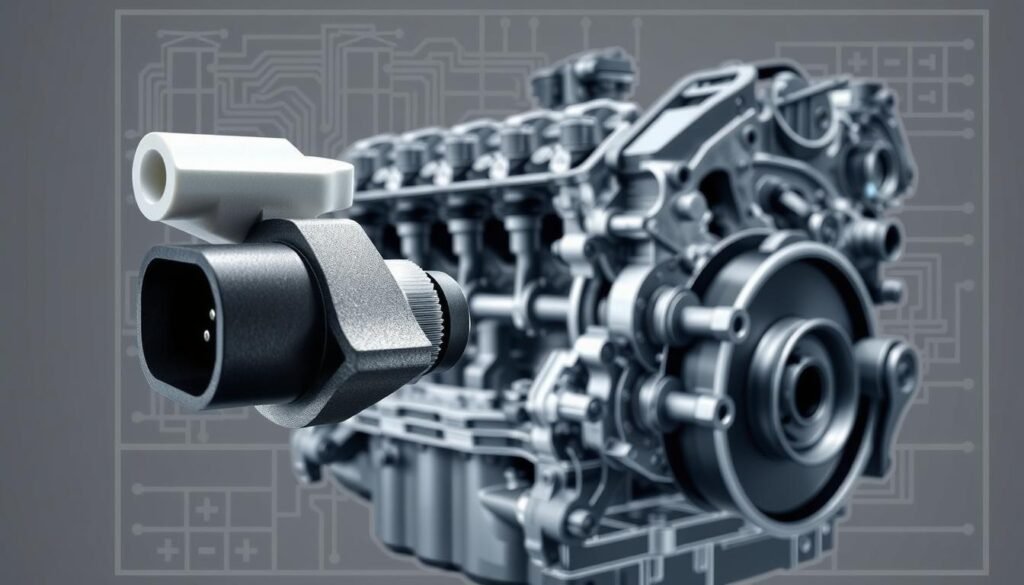
Knowing why the CPS matters lets you spot issues early. Quick action can stop bigger problems. This ensures your Chevy 5.3 keeps running well and lasts longer.
| Aspect | Details |
|---|---|
| Function | Provides the ECU with camshaft position data |
| Impact on Performance | Optimizes fuel injection and ignition timing |
| Consequences of Failure | Performance issues, inefficient fuel use, potential engine failure |
| Maintenance | Regular checks recommended to avoid issues |
How To Locate The Chevy 5.3 Cam Sensor Location
To find the cam sensor on a Chevy 5.3 engine, you need to know about the engine. The camshaft position sensor is critical for the engine to work right.
It is usually on the engine’s top block, behind the intake manifold. Learning about the Chevy 5.3 engine’s design will help you spot it easily.
Visual Identification Tips
To spot the cam sensor, here are some hints:
- Examine the area behind the intake manifold, where the sensor resides.
- Look for a cylindrical component with an electrical connector attached.
- Refer to illustrations in service manuals for guidance on how to locate the cam sensor on Chevy 5.3 models.
- Watch online videos that demonstrate the visual identification cam sensor process for clarity.

Chevy Silverado Camshaft Position Sensor Location
The location of the camshaft position sensor in a Chevy Silverado is key for the engine to work right.
It’s found on the engine block’s left side, just behind the intake manifold. Knowing where parts are is important for taking care of your vehicle and fixing parts.
Looking at the Silverado 5.3 engine diagram can really help find this sensor. The diagram shows you where everything is located.
It makes it easier to see how the sensor fits with other important parts of the engine.
To find the sensor, follow these steps:
- Make sure the engine is cool and the car is parked safely.
- Take off any parts that are in the way of getting to the sensor.
- Use the engine diagram to help spot the sensor’s exact spot.
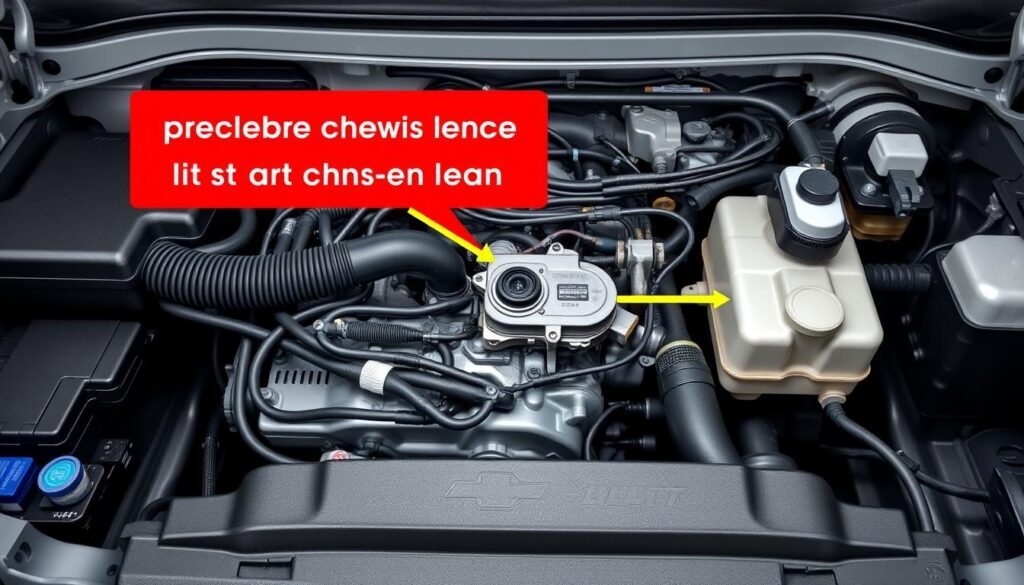
Accessing The 5.3 Camshaft Position Sensor Location
To work on your Chevy 5.3’s camshaft position sensor, you need a good plan and careful execution.
You might have to take out several engine parts, including the intake manifold. Knowing how to reach the cam sensor makes maintenance easier and helps your engine last longer.
Step-by-Step Access Guide
- Start by disconnecting the battery to ensure safety during the procedure.
- Remove any components obstructing your access to the cam sensor, such as air intake hoses and brackets.
- Using a ratchet, unbolt the intake manifold carefully, following your car’s service manual for torque specifications.
- Once the manifold is detached, locate the cam sensor, which is typically situated near the front of the engine.
- Disconnect the electrical connector from the cam sensor for safe removal.
- Check the area for any debris or oil that might affect performance before reinstallation.
Following these steps will make accessing your 5.3 engine’s camshaft sensor more efficient. Keep everything you remove in order, so putting it back together is easy.
Getting used to these steps will boost your confidence in handling your Chevy 5.3 engine maintenance.
Chevy 5.3 Cam Sensor Replacement Process
Replacing the camshaft position sensor in a Chevy 5.3 is simple if done right. First, gather all necessary tools, like a socket set, torque wrench, and cleaners.
Then, safely disconnect the battery to avoid electrical problems during installation. Find the current camshaft position sensor.
Remove any parts blocking the sensor. After that, unplug the electrical connector and take out the old sensor.
It’s important to clean where the sensor goes to make sure the new one fits right. To put in the new sensor, place it in its spot and tighten it as the maker suggests.
Connect the electrical connector well. Check everything once more to make sure all is good before hooking the battery back up.
By following these directions, you can install the cam sensor smoothly. Doing it right improves the engine’s work and trustworthiness.
Cam Sensor Replacement Cost Considerations
Thinking about replacing your cam sensor means knowing the cost. Prices change due to different labor rates and parts availability.
On average, expect to pay between $50 and $300. This price covers both the sensor and the installation.
If you own a Chevy 5.3, it’s important to understand the costs involved. Prices can vary depending on where you live, so get quotes from several places.
By comparing, you can find the best price and make sure you’re not overpaying.
| Service Type | Average Cost | Additional Notes |
|---|---|---|
| Parts Only | $30 – $150 | Prices vary by supplier and availability. |
| Labor Only | $20 – $150 | Rates depend on the shop’s hourly rate. |
| Full Service | $50 – $300 | Includes parts, labor, and possible diagnostics. |
Remember, the final cost could include diagnostics. Knowing all possible expenses helps you plan better. This way, you’ll be ready for any costs related to fixing your Chevy.
Troubleshooting Cam Sensor Issues
When you start fixing cam sensor problems, begin by checking for error codes. This helps find potential issues with the camshaft sensor.
Then, examine the sensor and its connections for wear or damage. Checking for things like corrosion or bad installation is key.
Doing this makes finding and fixing cam sensor problems easier and faster.
Diagnosing Problems Effectively
For a detailed check-up, follow these steps:
- Use an OBD-II scanner to find diagnostic trouble codes (DTCs).
- Look at the wiring to the sensor for damage or loose connections.
- Use a multimeter to test the cam sensor’s voltage output and see if it works right.
- Check if the engine’s issues match the trouble codes you found.
- Make sure the cam sensor is put in the right spot and lined up correctly.
Being careful in how you diagnose chevy 5.3 cam sensor problems helps a lot. It means you’re more likely to find and fix the real issue.
Knowing these steps lets you make smart choices about fixing or replacing parts.
| Step | Description | Outcome |
|---|---|---|
| 1 | Connect OBD-II scanner | Retrieve codes indicating potential faults |
| 2 | Inspect wiring harness | Identify damage or disconnections |
| 3 | Test voltage output | Ensure sensor functionality |
| 4 | Monitor engine performance | Recognize any correlations with the DTCs |
| 5 | Check sensor alignment | Confirm proper installation and positioning |
Conclusion
Learning your Chevy cam sensor is key to keeping your car running smoothly. The camshaft position sensor is crucial for your engine.
Knowing where it is, how it works, and what signs show it might be failing is important. Regular checks and maintenance are essential.
This way, you can fix small issues before they turn into bigger, expensive problems.
Keeping an eye on how your car runs and the shape of its parts will make your driving experience better. It also keeps your Chevy ready to go on the road.
Adding these Chevy care tips to your routine will really help. Learn about the camshaft position sensor and be ready for any problems that might pop up.
By being careful, you can keep your Chevy running well. This will protect your car investment for many years.
FAQs
Q: Where is the camshaft position sensor located on a Chevy 5.3 engine?
A: You will find the camshaft position sensor at the engine’s top, right behind the intake manifold on a Chevy 5.3.
Q: What are the common symptoms of a failing cam sensor in Chevy 5.3?
A: Signs of a failing cam sensor include strange engine behavior and weak acceleration. You might also see the engine stall, the check engine light turn on, and fuel economy get worse.
Q: How can I troubleshoot cam sensor issues on my Chevy 5.3?
A: Begin with an OBD-II scanner to look up any diagnostic codes. Check the sensor and its hookup for any leaks, damage, or incorrect setup.
Q: What is the typical cost for replacing the camshaft position sensor?
A: Replacing the sensor might cost you between to 0. The final price can vary, depending on where you get the work done, if the part is in stock, and if you need extra services.
Q: What does the error code P0340 indicate?
A: Error code P0340 points out there’s something wrong with the camshaft position sensor. This means it may either need fixing or replacement.
Q: What components need to be removed to access the cam sensor?
A: To reach the cam sensor, you’ll likely have to take off the intake manifold and some hoses. Remember to disconnect the battery first.
Q: How can I visually identify the camshaft position sensor on my Chevy 5.3?
A: Look at service manuals, online forums, or watch videos for a clear picture of where the sensor sits on the engine.
Q: What are the steps for replacing the camshaft position sensor?
A: Take the old sensor out and clean where it was mounted. Put in the new sensor, making sure it’s screwed in right. Finally, double-check that the electrical connections are tight.


