Ford Escape Oil Type Better 7 Tips For Choices & Specs
What kind of oil does your Ford Escape need? Knowing the right Ford Escape oil type for your Ford Escape is key. It keeps the engine healthy and improves your drive.
Choosing the correct oil isn’t just about recommendations, it makes your drive better and your engine last longer.
We’ll cover everything about the best oil for your Ford Escape. This includes the recommended oil, different oil types, and why each is important for your model and how you drive.
You’ll find out how to know when it’s oil change time, how to check oil capacity, and why oil viscosity matters.
Staying up-to-date on these topics means you can look after your Ford Escape well. Let’s get into the crucial info.
This will help you choose the best oil, ensuring your car’s top performance and long life.
What is The Importance of Oil For Your Ford Escape?
The engine oil in your Ford Escape is crucial for the car’s performance and its long life.
This fluid acts as the engine’s lifeblood, lubricating the moving parts and cutting down on friction.
An engine that’s well-lubricated runs smoother, which boosts its efficiency and longevity. Oil’s role is huge. It cools the engine by spreading out the heat it makes while running.
Changing your Ford Escape’s engine oil regularly means the oil stays fresh. This avoids dirt build-up that can hurt your engine, leading to expensive fixes later.
Knowing how oil works in your engine helps you make smart care choices. Being aware of when to change your oil, picking the right oil, and keeping an eye on oil levels keeps your engine in top shape for your Ford Escape’s life.
What is The Recommended Oil For Ford Escape?
For Ford Escape, Ford advises using 5W-20 oil for most models. This oil ensures good mileage and protects the engine.
If you live where it’s warm, 5W-30 oil can help your car perform better and protect it in high heat.
Following the maker’s oil advice is key, especially if your car is still under warranty. Using the right oil keeps your engine running smoothly and prevents damage.
Ford Escape Oil Type: Best Options Explained
It’s important to choose the right oil for your Ford Escape. You can pick between conventional oil and synthetic oil.
Conventional oil costs less, which is great for regular use. Synthetic oil, however, offers better engine protection and lets you go longer between oil changes.
Royal Purple is a brand noted for its engine-cleaning agents. These agents help keep your engine running well for a longer time. This means your Ford Escape could work better and last longer.
Let’s look at how the two oil types differ:
| Oil Type | Cost | Protection Level | Change Interval |
|---|---|---|---|
| Conventional Oil | Lower | Basic | 3,000 – 5,000 miles |
| Synthetic Oil | Higher | Superior | 7,500 – 15,000 miles |
Picking the best oil for your ford escape is key. The right oil shields your engine and boosts your car’s performance. It ensures that your Ford Escape stays in top shape for years.
Choosing The Right Ford Escape Engine Oil
When picking the perfect Ford Escape engine oil, think about how and where you drive.
If you’re often stuck in traffic or driving in very hot or cold weather, synthetic oil is your best bet. It works better under those conditions.
But, if you don’t drive much and the weather is usually mild, regular oil should be fine for you. It’s important to weigh the pros and cons of each oil type.
Your Ford Escape’s age and how many miles it has also matter in your choice.
| Type of Oil | Advantages | Disadvantages |
|---|---|---|
| Synthetic Oil | Better engine protection, higher temperature tolerance, longer intervals between changes | Higher cost upfront |
| Conventional Oil | Lower cost, suitable for mild driving conditions | Less effective in extreme conditions, shorter change intervals |
Look at the oil selection guide and follow the car maker’s advice to choose wisely. This ensures your Ford Escape keeps running smoothly and stays in top shape over time.
Ford Escape Oil Viscosity: What You Need To Know
It’s key to understand ford escape oil viscosity for top engine function. The ratings, like 5W-20, show oil flow at different temps.
The first number is key for cold starts, and the second for when it’s warm. This info helps keep your engine running well in all kinds of driving.
Ford Escapes usually need 5W-20 or 5W-30 oil. These work in many climates, making them good choices. In hot places, 10W-30 or 10W-40 oils are also safe.
Choosing the right oil for your area and how you drive can boost your engine’s efficiency and life.
| Oil Viscosity Rating | Temperature Range | Best Used In |
|---|---|---|
| 5W-20 | -20°F to 100°F | Cold to moderate climates |
| 5W-30 | -20°F to 100°F | Moderate climates |
| 10W-30 | 0°F to 100°F | Warmer climates |
| 10W-40 | 0°F to 100°F | Hot climates |
Best Oil For Ford Escape: Synthetic vs. Conventional
Choosing the right oil for your Ford Escape is key to keeping it running well. Synthetic oil is great for engine performance and protection.
It reduces wear and boosts fuel efficiency, perfect for tough driving conditions. Yet, conventional oil is still chosen by many because it’s cheaper.
It doesn’t protect as well as synthetic oil but is fine for regular driving. For those watching their budget and driving in normal conditions, it’s a good pick.
To figure out the best oil for your Ford Escape, look at the factors below:
| Feature | Synthetic Oil | Conventional Oil |
|---|---|---|
| Engine Protection | Superior | Good |
| Fuel Efficiency | Better | Adequate |
| Operating Temperature Range | Wide | Narrow |
| Cost | Higher | Lower |
| Change Interval | Longer | Shorter |
Knowing the difference between synthetic and conventional oil helps you choose the best for your Ford Escape.
Learning their benefits lets you pick the right oil for your driving style and needs.
Ford Escape Oil Change Intervals: When To Change
Keeping your engine healthy requires regular Ford Escape oil changes. Experts recommend changing your oil every 5,000 to 7,500 miles.
This depends on the oil type and how you drive. If you use synthetic oil, you might wait up to 10,000 miles between changes.
Keeping an eye on your engine’s performance is key. Checking the oil can show if its color or thickness changes.
This means you might need to change it sooner than planned. By watching closely, you make sure the oil gets changed at the best time for your Ford Escape.
Ford Escape Oil Capacity: Essential Specs
Knowing how much oil your Ford Escape needs is key to keeping your engine running well. Most Ford Escapes need about 5 quarts of oil with a filter change.
The exact amount can change based on the engine and year of your car. For the best engine health, check your owner’s manual for the right oil amount.
This manual gives you the specific details for your car model. It’s a crucial guide for all Ford Escape owners.
| Model Year | Engine Type | Oil Capacity (Quarts) |
|---|---|---|
| 2013-2019 | 2.5L I4 | 5 |
| 2013-2019 | 1.6L EcoBoost I4 | 5.7 |
| 2020-2023 | 2.5L I4 Hybrid | 4.5 |
| 2020-2023 | 2.0L EcoBoost I4 | 5.7 |
Staying on top of your Ford Escape’s oil needs helps it last longer and perform better. Make sure to follow these guidelines for a smooth ride.
Using Ford Escape Oil Filter: A Guide
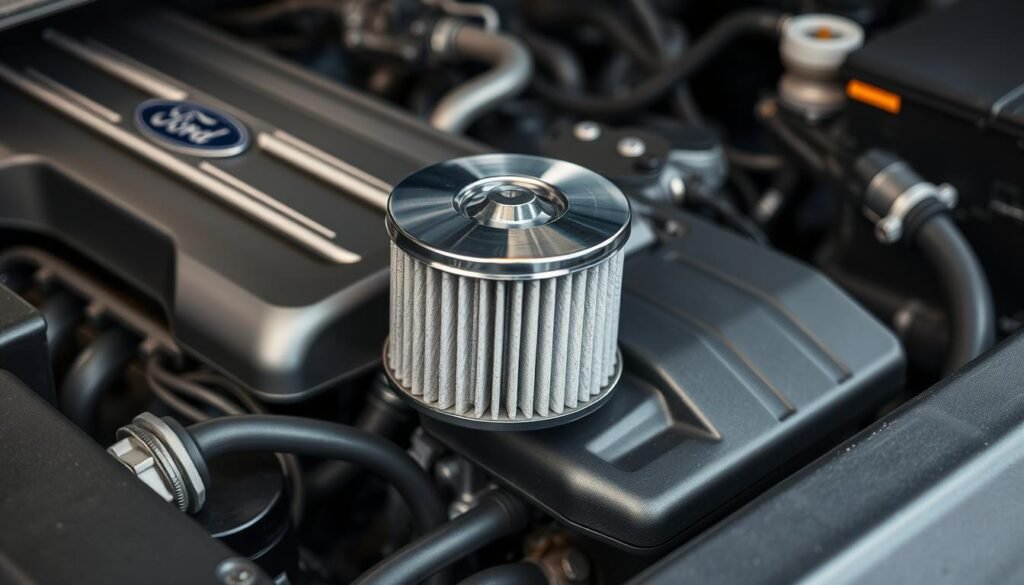
The oil filter helps keep oil clean in your Ford Escape’s engine. Clean oil is key for the engine to work well and last long.
It’s crucial to replace the oil filter when you change the oil. This stops dirt and harmful stuff from getting into the engine.
Here are some tips for top results:
- Choose high-quality filters that meet Ford standards. This ensures reliability and compatibility with your vehicle.
- Replace the ford escape oil filter every time you change the oil. This practice helps maintain clean oil and protects your engine.
- Follow the manufacturer’s recommendations in the oil filter guide for proper installation and maintenance.
Following these steps will help keep your Ford Escape’s engine running smoothly.
Ford Escape Oil Life Monitor: How It Works
The Ford Escape’s oil life monitor (OLM) is a key tool for keeping your engine running well. It looks at how you drive, how the engine performs, and oil quality.
This way, it tells you the best time for an oil change. When it’s time for new oil, the OLM uses lots of data it has gathered.
It thinks about different driving habits, like short trips or long drives, and weather conditions. Paying attention to the OLM can make your Ford Escape work better and last longer.
Taking care of the oil life monitor avoids engine problems. This lets your car run smoothly.

Detecting Ford Escape Oil Leaks: Signs and Solutions
Finding oil leaks in your Ford Escape is crucial for its upkeep. If not fixed on time, oil leaks can seriously harm your engine.
Spotting these leaks early saves you both time and money on repairs. Look for brown or black spots where you park, which usually means there’s an oil leak.
Also, oily residue under your car is a warning sign. Keep an eye on your oil level, too. A quick drop in oil level often points to a leak.
Ignoring these signals can cause your engine to break down or lead to expensive repairs.
Check your car regularly, especially before long drives. This keeps your Ford Escape running smoothly and efficiently.
Below is a table featuring common oil leak signs and recommended actions:
| Oil Leak Signs | Recommended Actions |
|---|---|
| Brown or Black Puddles | Inspect the oil filter and oil pan for loose seals or damages. |
| Oily Underside of Vehicle | Clean the area and monitor for further leaks; consider professional examination. |
| Low Oil Level | Refill oil as needed and identify the source of the leak. |
Stay alert and tackle oil leak signs right away. Doing so will keep your Ford Escape in top shape for years.
Conclusion
Learning the right oil for your Ford Escape is key to your car’s performance. Choosing the right oil and regular change intervals can make your engine last longer.
This keeps it working smoothly and efficiently. Learning about different oil types and their viscosities helps you make smart choices.
This keeps your Ford Escape in top shape. It also saves you money on big repairs and makes driving more enjoyable.
Regular upkeep is crucial for your car. Checking the oil type and changing the oil regularly are easy steps. They ensure your Ford Escape stays reliable for a long time.
FAQs
Q: What type of oil should I use for my Ford Escape?
A: Ford suggests 5W-20 oil for many Ford Escape models. Yet, 5W-30 is better for hotter climates.
Q: How often should I change the oil in my Ford Escape?
A: Change the oil every 5,000 to 7,500 miles if you use conventional oil. But synthetic oil can last up to 10,000 miles.
Q: What is the oil capacity for a Ford Escape?
A: Most models need about 5 quarts of oil with a filter change. Always check your owner’s manual for your engine and model specifics.
Q: Should I use synthetic or conventional oil in my Ford Escape?
A: Synthetic oil is best for tough conditions or hot weather. But conventional oil works fine for light driving and is less expensive.
Q: How does the Ford Escape oil life monitor work?
A: The Oil Life Monitor watches how you drive and the environment. It tells you when to change the oil to keep your engine running great.
Q: What are the signs of an oil leak in a Ford Escape?
A: Look out for dark spots on your driveway and oily parts under the car. If your oil level drops quickly, you might have a leak.
Q: How can I tell what viscosity oil is best for my Ford Escape?
A: Your owner’s manual will guide you on viscosity. Generally, 5W-20 works for most conditions, and 5W-30 is suited to warmer weather.
Q: How do I choose the right oil filter for my Ford Escape?
A: Choose quality oil filters that match Ford’s requirements. Always change the filter with your oil for the best engine performance.