Ford Escape Oil Change Better 9 Guide & Tips
Wondering how to change the oil in your Ford Escape? Regular oil changes keep your engine running well. They are key to your car’s longevity.
This guide gives you all you need for a Ford Escape oil change. You’ll discover why sticking to an oil change schedule matters.
You’ll also learn how to do it yourself or when to seek professional help. In this guide, we discuss what oil to use and how much your model needs.
We’ll also tell you how often to change your oil. You’ll get step-by-step instructions on getting the right tools, lifting your car safely, draining old oil, changing the oil filter, and adding fresh oil.
By the end, you’ll be ready to handle your car’s maintenance. You’ll also know what to expect at the mechanic.
Why Regular Oil Changes are Essential For Your Ford Escape?
Engine oil is the lifeblood of your Ford Escape. It lubricates parts, cutting down on friction. This helps keep your engine at the right temperature.
Regular oil changes are crucial for your car’s maintenance. They stop sludge from building up. This keeps engine parts unclogged and your engine running smoothly.
The Importance of Engine Oil
Engine oil does more than just lubricate. It also cleans your engine. It moves away dirt and debris, keeping your engine clean and efficient.
Changing your oil regularly boosts your car’s performance and lifespan. It’s a simple step that makes a big difference.
Consequences of Neglecting Oil Changes
Skipping oil changes is risky. Old oil can cause overheating and wear out engine parts faster. This can lead to your engine breaking down.
Getting your oil changed on time is key. It keeps your car running well and maintains its value.
What’s Your Ford Escape’s Oil Requirements
Engine oil is key for your Ford Escape’s best performance and long life. Knowing which oil to use is crucial. It helps to know the recommended oil types and how much your car needs.
Types of Oil Recommended For Ford Escape
Different engine models need different oils. Synthetic blends or fully synthetic oils, especially 0W-20 or 5W-20, are preferred.
They protect your engine and help save on gas, keeping your Ford Escape running well.
Oil Capacity Specifications For Different Models
It’s important to know how much oil your car takes. For example, 2.5L Ford Escape engines usually need about 5.7 quarts of oil.
Always check your owner’s manual for the exact amount for your engine type.
Ford Escape Oil Change Interval
Knowing when to change the oil in your Ford Escape is key to keeping its engine healthy.
Car makers give clear guidelines on when to do so. This ensures your vehicle runs well and lasts longer.
Manufacturer Recommendations
Car makers often recommend changing the oil every 5,000 to 10,000 miles. The exact timing can change depending on the kind of oil and how you drive.
Synthetic oil might let you go longer between changes. Conventional oil usually means you’ll need changes more often.
Factors Influencing Oil Change Frequency
Some things can make you need oil changes more often for your Ford Escape:
- Short drives that keep the engine from warming up fully.
- Very hot or cold weather.
- Driving with heavy loads or towing, which can stress the engine.
Checking the oil’s quality with a dipstick tells you when it’s time for a change. This helps your engine stay in top shape.
| Oil Type | Recommended Interval (Miles) |
|---|---|
| Synthetic Oil | 7,500 – 10,000 |
| Conventional Oil | 5,000 – 7,500 |
| Severe Conditions | 3,000 – 5,000 |
Step-by-Step Guide For A Ford Escape Oil Change
Getting ready for a DIY Ford Escape oil change? You’ll need the proper tools and some prep. This guide will help you get everything together and prepare your car for the job.
Gathering Required Tools and Materials
Start your oil change by getting all the necessary tools. Here is what you’ll need:
- 15mm socket wrench
- Oil filter wrench
- Oil catch pan
- Funnel
- Gloves
- New oil filter
- New engine oil
Preparing Your Vehicle For an Oil Change
Good preparation is essential for a smooth oil change. Follow these steps to get your car ready:
- Park your Ford Escape on a flat area.
- Make sure the engine is cool.
- Engage the parking brake to stop it from moving.
- Take off the oil cap before lifting the car. This helps the oil flow out better.
With these steps, you’re ready to tackle the DIY Ford Escape oil change confidently and efficiently.

Dismantling The Splash Shield and Accessing The Oil Drain
Changing the oil in your Ford Escape requires a few steps. First, you need to get to the oil drain. This means taking off the splash shield.
It’s a cover that keeps the parts under your car safe. Make sure you’re following safety rules to keep you and your car safe.
How To Safely Lift Your Ford Escape
Lifting your Ford Escape can be done with ramps or a hydraulic jack. To keep it safe, use jack stands too.
This makes sure your car stays put while you work under it. You get to the oil drain safely this way.
Place the jack under the spots your manual shows. Make sure your car is on level ground. And don’t forget to set the parking brake for extra safety.
Removing The Splash Shield
With your Ford Escape lifted, start removing the splash shield to see the oil drain. You’ll need a 7mm socket to take off some plastic bolts.
Be gentle with the shield to avoid breaking it. With the shield off, you can easily get to the oil drain for a hassle-free oil change.
How To Drain Old Oil from Your Ford Escape
Draining old oil is key to a good oil change. It’s important to know the right steps. This prevents expensive errors. First, find the drain plug. Then follow safety steps to handle the oil right.
Finding the Drain Plug
Start by locating the drain plug at the oil pan’s lowest point. Removing it usually needs a 15mm socket. Make sure your Ford Escape is on a flat surface for even draining.
Best Practices For Draining Oil Safely
Before you drain the oil, make sure you’re safe. Wear gloves and goggles to keep your skin and eyes safe, since the oil could be hot. Here’s what to do:
- Put an oil catch pan under the drain plug to catch the oil.
- Open your Ford Escape’s hood before you loosen the drain plug. This lets air into the oil pan, helping oil drain faster.
- Use a ratchet and 15mm socket to carefully loosen and take out the drain plug. Let the old oil pour into the catch pan.
- After all the oil has drained, put the drain plug back and tighten it well.
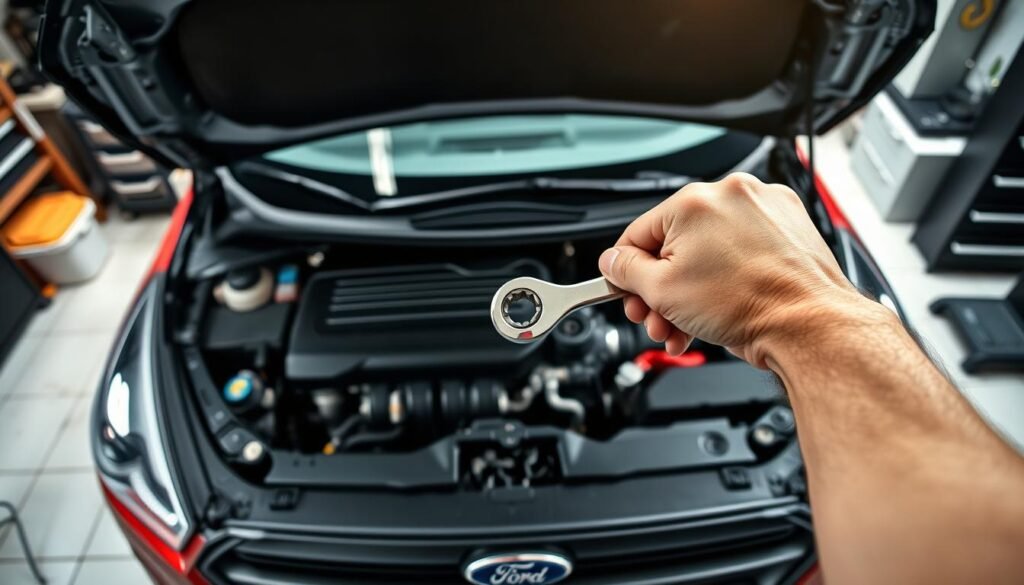
Following these tips ensures a safe and smooth oil draining process. This prepares your car for the next steps of the oil change.
Replacing The Oil Filter: An Important Step
Replacing your Ford Escape’s oil filter is key to keeping the engine running smoothly.
Choose the right oil filter, like the Motorcraft FL910S, for the best results. A correct installation ensures no oil leaks and keeps the oil pressure right.
Choosing The Right Oil Filter
For your Ford Escape, picking the right oil filter matters. The Motorcraft FL910S is a good choice, or find one just as good. The right filter stops dirt and junk from hurting your engine.
Installation Tips For New Oil Filters
Follow these steps when installing a new oil filter:
- Put a little oil on the gasket of the new filter. It makes a better seal and removal easier later on.
- Put the filter in its place and twist by hand. Don’t make it too tight to avoid gasket damage.
- After putting it in, check for leaks. A quick check can prevent engine problems down the road.
Filling Your Ford Escape with New Oil
After draining the old oil and replacing the oil filter, it’s time to add new oil. This step is crucial for your engine’s performance and life. Keep the following tips in mind.
How Much Oil to Use
Most Ford Escape models need about 5.7 quarts of oil. Always check your owner’s manual first to confirm. The right amount ensures good lubrication and efficiency.
Checking Oil Levels Accurately
Start pouring the new oil with a funnel to avoid spills. Check the dipstick often to watch the oil level. Don’t overfill. After adding the oil, wait a bit for it to settle.
Then check the dipstick again. It should be within the suggested range. This is a key step for your engine’s health and your car’s performance.

By following these steps, you’ll fill your Ford Escape with oil the right way. Plus, it shows how important it is to regularly check oil levels. This helps keep your car running smoothly.
Ford Escape Oil Change Procedure Recap
Changing the oil in your Ford Escape has some key steps to follow. These steps are vital for your car to work well. Remember to do these things after changing the oil.
Final Steps After Oil Change
Once you’ve put in new oil and a filter, you should:
- Start the engine and let it run for about 30 seconds to allow the new oil to circulate.
- Check for any leaks around the oil filter and drain plug.
- Shut off the engine and wait a moment before checking the oil level with the dipstick. Add oil if necessary.
- Reattach the splash shield securely and lower the vehicle carefully.
Resetting The Oil Change Light
Don’t forget to reset the oil change light. Ford Escape models may have different reset methods. Check your owner’s manual for the correct way for your model.
You can usually reset it through vehicle settings or button presses. This makes sure the reminder is updated for your latest oil change.
DIY Ford Escape Oil Change vs. Professional Service
Choosing between a DIY Ford Escape oil change and professional service can seem tough.
Each has unique benefits that fit different needs and likes. It’s important to know about both to choose wisely for your car’s upkeep.
Benefits of DIY Oil Change
Doing an oil change yourself has many perks, like:
- Cost Savings: You save money by not paying a professional.
- Satisfaction: It feels great to do the job on your own.
- Knowledge Gain: You learn more about your car, which is always good.
- Custom Schedule: You decide when to change the oil, fitting it into your life.
When To Seek Professional Help
DIY has its advantages, but sometimes you need to turn to pros:
- Lack of Tools: Not having the right tools can be a big barrier.
- Inexperience: If you’re not confident about doing it right, seek help.
- Time Constraints: If you’re too busy, professional service is a better choice.
- Complex Issues: For serious car problems, you definitely need a professional’s eye.

Cost Considerations Tor Your Ford Escape Oil Change
Getting to know the costs of an oil change for your Ford Escape matters. It helps you decide between a garage service or doing it yourself.
Each choice impacts your wallet differently due to various factors.
Average Cost of Oil Change at A Garage
At a garage, an oil change costs between $40 and $100. Your location and selected services make prices vary.
Garages offer deals with extra services, so check what’s included to avoid surprises.
Comparative Costs of DIY Oil Changes
A DIY oil change costs about $20 to $50. This includes oil and a new filter. Going DIY saves you money and keeps your car maintained well.
| Service Type | Estimated Cost |
|---|---|
| Average Cost at Garage | $40 – $100 |
| DIY Oil Change Costs | $20 – $50 |
Conclusion
Getting regular oil changes is key to keeping your Ford Escape running well. This guide gives you all the steps and tips you need.
It prepares you to either do it yourself or know when to get professional help. Sticking to an oil change schedule boosts your car’s performance and life span.
Your ride will be smoother and you’ll avoid big repair costs later. Clean oil keeps your engine running smoothly, making your drives better.
In the end, you can do your own oil changes or choose pros. What’s important is staying on top of your Ford Escape’s upkeep.
This saves you money and stress in the long run. Keep this guide close for when you look after your car.
FAQs
Q: How often should I change the oil in my Ford Escape?
A: Most experts suggest changing the oil every 5,000 to 10,000 miles. This depends on how you drive and the oil type.
Q: What type of oil should I use for my Ford Escape?
A: For your Ford Escape, use synthetic blend or fully synthetic oil. They should generally be 0W-20 or 5W-20.
Q: How do I check the oil level in my Ford Escape?
A: First, take out the dipstick and clean it off. Put it back in fully, then pull it out to see the oil level.
Q: Can I do a DIY oil change in my Ford Escape?
A: Yes, you can change your oil yourself if you have the right tools. Just make sure to be safe.
Q: What tools do I need for a Ford Escape oil change?
A: You’ll need a 15mm socket wrench, an oil filter wrench, a catch pan, a funnel, and gloves.
Q: How much does an oil change cost at a garage for my Ford Escape?
A: A professional oil change costs about to 0. The price varies by location and the services included.
Q: What happens if I neglect oil changes?
A: Not changing your oil can cause big engine problems. These include overheating, extra wear, sludge build-up, and total engine failure.
Q: How can I reset the oil change light after an oil change?
A: To reset the oil change light, use your vehicle settings. Or, follow button instructions in your owner’s manual.