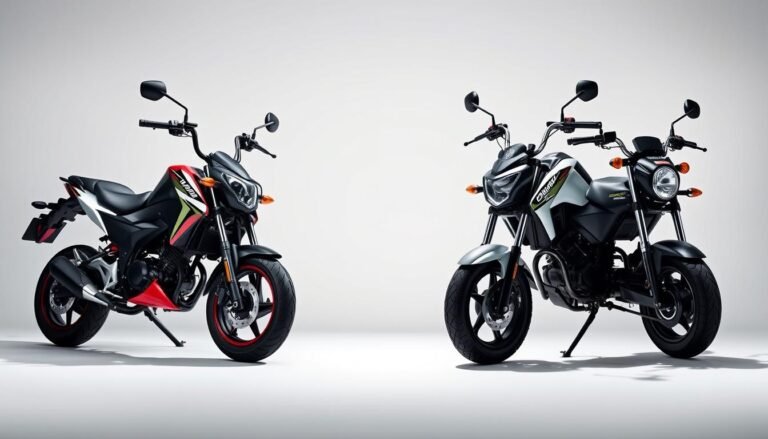
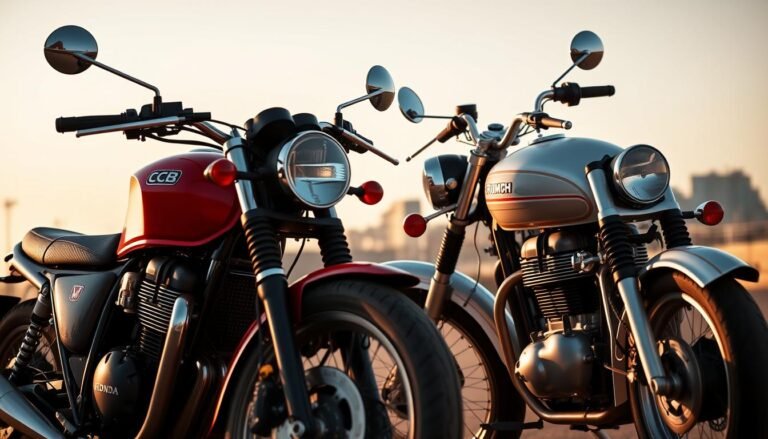
Honda Cbr vs Yamaha R1: Better Speed & Performance Duel
Are you ready for the thrill of Japanese sport bikes? We’re comparing the Honda CBR vs Yamaha R1. Both are iconic, with top-notch performance.
The Honda CBR is all about agility and ease. Meanwhile, the Yamaha R1 boasts advanced tech and power.
We’ll dive into their histories, designs, and the speeds they can reach. You’ll learn about their power, performance, and handling.
This will help you understand what makes these bikes stand out. Whether you’re an experienced rider or new, we’ve got the information you need on these legendary models.
Let’s get into the technical details and performance of the Honda CBR and Yamaha R1. Find out which bike tops the charts in the sport bike world!
Introduction To Japanese Sport Bikes
Japanese sport bikes are at the top when it comes to motorcycle speed and new ideas. Honda and Yamaha are well-known brands.
They mix great engineering with a history of racing. The Honda CBR and Yamaha R1 are examples. They lead in speed and agility, exciting bike fans.
The Honda CBR appeared in 1983. It quickly became known for being reliable and fast in races.
This bike started improvements that made it better, winning the hearts of riders at every skill level. Then in 1998, Yamaha launched the R1.
It changed sport bike design with new ideas. It wasn’t just good-looking. It also had the latest tech, dominating on the race track.
Comparing sport bikes shows how unique they are. They’re fast, handle well, and have top-notch technology.
The Honda CBR and Yamaha R1 promise an exciting ride with strong engines and advanced suspension.
This focus on performance and design is why race fans love Japanese sport bikes.
Honda CBR: A Rich History in Racing
The Honda CBR series started an amazing racing story in 1983 with the CBR400F. This event was key for Honda, starting the CBR saga that keeps growing.
The CBR600RR and CBR1000RR helped shape sport bikes with top-notch technology and speed.
The CBR1000RR, the top model, changed how sport bikes perform on tracks. It offers great aerodynamics and tech for the best speed and control.
Honda’s CBR race history shows a drive for the top, with wins in many races showing what these bikes can do.
If you race or just ride every day, a Honda bike brings fun and dependability. The CBR line mixes tradition and new ideas, giving riders great performance whenever they ride.
Yamaha R1: Innovative Design & Development
The Yamaha R1 has been a leader in motorcycle craftsmanship since 1998. It shows off incredible engineering and a sharp eye for detail.
Its compact engine design helps it deliver power efficiently and stay light, perfect for fast rides.
The bike has a Deltabox frame that greatly improves how it handles and stays steady. This design, along with a top-notch suspension, gives riders precise control.
This is true both on race tracks and city streets. Aerodynamics play a big role in the Yamaha R series.
The bikes have special parts that cut down on drag, so they can go faster but still look great.
Yamaha blends style and function in these designs, attracting fans who want both top speed and a sleek look.
Power Comparison: Honda CBR vs Yamaha R1
The fight between the Honda CBR1000RR and Yamaha R1 is all about power. The Honda CBR1000RR pushes 214 horsepower, beating the Yamaha R1’s 200 horsepower.
This shows the CBR1000RR aims for higher performance on roads and racetracks. When we look at torque, both bikes show off their engineering prowess.
The CBR1000RR has strong mid-range torque for quick speed boosts. On the other hand, the R1 has its own impressive torque, keeping up the competition.
This difference is key to understanding how each bike changes the way you ride.
The following table summarizes the power and torque characteristics of both motorcycles:
| Model | Horsepower | Torque |
|---|---|---|
| Honda CBR1000RR | 214 hp | 113 Nm |
| Yamaha R1 | 200 hp | 112 Nm |
In this horsepower comparison, it’s clear both bikes perform amazingly. But the CBR1000RR’s higher horsepower gives it an edge in raw power.
You’ll notice this power difference when taking curves fast or speeding down straights.
Speed & Top Performance Metrics
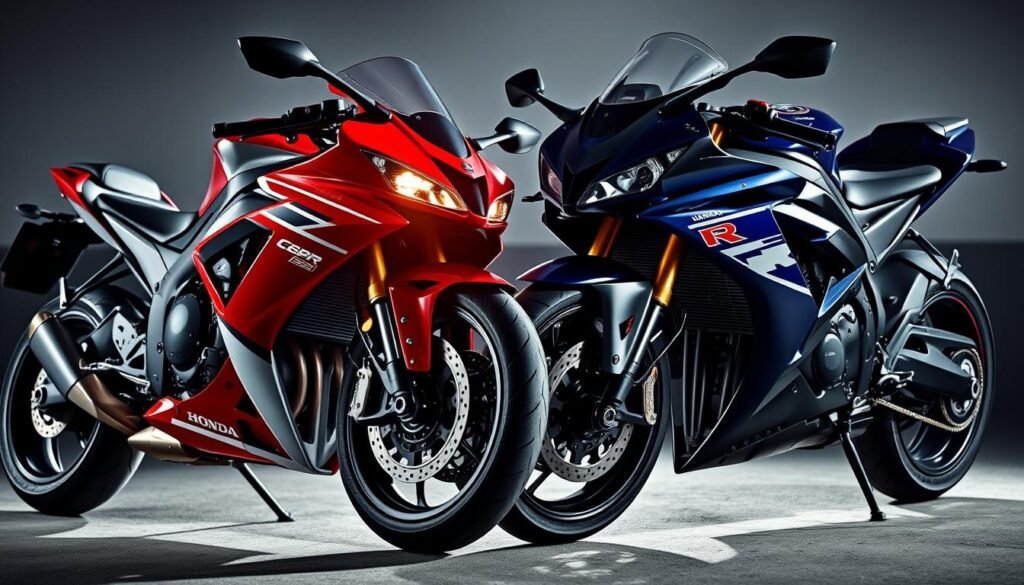
The Honda CBR and Yamaha R1 are top picks for speed, each offering thrilling capabilities. Both can reach speeds up to 186 MPH.
This showcases their strength on tracks and roads. The Honda CBR hits 0-60 MPH in 3.1 seconds. The Yamaha R1 does it in about 3.0 seconds.
This small difference shows the bikes are closely matched. It also highlights that the rider’s skill is key in speed tests. Braking distance is key for top performance.
The CBR can stop from 60 MPH in around 30 feet. The R1 stops in 28 feet. This shows both have excellent stopping power, but the R1 may perform slightly better in quick stops.
Below is a detailed comparison of the Honda CBR and Yamaha R1’s performance specs:
| Performance Metric | Honda CBR | Yamaha R1 |
|---|---|---|
| Top Speed | 186 MPH | 186 MPH |
| 0-60 MPH Acceleration | 3.1 seconds | 3.0 seconds |
| Braking Distance (60-0 MPH) | 30 feet | 28 feet |
Chassis and Suspension Analysis
The chassis and suspension study shows key differences in the Honda CBR and Yamaha R1 performance.
These motorcycles handle changing ride conditions differently. The Honda CBR uses advanced Showa suspension to improve handling and smoothness.
This setup connects riders better to the bike, boosting control in various situations. The Yamaha R1, however, uses KYB forks tuned for race conditions.
This gives great stability at high speeds, making it great for racers. The R1 blends suspension tech and bike design well, offering excellent feedback and control.
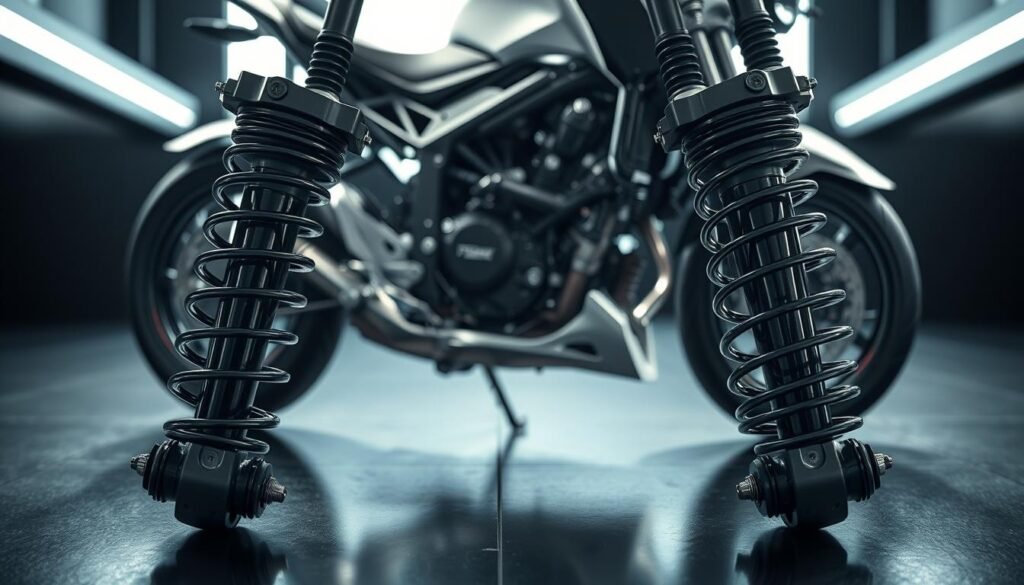
It’s clear that both brands focus heavily on suspension development. The progress in Honda CBR and Yamaha R1 suspensions shows their dedication to better riding experiences.
Knowing these differences helps riders pick a bike that suits their riding style and needs.
Handling Characteristics: CBR vs R1
The Honda CBR and Yamaha R1 both offer unique rides for different preferences. The CBR is stable and friendly for city riding.
It helps riders feel confident in tight spots and traffic. The Yamaha R1, however, is about thrilling performance in corners.
Its design is sharp, appealing to those who love an exciting ride. It makes carving through turns a blast for skilled riders.
To better understand these differences, consider the following aspects of both models:
- CBR: Excellent stability, ideal for urban riding, forgiving nature.
- R1: Aggressive maneuverability, superb cornering, heightened responsiveness.
Think about your riding style and where you plan to ride when choosing between Honda and Yamaha. Each bike has unique benefits for your preferences and the places you’ll ride.
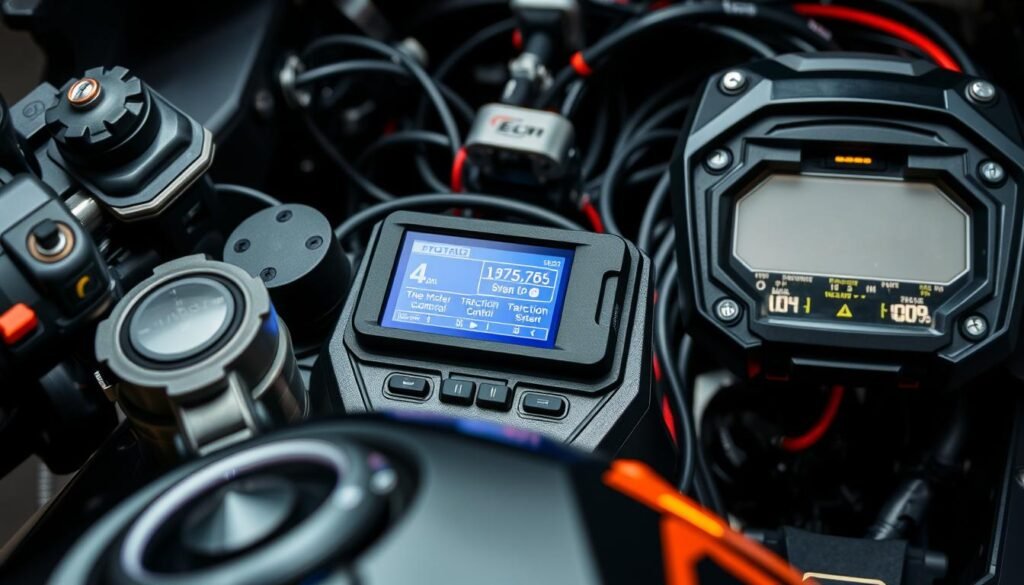
Honda CBR vs Yamaha R1: Electronic Aids and Technology
Motorcycle technology is always getting better. Electronic aids are now key to making bikes both safer and more powerful.
The Yamaha R1 is ahead because it started using ride-by-wire tech first. This lets riders control the throttle more accurately and manage power better.
It helps the bike adjust to different ways of riding. The Honda CBR also uses a lot of tech to improve the ride.
It has traction control, which stops the back wheel from slipping when you speed up. This is super important for safe, fast riding.
It also lets riders change the engine’s power to match their riding style, like riding smoothly on the highway or racing on a track.
Both bikes use modern tech to be their best. Here’s how their technology compares:
| Feature | Yamaha R1 | Honda CBR |
|---|---|---|
| Ride-by-Wire System | Yes | No, uses a traditional throttle system |
| Traction Control | Yes, adjustable settings | Yes, with multiple levels |
| Power Modes | Yes, multiple settings | Yes, rider-selectable modes |
| Anti-lock Braking System (ABS) | Advanced ABS | Standard ABS |
Design Aesthetics: Beauty of The Bikes
The look of motorcycles is crucial for buyers, particularly when comparing the Honda CBR and Yamaha R1.
Each has unique design elements that meet different riders’ tastes. The Honda CBR’s design is about sleek lines and sharp angles.
This look helps the bike move smoothly through the air. It also stands out with bright colors and special graphics.
The Yamaha R1, however, goes for a bolder, edgier look. It uses modern materials to appear cutting-edge.
The sharp lights and detailed panels show its racing roots. Choosing between these bikes is all about what style you prefer.
The CBR gives that classic race feel, while the R1 adds a modern twist. Both showcase their creators’ focus on performance and style.
Market Pricing and Affordability
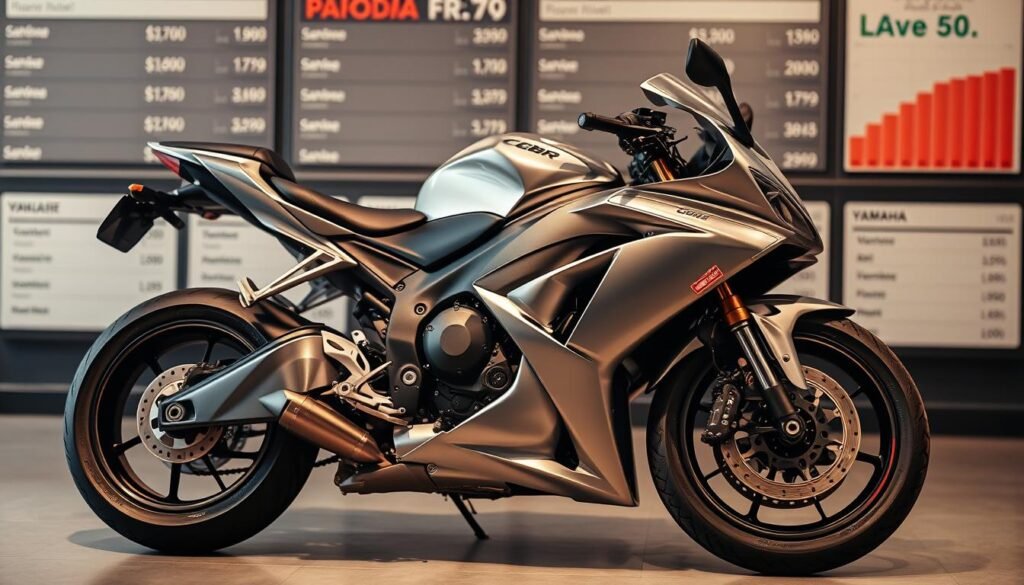
Choosing between a Honda CBR and Yamaha R1 involves looking at prices closely. The R1 is pricier, with an MSRP of about $17,999.
On the other hand, the CBR1000RR costs less, with a price tag of around $16,599. This difference in price can influence your choice, especially if you’re looking at the cost of sport bikes.
Both motorcycles perform well, but their costs make us think about their value. It’s key to compare their features and performance.
This helps figure out which bike gives you more bang for your buck. Here’s a pricing comparison with other bikes in the market:
| Model | MSRP | Engine Type | Horsepower |
|---|---|---|---|
| Honda CBR1000RR | $16,599 | 999cc inline-4 | 189 hp |
| Yamaha R1 | $17,999 | 998cc inline-4 | 200 hp |
| Kawasaki ZX-10R | $16,999 | 998cc inline-4 | 200 hp |
| Suzuki GSX-R1000 | $16,999 | 999cc inline-4 | 199 hp |
Looking at the table, you can see where the CBR and R1 fit among other top models.
Comparing their prices and specs makes it easier to decide what to buy. It helps you understand what “affordable” really means for sport bikes.
Aftermarket Support and Customization Options
For many motorcycle fans, making their bikes special is more than just looks. It’s about better performance and showing their own style on the road.
The big world of motorcycle aftermarket parts offers endless ways to customize. This is true for both Honda and Yamaha bikes.
Riders can find all sorts of upgrades, like new exhaust systems, air filters, and suspension kits. These changes let riders get the most out of their motorcycles.
Many parts out there can make a bike handle better, increase its power, or just make it look cooler.
Each change can have a big impact. It can show off the rider’s unique style while making the bike more comfortable and functional.
Here’s a look at popular parts and how they make a difference:
| Part Type | Honda CBR | Yamaha R1 |
|---|---|---|
| Exhaust Systems | Increase horsepower and sound | Improves performance and reduces weight |
| Suspension Kits | Enhances cornering stability | Offers superior ride quality |
| Air Filters | Increases airflow for better acceleration | Boosts engine efficiency dramatically |
| Aesthetic Enhancements | Custom fairings and decals | Unique bodywork and graphic kits |
With so many customization options, any Honda or Yamaha owner can improve their bike’s looks and performance.
Each change not only enhances the motorcycle’s function but also its rider’s uniqueness.
Dive into the world of aftermarket parts. Make your sport bike a one-of-a-kind creation that matches your riding style.
Conclusion
In this comparison of the Honda CBR and Yamaha R1, we looked at their history, design, and performance.
Both bikes show different ways to achieve speed, manage turns, and advance in technology.
The Honda CBR is known for its racing wins, while the Yamaha R1 leads in modern engineering.
Choosing between the Honda CBR and Yamaha R1 depends on what you like. Think about if you want speed on the track, smooth riding on curvy roads, or a sleek look.
After thinking about power, design, and cost, what matters is how a bike matches your riding style and what you look for in a motorcycle.
To end, the competition between the Honda CBR and Yamaha R1 highlights the skill and love for speed that these brands bring.
Think about what features matter to you. This will help you pick the motorcycle that fits what you want and love.
FAQs
Q: What are the key differences in performance between the Honda CBR and Yamaha R1?
A: The Honda CBR1000RR has 214 horsepower, whereas the Yamaha R1 has 200 horsepower. Both reach speeds near 186 MPH. This shows they are closely matched in performance.
Q: Which motorcycle is better for corner handling?
A: The Yamaha R1 excels in aggressive cornering. The Honda CBR is more stable and easier to handle. This makes them fit for various riders’ preferences.
Q: What advanced technologies do the Honda CBR and Yamaha R1 feature?
A: Both bikes are rich in tech. The Yamaha R1 uses ride-by-wire technology for better performance. The Honda has electronics like traction control and power modes, enhancing the ride.
Q: How do the prices of the CBR and R1 compare?
A: The Yamaha R1’s price is about ,999, and the Honda CBR1000RR’s price is near ,599. This makes the CBR a cheaper choice.
Q: Can I customize my Honda CBR or Yamaha R1?
A: Yes. Both motorcycles offer a vast selection of aftermarket parts. Riders can boost performance and customize looks to show their unique style.
Q: What is the historical significance of the Honda CBR?
A: The CBR started in 1983 with the CBR400F. It has a rich racing heritage that has shaped its development. Honda’s focus on engineering excellence is evident in their sport bikes.
Q: How do the design aesthetics of the Honda CBR and Yamaha R1 differ?
A: The Honda CBR boasts a sleek, aggressive design. The Yamaha R1, on the other hand, has a sharp, modern look. Both appeal to those who love performance-driven designs.