Why Is Honda Pilot Not Starting? Troubleshooting Better 7 Tips
If your Honda Pilot not starting, you’re in good company. Many owners have faced this issue. We’ll guide you through fixing common starting problems.
This includes battery issues, starter motor failures, and fuel system troubles. You’ll be ready to solve these problems.
First, evaluate the situation with your Honda Pilot. Check the ignition system and the battery’s health first. They’re often the reason your car won’t start.
Next, examine the fuel system and electrical parts if needed. Each step will bring you closer to solving the starting issues.
We’ll give you handy tips and clear instructions to get your car running again.
Keep reading to find detailed solutions for your Honda Pilot’s starting problems. Let’s dive in and get your car working again!
Introduction To Honda Pilot Starting Issues
Learning why your Honda Pilot won’t start can make things less stressful. This annoyance is often due to battery problems, a faulty starter motor, or fuel system issues.
Knowing these common starting problems helps you figure things out faster or talk to your mechanic better.
If you run into engine trouble with your Honda Pilot, start by checking everything carefully. Each problem has its own signs, making it important to know what to look for.
This knowledge lets you tackle issues more effectively, keeping you informed and ahead in keeping your car running smoothly.
Common Causes For Honda Pilot Not Starting
If your Honda Pilot won’t start, you might be facing a few common issues. These problems can make diagnosing a bit easier.
A big troublemaker could be the battery. If it’s dead or not working right, your car may try to crank but won’t start, which is very frustrating.
Another issue might be the starter motor. If it’s broken, your car won’t crank at all, leaving you stuck. Then there’s the fuel system.
For example, a blocked fuel filter can stop fuel from flowing right, and a bad fuel pump means not enough fuel gets to the engine.
Also, the ignition system is key. If it has problems, your engine won’t start, no matter what else is working.
Knowing these issues helps you figure out what’s wrong more quickly. This way, you can fix your Honda Pilot’s starting problems faster.
| Cause | Description |
|---|---|
| Battery Issues | A dead or failing battery may cause cranking without starting. |
| Starter Motor Failure | A faulty starter prevents the vehicle from cranking altogether. |
| Fuel System Malfunctions | Clogged fuel filters or failing fuel pumps disrupt fuel delivery. |
| Ignition System Problems | Faults in the ignition can prevent the engine from firing up. |
Battery-Related Problems
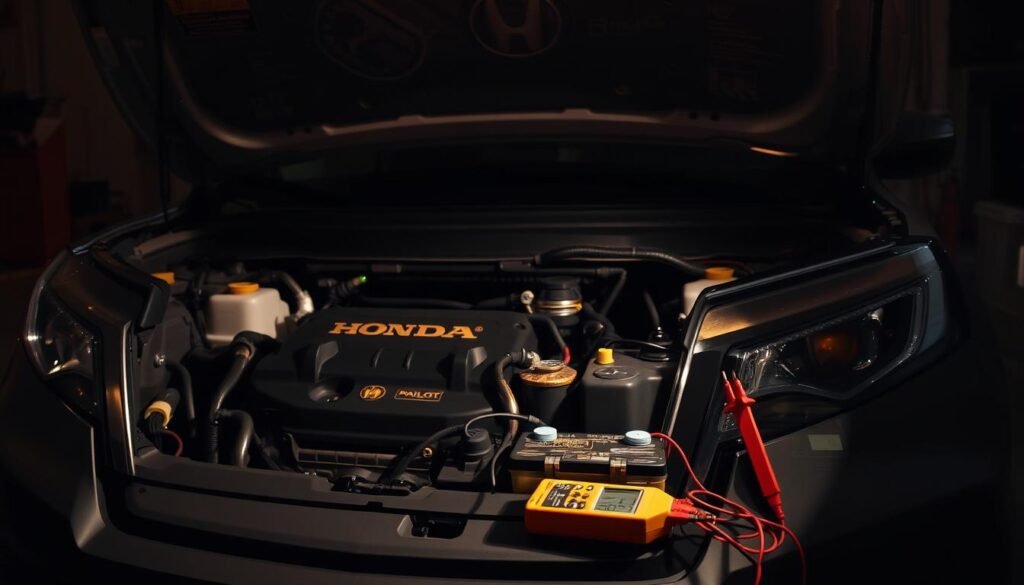
Starting issues in your Honda Pilot often point to the battery first. If the vehicle tries to start but fails, it’s smart to check the battery.
You want to see a charge of at least 12.4 volts with a multimeter. A lower reading means the battery might need recharging or replacing.
Checking Battery Charge and Health
Follow these steps to check the battery:
- Turn off all electronic accessories in your Honda Pilot.
- Use a multimeter to check the voltage. It should be 12.4 volts or more.
- If the voltage is low, try to jump-start the engine.
- If the car starts, you should charge or replace the battery to avoid future problems.
Signs of A Failing Battery
There are clear signs when a battery starts to fail. Pay attention to the following:
- Headlights dim when you start the engine.
- The engine cranks slowly when you try to start it.
- Warning lights often pop up on the dashboard.
Noticing these signs early can prevent more serious issues. By dealing with battery problems quickly, you can dodge a situation where your Pilot won’t start at all.
Starter Motor Troubleshooting
If your Honda Pilot won’t start but the battery seems fine, the starter motor might be the problem. Knowing the early signs of trouble with the starter motor helps you fix issues faster.
Signs include strange noises or no reaction when you try to start your car. Paying attention to these signs will guide you on what to do next.
Identifying Starter Motor Symptoms
Look for these signs if you think the starter motor is failing:
- A clicking sound when you turn the ignition key.
- No noise or response at all when attempting to start the vehicle.
- Temporary resolution after tapping the starter motor with a tool.
- Intermittently functioning starter, requiring multiple attempts to start.
If you hear a clicking noise or notice anything unusual, the starter motor might be close to failing.
Doing a temporary bypass of the starter confirms if it’s the reason your Honda Pilot won’t start. This step helps make sure of the problem.
Inspecting The Fuel System
Your Honda Pilot needs a good fuel system to start and run right. Solving fuel system issues can fix common starting problems.
You’ll learn to spot a clogged fuel filter and check your fuel pump here.
Signs of A Clogged Fuel Filter
A clogged fuel filter can block fuel flow, causing clear issues. Look out for these signs:
- Rough idling or stalling when coming to a stop
- Difficulty accelerating or a sluggish response when pressing the accelerator
- Decreased fuel efficiency
If you see any of these signs, you might need to inspect or change the fuel filter to avoid more issues.
Checking The Fuel Pump Functionality
The fuel pump is vital for fuel delivery. To test the fuel pump, follow these steps:
- Turn the ignition to the “on” position without starting the engine.
- Listen for a humming sound from the fuel pump located in the fuel tank.
- If you don’t hear the sound, the pump might not be working right and could need a replacement.
Ignition System Checks
The ignition system is key to starting your Honda Pilot. If it’s not starting, there might be an ignition issue. First, check the ignition switch for malfunctions.
When you turn the key, look for warning lights on the dashboard to spot problems. Make sure your Honda Pilot’s key fob is working.
A dead key fob battery can stop the car from starting. Also, check the spark plugs. Dirty or worn-out spark plugs can make starting tough.
| Component | Signs of Trouble |
|---|---|
| Ignition Switch | Dashboard warning lights do not illuminate, or the engine does not crank. |
| Key Fob | Inability to start the engine or difficulty locking/unlocking the doors. |
| Spark Plugs | Visible wear or carbon buildup, difficulty in starting the engine. |
Checking these can help you find the ignition problems. By acting early, you save time and keep your Honda Pilot running well.
Honda Pilot Not Starting: Electrical System Diagnosis
The electrical system is key to starting your Honda Pilot. If there’s an issue here, your Honda Pilot might not start or turn over.
Start by looking at the ignition switch. Wear or a failure inside can mess up the start sequence.
Examining the Ignition Switch
Test the ignition switch’s function. A bad switch can block the start signals.
Make sure the key turns easily and listen for odd sounds.
Checking For Faulty Wiring
If the ignition switch looks okay, check the wiring to the starter and battery next. Look out for:
- Corrosion at the terminals
- Loose connections
- Frayed or damaged wires
These issues can stop electricity from flowing properly, making it hard to start the car. Systematic checks help find electrical faults preventing your Honda Pilot from starting.
Keyless Start System Issues
Having trouble starting your Honda Pilot? The issue might be with the keyless start system. Learning to spot problems with your key fob can help you avoid headaches.
Key Fob Battery Replacement Tips
Starting troubles can often come from your key fob not talking right to your car. A dead key fob battery usually causes this. Follow these steps to change the battery:
- Find out what battery your key fob needs, like a CR2032.
- Use a small flathead screwdriver to carefully open the fob.
- Take out the old battery and put in a new one the right way round.
- Put the key fob back together tightly.
If changing the battery doesn’t fix your Honda Pilot’s starting issues, you might need to look into other keyless start system problems.
Diagnosing Keyless Entry Failures
If your car still won’t start, the issue could be the key fob or the car’s software. To fix this, try these steps:
- Check the key fob for any obvious damage.
- Push the buttons on the key fob to see if they work.
- See if using a backup key fob fixes the problem.
- If both fobs don’t work, the car’s software or a communication error might be the issue, and you may need expert help.
Good communication between your key fob and the Honda Pilot makes starting your car easier and avoids annoying problems.
Brake Light Switch and Its Impact
The brake light switch is a must-have for starting your Honda Pilot. It checks if the brake pedal is down, readying the engine to start.
If your Honda Pilot won’t start or the brake lights don’t light up when you press the pedal, the brake switch might be the issue.
Problems with the switch can make starting the vehicle difficult. It’s wise to inspect the brake light switch closely if there are issues.
Fixing or tweaking this part often solves the startup problems. Here’s a simple table explaining how the brake light switch impacts the starting process:
| Condition | Effect on Starting | Solution |
|---|---|---|
| Brake lights do not illuminate | Honda Pilot not starting | Replace or repair the brake light switch |
| Brake lights flicker on and off | Intermittent starting issues | Adjust the brake light switch position |
| Brake lights remain on | Potential battery drainage | Check and replace the brake light switch |
Professional Help and When To Seek It
When your Honda Pilot won’t start, even after trying to fix it yourself, it’s time to get professional help.
Certified mechanics have the right tools and knowledge that most car owners don’t. They can perform detailed checks to find the exact problems.
Knowing when to see an expert is key. Look out for signs like:
- Multiple systems in your car not working
- Strange noises when you try to start it
- Dashboard warning lights that won’t go off
- Electrical parts that don’t respond
These signs mean there could be a deeper problem. An expert can offer a dependable solution for your Honda Pilot.
This saves time and stops more issues from happening. It’s important to know when to seek help to keep your vehicle running well.
| Signs to Seek Professional Help | Possible Issues |
|---|---|
| Multiple systems malfunctioning | Complex electrical or mechanical issues |
| Unusual noises | Potential starter or engine problems |
| Warning lights illuminated | Specific system failures needing diagnosis |
| Unresponsive electrical components | Battery or wiring issues |
Conclusion
Fixing a Honda Pilot that won’t start means checking simple things first, like the battery. Then, move on to more complex electrical parts.
By looking at common problems and using the steps in this article, you can find and fix starting issues easily. Knowing how your car works helps save time and money.
Keeping up with regular checks on important parts like the battery and fuel system prevents most starting problems.
By caring for these parts, you stop problems before they grow worse. If problems keep happening and you can’t fix them, knowing when to get professional help is key.
A skilled technician can make sure your Honda Pilot stays dependable. This keeps you driving safely and confidently.
FAQs
Q: What should I do if my Honda Pilot won’t start at all?
A: First, check the battery; it should have at least 12.4 volts. If the battery’s good, look at the starter motor and ignition system for issues.
Q: How can I tell if my Honda Pilot’s battery is dead?
A: Watch for dim headlights or if it cranks slowly when starting. Dashboard lights might also warn you about the battery. A multimeter can confirm its condition by measuring the voltage.
Q: My Honda Pilot cranks but doesn’t start. What could be the problem?
A: This might mean there’s a problem with the fuel system, starter motor, or ignition. Make sure fuel is getting to the engine and the ignition parts work right.
Q: What signs indicate a failing starter motor in my Honda Pilot?
A: If you hear a clicking sound when starting or if the engine does nothing, the starter might be bad. Tapping the starter or trying to bypass it can help check its condition.
Q: How do I check the fuel pump in my Honda Pilot?
A: Turn the ignition to the “on” position and listen for a humming sound from the fuel pump. If there’s no sound, the pump might need to be replaced.
Q: What role does the brake light switch play in starting my Honda Pilot?
A: The brake light switch signals that the brake pedal is pressed, allowing the engine to start. If pressing the pedal doesn’t light up the brake lights, check or replace this switch.
Q: When should I seek professional help for my Honda Pilot starting issues?
A: If you can’t find the problem yourself or think it’s something big involving different systems, see a certified mechanic. They can diagnose the issue thoroughly.