What Is Best Chevy Volt vs Bolt? Electric Model 9 Comparison
Many car lovers are curious about the Chevy Volt vs Bolt. These two electric models have changed the world of eco-friendly cars.
The Volt is a leading hybrid, while the Bolt is fully electric. They show how car tech is growing to become more green.
Electric cars are getting more popular as people want cleaner alternatives to gas cars. This guide will compare the Chevy Volt and Bolt for you. You’ll see what makes each model special and how they help the environment.
Whether you need a car with a long range or one that produces zero emissions, this will help you see the differences. It shows how the Volt and Bolt advance green car technology.
Overview of Chevy Volt and Bolt
The Chevy Volt and Chevy Bolt take different paths in electric travel. The Volt is a plug-in hybrid combining an electric system with a gas engine.
It offers a long driving range, perfect for those who like electric with a gas option. The Bolt, on the other hand, is entirely electric.
It’s known for being practical and not too expensive. With over 200 miles possible on one charge, it’s great for anyone committed to electric cars.
General Motors is now focusing more on cars like the Bolt. This move highlights their aim to grow their electric car options.
It shows how car making is changing, focusing more on being green and efficient.
Powertrain Differences between Volt and Bolt
The Chevy Volt and Bolt EV have different powertrains for varied needs. The Volt is a plug-in hybrid with a regular gasoline engine.
This engine charges the battery once it’s low, letting the Volt go over 300 miles.
The Bolt EV is a full electric vehicle with no gas engine. This means it doesn’t emit any pollution, which is better for the planet.
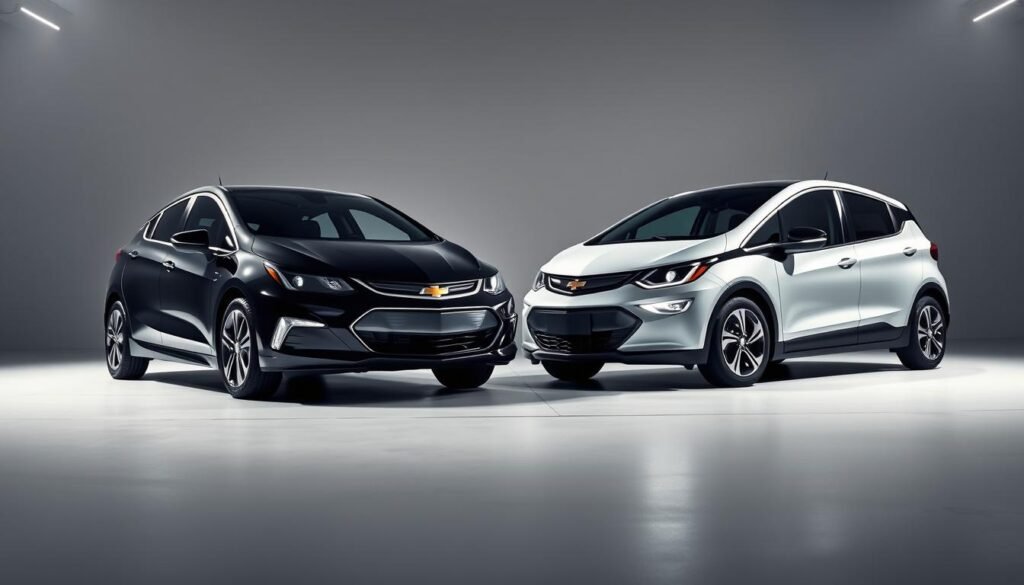
Comparing chevy volt vs bolt performance shows unique benefits. The Volt is great for those unsure about going fully electric, offering a mix of both worlds.
On the other hand, the Bolt gives an all-electric drive with fast power and silence. Knowing these points helps in picking the right car for you.
Driving Range: Chevy Volt vs Bolt
The Chevy Volt and Bolt offer different driving ranges, which is key to your choice. The chevy volt range can cover an electric-only distance of 53 miles.
This is great for everyday commutes and short drives. After the electric range is used up, it switches to gas.
This means you can keep driving without needing to charge all the time. On the other hand, the Chevy Bolt shines with its all-electric range of over 200 miles.
This is perfect for those who travel long distances, ensuring you won’t worry about your battery running out.
For weekend trips or daily tasks, the Bolt is reliable thanks to its extensive chevy bolt battery life.
Knowing the different ranges of these cars helps decide which suits your lifestyle better. If you charge your car often, the Volt is a good pick.
But if you go on long trips and don’t want to stop for charging, consider the Bolt as your top choice.
| Model | Electric Range | Fuel Type | Optimal Use |
|---|---|---|---|
| Chevy Volt | 53 miles (electric-only), indefinite with gas generator | Hybrid (electric + gasoline) | Short commutes, city driving |
| Chevy Bolt | Over 200 miles (all-electric) | All-electric | Long-distance travel, greater flexibility |
Charging and Fueling Considerations
The Chevy Volt and Bolt offer different ways to keep moving. The Volt lets drivers use a standard outlet at home and gasoline.
This is great for those who can’t always use charging stations. The Bolt, on the other hand, only uses electric charging.
There’s no need for gasoline. But, you must have access to charging stations. Knowing about the different charging station types is key.
There are three main kinds of electric charging stations:
- Level 1 Charging: Uses a standard home outlet and takes an extended time to fully charge.
- Level 2 Charging: Commonly found at public charging stations, it gives a faster charge than Level 1.
- DC Fast Charging: Allows for quick charging, perfect for long trips.
Here is a table showing how long each model takes to charge:
| Charging Type | Chevy Volt Charging Time | Chevy Bolt Charging Time |
|---|---|---|
| Level 1 (120V) | Approx. 13 hours | Approx. 20 hours |
| Level 2 (240V) | Approx. 4.5 hours | Approx. 9.5 hours |
| DC Fast Charging | N/A | Up to 100 miles in 30 minutes |
Using electricity wisely keeps costs down and ensures you get what you need from either vehicle. Know your charging options to pick the best model for your life.

Performance Comparison: Chevy Volt vs Bolt
Looking at the Chevy Volt vs Bolt, we see how each car operates. The Chevy Volt has two motors. It blends electric and gasoline power well.
This gives it smooth starts, especially good for city drives. The Volt’s gas engine helps for long trips, offering flexibility that many drivers like.
The Chevy Bolt has one electric motor, aiming for fun driving. It speeds up fast, making highway entry and city driving easy.
It responds quickly, a top choice for those who enjoy lively rides. When it comes to handling, both cars stand out in different ways.
The Volt rides smoothly, thanks to its hybrid system. It adapts well under various conditions. The Bolt, with its battery at the bottom, is nimble in small spaces.
Ride comfort is crucial too. The Volt focuses on a quieter ride with its smooth motor change.
The Bolt, being only electric, offers a nearly silent drive. This makes the electric drive more enjoyable.
Choosing between a hybrid and an electric car depends on understanding these differences. It can help you decide in the electric car debate.

Interior Features and Comfort
The Chevy Volt and Bolt EV stand out with their interior features. The Volt’s cabin is stylish and modern, filled with top-notch materials. You’ll find the space both in the front and back cozy and roomy. The infotainment system is easy to use, supporting Apple CarPlay and Android Auto. This makes connecting your smartphone a breeze.
The Volt comes loaded with cool features. It has a great sound system and climate control to keep you comfy. You also get safety tech like forward collision alert and lane keep assist. These features make driving safer and stress-free.
The Bolt EV, meanwhile, focuses on giving you more room. Its inside is designed to maximize space, making it super practical. Passengers will enjoy lots of leg and head space. The car also has a big trunk for your stuff, which gets even bigger when you fold the seats.
This car boasts a 10.2-inch touchscreen for all your infotainment needs, again with smartphone compatibility. The Bolt doesn’t skimp on comfort, offering a great audio system and climate control. Safety features like forward collision alert and lane keep assist are also part of the package. This makes the Bolt a safe and comfy choice.

Environmental Impact of Chevy Volt and Bolt
The Chevy Volt and Bolt catch the eye of those who care about our planet. The Volt, a hybrid, goes electric without polluting the air. If it uses gas, it releases about 0.53 pounds of CO₂ for every mile. The type of electricity you use can change how green the Volt is.
If your area uses a lot of clean energy, the Volt is even better for the environment. Knowing where your electricity comes from is key when choosing an eco-friendly car. But if your area uses lots of coal or oil for power, the Volt might not be as green as you think.
The Bolt, however, runs entirely on electricity, promising no pollution from its tailpipe. The energy source for charging the Bolt matters a lot, too. In places with lots of wind or solar power, the Bolt hardly leaves a carbon footprint. Yet, in areas using old-school energy, the Bolt’s eco-friendliness takes a hit.
General Motors aims to cut tailpipe pollution from all their new cars by 2035 and go carbon neutral by 2040. Both the Volt and Bolt play big roles in reaching these goals. GM provides these choices to help us use less oil and emit fewer gases that heat up our planet.
Conclusion
When comparing the Chevy Volt to the Bolt, each car has its own perks for different drivers. The Volt’s hybrid system means you can drive further without charging. But the Bolt, being all electric, offers great efficiency and more room inside. So, your choice depends on how and where you drive.
Think about your daily drive, how easy charging is for you, and if you’re keen on cutting emissions. If you’re after flexibility, the Volt might be more up your alley. Yet, if you’d prefer not to visit gas stations much, the Bolt could be better. Each car meets different driver needs in the electric vehicle world.
Choosing wisely matters. Consider what’s important to you, like budget, helping the environment, or convenience. This way, you can pick the car that suits your life best. It’s a step towards eco-friendly driving.
FAQs
What is the main difference between the Chevy Volt and the Chevy Bolt?
The Chevy Volt is a plug-in hybrid that uses gas and electricity. The Chevy Bolt runs only on electricity.
How does the driving range of the Volt compare to the Bolt?
The Volt can go about 53 miles on electricity alone. After that, it needs gas. The Bolt can travel over 200 miles with just one electric charge.
What are the charging options for the Chevy Volt and Chevy Bolt?
The Volt can be charged at home or run on gas when needed. The Bolt only uses electric charge, so finding stations is key.
How do the performance characteristics differ between the Volt and the Bolt?
The Volt uses two motors for a smooth ride and gas for long trips. The Bolt’s single motor offers quick, fun driving everywhere.
Which vehicle is more eco-friendly, the Volt or the Bolt?
The Bolt is better for the environment because it doesn’t produce tailpipe emissions. This makes it the greener choice over the Volt.
What technology features can I expect in the Chevy Volt and Bolt?
The Volt comes with a fancy infotainment system. The Bolt focuses on space and easy tech for a comfy ride.
Are there any incentives for purchasing an electric vehicle like the Chevy Bolt?
Yes. The Bolt might get you federal tax credits and other perks. The Volt has some deals, but not as many as fully electric cars.
How do I choose between the Chevy Volt and the Chevy Bolt?
Think about your daily needs, budget, and how green you want to be. Choose the Volt for hybrid flexibility or the Bolt for electric fun.