Honda Civic Lug Pattern Exclusive 9 Guide & Specs
What’s the bolt pattern on a Honda Civic? It often changes with the model year, but a 5×114.3 mm pattern is usual for many.
Knowing this pattern is key for picking the right wheels. It makes sure your car drives safely. Getting the right fit boosts your Civic’s looks and safety.
Knowing the bolt pattern’s importance for different generations is crucial. It affects how well aftermarket wheels will fit.
This guide will help you pick the right wheels, keeping your Honda safe and running smoothly.
By the time you finish reading, you’ll know why the Honda Civic’s lug pattern matters.
This will help you make the best choices, whether you’re upgrading or just keeping your wheels in check. Our tips ensure your wheels perfectly match your Honda Civic.
What is Honda Bolt Patterns and Their Compatibility?
It’s crucial to know about honda bolt patterns for safe wheel fitment. Bolt patterns are about the number of bolts and the space between them.
This is key for wheel compatibility. Choosing the right bolt pattern for your Honda ensures stability and better driving.
The civic lug pattern is specific to Honda Civics and changes with different models. A 5-lug pattern won’t fit a car with a 4-lug setup.
This shows how important bolt pattern importance is for picking the right wheels. The wrong fit can affect your car’s performance or cause accidents.
Learning about Honda bolt patterns helps you pick the right aftermarket wheels. This keeps your car running safely and well.
What is The Bolt Pattern For A Honda?
The bolt pattern is key for Honda cars, making sure wheels fit right and stay safe. Honda mainly uses two bolt patterns: 4x100mm and 5×114.3mm.
Cars like the Honda Civic from 1973 to 2000 have the 4x100mm pattern. After 2000, newer Hondas switched to the 5×114.3mm pattern.
Picking the right Honda Civic bolt pattern is crucial when putting on wheels. A wrong fit can lead to problems like the wheel moving too much, harder control, and even dangers while driving.
By following the bolt pattern, your car keeps its balance and works well. Knowing which bolt pattern fits your Honda model helps in making smart choices.
| Model Year | Bolt Pattern |
|---|---|
| 1973-2000 Honda Civic | 4x100mm |
| 2001-present Honda Civic | 5×114.3mm |
Honda Civic Lug Pattern: Generational Differences
For Civic owners, knowing the generational differences is key. This includes the lug patterns, which change with each model.
These differences relate directly to wheel compatibility. The Civic stuck with a 4x100mm lug pattern from 1973 to 2000.
This suited the smaller car sizes and worked well back then. In 2000, Honda moved to a 5×114.3mm pattern. This was to match larger wheels, improving driving and handling.
To show these changes, we’ve listed the bolt patterns by generation:
| Model Year | Generational Name | Bolt Pattern |
|---|---|---|
| 1973-2000 | 1st to 6th Generation | 4x100mm |
| 2001-Present | 7th Generation and Beyond | 5×114.3mm |
Knowing the difference in lug patterns is critical for choosing wheels. The right specs ensure your Civic is safe and performs well.
Factors Affecting Compatibility with Aftermarket Wheels
When picking aftermarket wheels for your Honda Civic, think about many important details. Matching the bolt pattern by itself won’t work.
Other specs also play a big role in how well the wheels fit and perform. The wheel offset is the first thing to consider.
The right offset will make sure the wheel lines up right with the vehicle’s suspension and body.
If it’s off, you could have bad handling, your tires might wear out faster, or you could even face safety issues.
Then, look at the hub bore size. This size tells you how well the wheel will sit on the hub. If it’s too big, you might need hub-centric rings for a tight fit.
It’s vital to get the hub bore size right for safe and correct wheel compatibility. Also, think about the lug nuts’ shape and size.
Aftermarket wheels might need a certain type of lug nut. Making sure the lug nuts match the wheel’s design helps ensure a secure and effective setup.
| Factor | Description |
|---|---|
| Bolt Pattern | Must match the specifications of the Honda Civic for safe fitment. |
| Wheel Offset | Distance between the wheel’s mounting surface and its centerline; impacts vehicle handling and clearance. |
| Hub Bore Size | Diameter of the hole in the center of the wheel; must align with the hub size for optimal fit. |
| Lug Nut Shape | Shape may vary; ensure compatibility with selected aftermarket wheels for secure installation. |
Knowing these points helps you pick the right aftermarket wheels for your Honda Civic. This way, you can keep your car looking great without sacrificing its performance.
Safety and Performance Implications of Bolt Patterns
Bolt patterns are more than just fitting; they are key to your safety. Having the wrong bolt patterns can cause big troubles.
You might experience shaking, unstable driving, or even lose a wheel. Such problems can put you and others in danger. Choosing the right bolt patterns ups your wheel safety.
Your car will handle better, be more stable at high speeds, and be safer all around. Knowing this helps when you’re looking after your Honda Civic.
In short, paying attention to bolt patterns is crucial for your car’s performance and your safety. Making smart choices here means you’re safer and enjoy smoother drives.
Honda Civic Bolt Patterns by Generation
Understanding the civic bolt patterns by generation is key when picking the right wheels for your Honda Civic.
The bolt patterns have changed a lot over time. This affects which wheels fit different model years.
Older Honda Civics, from 1973 to 2000, mostly used a 4x100mm bolt pattern. Starting in 2001, Honda Civics got a stronger 5×114.3mm pattern.
This matches newer wheel designs that improve safety and driving. Here’s a table that shows the bolt patterns for each Honda Civic generation:
| Generation | Years | Bolt Pattern (mm) |
|---|---|---|
| 1st | 1973-1979 | 4×100 |
| 2nd | 1980-1983 | 4×100 |
| 3rd | 1984-1987 | 4×100 |
| 4th | 1988-1991 | 4×100 |
| 5th | 1992-1995 | 4×100 |
| 6th | 1996-2000 | 4×100 |
| 7th | 2001-2005 | 5×114.3 |
| 8th | 2006-2011 | 5×114.3 |
| 9th | 2012-2015 | 5×114.3 |
| 10th | 2016-Present | 5×114.3 |
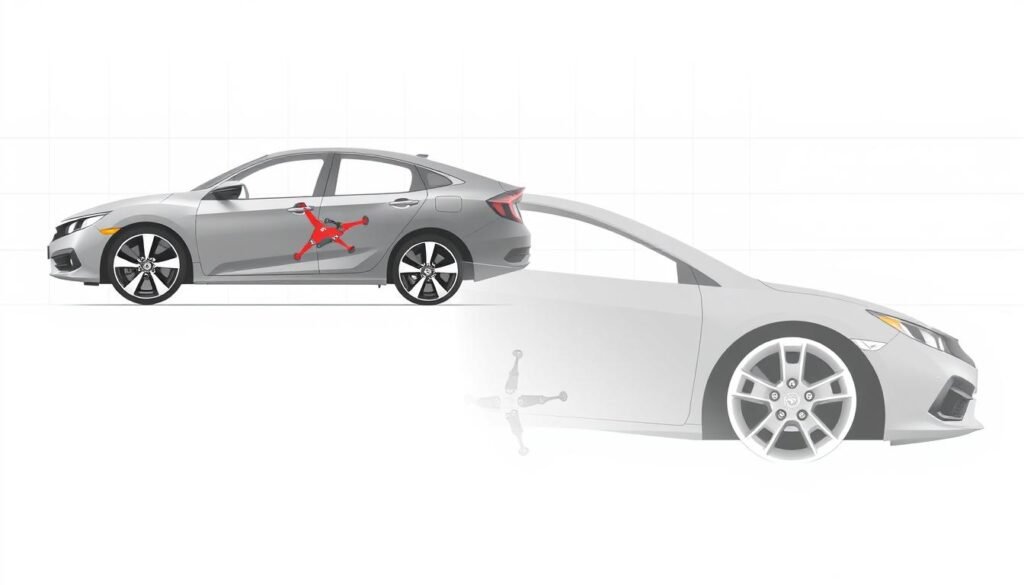
Knowing these bolt pattern changes helps you choose the right aftermarket wheels. Right wheels make your car look better and keep it safe and smooth on the road.
How To Identify The Correct Bolt Pattern For A Specific Honda Model?
Finding the right bolt pattern for your Honda is key to picking compatible wheels. Start by cleaning the wheel hub well.
This removes any grime that could mess up your measurements. Use simple tools like a measuring tape or a steel ruler to find the bolt pattern.
These will help you measure the distance between bolts or holes correctly. For cars with 4 lugs, you measure from one lug’s center to the opposite.
For 5 lugs, measure one lug to the direct opposite and also around to get the circle’s measure.
Here’s an example of the steps to follow:
- Clean the wheel hub area to expose the bolt holes.
- Use the measuring tape to determine the center-to-center distance between the bolts.
- For 4-lug patterns, measure directly across; for 5-lug, consider multiple configurations.
- Note down the measurements to check against Honda model specs.
By measuring bolt patterns accurately and checking them with Honda’s specs, you pick the right wheels easily. Doing this ensures your Honda’s safety and keeps it performing well.
Tools Required For Accurate Measurement
Getting the right wheels for your Honda Civic means measuring bolt patterns accurately.
You need the right tools for measuring bolt patterns to find the correct distances between lug holes. This ensures your wheels fit perfectly.
Measuring Tape
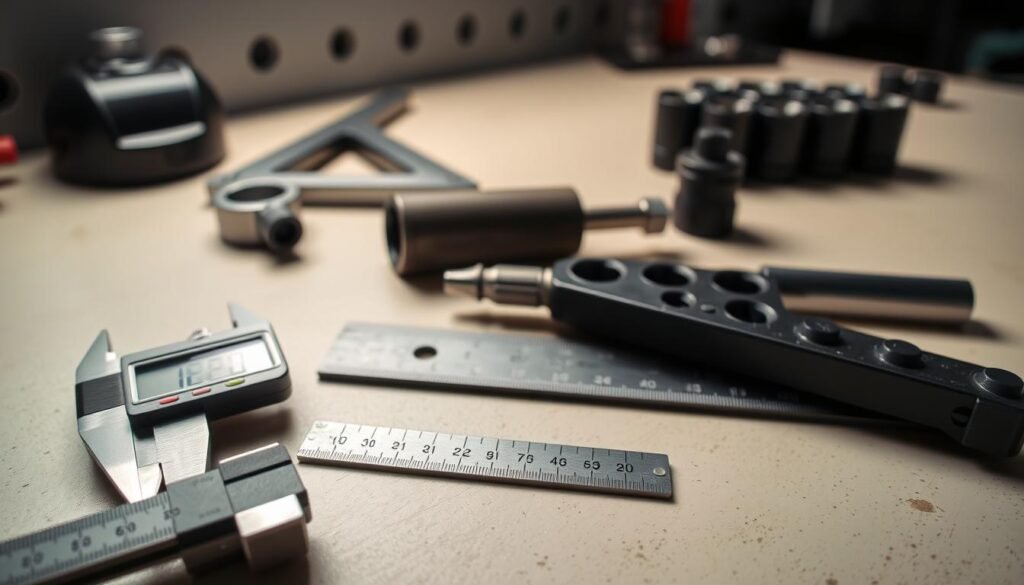
A measuring tape is crucial for wheel measurement tools. It helps you measure between lug holes accurately.
You start by measuring from the middle of one hole to the middle of the opposite hole. This gives you the precise bolt pattern measurement needed for the right wheel.
Steel Ruler
A steel ruler provides a straight edge for better accuracy. It’s great for measuring precisely across several lug holes.
By using it alongside a measuring tape, you ensure all measurements match perfectly. This guarantees accurate bolt pattern measurements.
Comparisons Between Honda’s and Other Brands’ Bolt Patterns
It’s important to know the differences in bolt patterns between Honda and others, like Toyota and Nissan.
This helps if you’re thinking about changing or getting new wheels. Here are some main points to consider:
| Brand | Bolt Pattern | Center Bore Size (mm) | Lug Nut Thread Size |
|---|---|---|---|
| Honda | 5×114.3 | 64.1 | M12 x 1.5 |
| Toyota | 5×100 or 5×114.3 | 60.1 | M12 x 1.5 |
| Nissan | 5×114.3 | 66.1 | M12 x 1.25 |
Comparing bolt patterns of these vehicles shows key differences that affect how wheels fit. Each brand has its own specs, affecting how wheels line up.
Always check bolt patterns when buying new wheels, as changes can impact your car’s alignment and how it performs.
Looking at car bolt patterns, notice not just the bolt count but also their layout and size.
Compromise these details helps ensure a smooth switch between brands or when upgrading. This ensures your choices are well-informed.
Cost Breakdown of Wheels by Brand
For any vehicle owner, knowing the cost of wheel replacements is key. This part dives into the prices of wheels by brand.
You’ll see what Honda wheels cost and how they stack up to aftermarket ones. This info will help you plan your budget when you’re looking to buy new wheels.
It’s important to know the difference between OEM and aftermarket wheel options. OEM wheels are made by Honda and are usually more expensive.
They are sure to fit your vehicle and are of high quality. On the other hand, aftermarket wheels can cost less but differ in design, materials, and how they’re made.
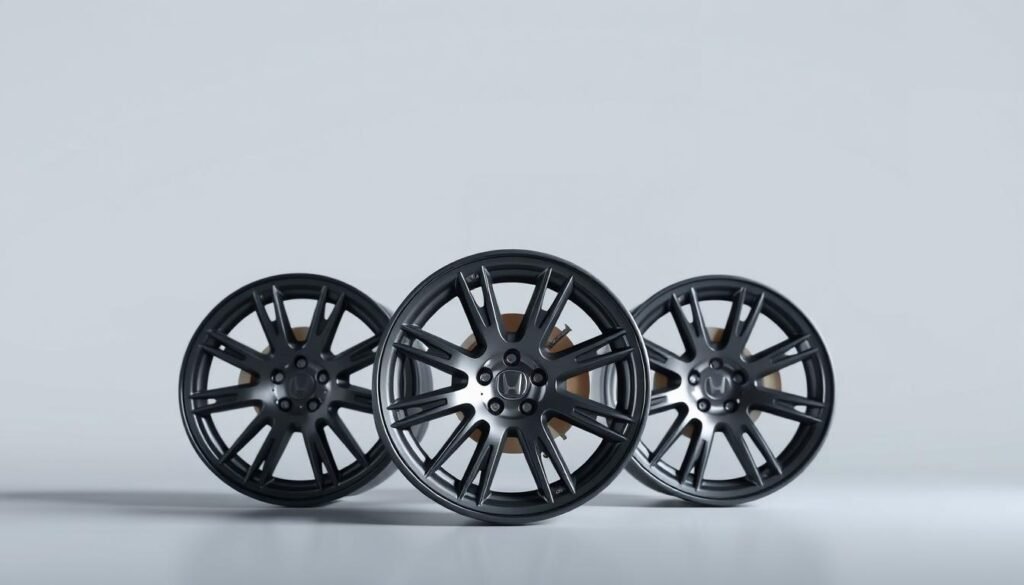
| Wheel Type | Average Price Range | Brand |
|---|---|---|
| OEM Steel Wheels | $100 – $150 | Honda |
| OEM Alloy Wheels | $200 – $300 | Honda |
| Aftermarket Steel Wheels | $75 – $125 | Generic |
| Aftermarket Alloy Wheels | $150 – $400 | Various Brands |
Comparing the price of Honda wheels with aftermarket ones helps you see all options. By looking at wheel prices by brand, you can make a smart choice.
You’ll pick wheels that fit your budget and work well for your vehicle.
How To Maintain Bolt Patterns on Your Honda
Keeping the bolt patterns in check is key for your Honda Civic’s safety. Doing regular checks helps avoid major problems that come from bad alignment or wear and tear.
Here’s what you need to do to keep things running smoothly:
- Check lug nut tightness regularly. Loose lug nuts can compromise the integrity of the bolt patterns.
- Clean rust from mounting surfaces to ensure a solid connection with your wheels.
- Use a torque wrench to ensure you’re applying the correct torque settings during wheel installations, as per Honda specifications.
- Inspect the wheels for any signs of damage or wear that could affect the bolt pattern.
These steps are crucial for Honda Civic maintenance. By following them, you’ll keep your bolt patterns in good shape. This improves your car’s performance and safety.
Conclusion
For Honda Civic owners, it’s key to know how bolt patterns affect wheels and the car’s performance.
Knowing this helps pick the right aftermarket wheels. It boosts how your car looks, drives, and keeps you safe.
Remembering wheel fit is crucial, and getting it wrong can bring problems. Always check your bolt patterns to avoid issues like bad alignment.
Such care is vital for keeping your car in good shape and safe to drive. Knowing what your Honda Civic needs lets you make smart choices.
This keeps your car running well and safe on the road. Stay aware and careful with these details for a better driving experience.
FAQs
Q: What is the lug pattern for a Honda Civic?
A: Honda Civics made from 1973 to 2000 use a 4x100mm pattern. The newer ones, made after 2000, have a 5×114.3mm pattern.
Q: How do I measure the bolt pattern of my Honda Civic?
A: First, clean the wheel hub well. Then, use a measuring tape or a steel ruler. For 4-lug patterns, measure across to the opposite hole. For 5-lug ones, measure between two neighboring holes.
Q: What is the lug nut size for a Honda Civic?
A: Most Honda Civics use M12x1.5 lug nuts. But, make sure to check for your specific model.
Q: What is the recommended torque for Honda Civic lug nuts?
A: The right torque for lug nuts on a Honda Civic is usually 80-100 ft-lbs. However, your owner’s manual will have the precise figure.
Q: Can I use wheels from other car brands on my Honda Civic?
A: You might be able to, but it’s important to check. Ensure the bolt pattern, center bore size, and lug nuts match. Incorrect matches can be unsafe.
Q: How does wheel offset affect my Honda Civic’s performance?
A: Wheel offset changes how the wheel sits in relation to the suspension and fenders. The wrong offset may lead to handling issues or rubbing against the car parts.
Q: What tools do I need to accurately measure my Honda Civic’s bolt pattern?
A: You’ll need a measuring tape, a steel ruler, bolt pattern gauge, or calipers. These tools help make sure your measurements are accurate.