Ford Explorer Lug Pattern Better 9 Guide & Specs
The Ford Explorer lug pattern is vital for those wanting new wheels. Knowing your Ford Explorer wheel bolt pattern helps you choose the right ones.
The usual size of lug nut is key for your wheels’ safety. This guide will show you the lug pattern details, how to measure it, and how to take care of your wheels.
Learning about the Ford Explorer lug nut size and wheel pattern is great for upgrading. We’ll guide you on measuring your lug pattern correctly.
This ensures a perfect fit every time. With this important info, your Ford Explorer will stay smooth and stylish.
What is The Importance of Lug Patterns?
Lug patterns are crucial in automotive wheel specs. They show how wheels attach to a vehicle’s hubs.
This affects safety and performance. The right lug pattern is essential for a safe fit. This helps avoid risks with loose wheels.
Secure wheels mean better handling and a smoother ride. On the flip side, the wrong lug pattern can mess with handling.
This may lead to unsafe driving situations. Knowing your vehicle’s lug pattern allows for customization.
Car fans often upgrade their wheels for looks and function. Matching the right specs ensures style and dependable performance.
Smart choices about lug patterns boost your vehicle’s safety and performance. It’s key for all drivers to get this. Understanding these specs makes for a better drive.
What is The Ford Explorer Lug Pattern?
The ford explorer lug pattern is about how the wheel’s holes are arranged. This setup hooks the wheel to the car’s hub.
It keeps it safely in place. Knowing this pattern helps when you need new wheels.
Definition and Explanation of Lug Pattern
The Ford Explorer’s lug pattern has five holes. They’re spaced out in a circle. The term for this is the bolt circle diameter, and it’s 114.3mm across.
Recognizing this pattern makes changing or picking new wheels easier.
5×114.3mm Specifications
The lug pattern for the Ford Explorer sticks to a 5×114.3mm setup. It means there are five lugs.
The gap from the middle of one lug to another stretches over a circle that’s 114.3mm wide.
This has been true for all models from 1991 till now. It helps in finding wheels that will fit without any issue.
| Specification | Details |
|---|---|
| Lug Pattern | 5×114.3mm |
| Number of Lugs | 5 |
| Bolt Circle Diameter | 114.3mm |
| Model Years | 1991 – Present |
Ford Explorer Wheel Bolt Pattern Overview
Getting to know the Ford Explorer wheel overview is key for your vehicle’s top performance. The wheel bolt pattern uses a 5-lug design and a diameter of 114.3mm.
This is crucial for the right wheel fitment and safety. It makes sure that the wheels are firmly attached to the hub, ensuring stability while driving.
But there’s more to it than just the lug layout. Other important specs include a hub bore of 70.5mm and offsets from +35mm to +45mm, depending on the year of the model.
These details are critical when choosing the right wheels. They affect how the wheels line up with the suspension and steering, which impacts how the car handles and how smooth the ride is.
When you’re thinking about upgrading or getting new wheels for your Ford Explorer, remember these specifics for a smarter choice.
Measuring Your Ford Explorer’s Bolt Pattern
Finding the right bolt pattern for your Ford Explorer is key when choosing new wheels.
By following simple steps, you ensure the wheels fit perfectly and your ride runs smoothly.
First, gather necessary tools and carefully follow the given instructions for accurate results.
Tools Needed For Measurement
- Measuring tape
- Flashlight
- Pen and paper
Steps To Measure Your Bolt Pattern
- Park the vehicle on a flat surface and engage the parking brake.
- Clean around the lug nuts for clear visibility.
- Measure from the center of one lug hole directly across to the center of the opposite lug hole.
- If the distance is 4.5 inches, it confirms the 114.3mm bolt pattern.
List of Ford Explorer Models and Their Specs
Learning about the Ford Explorer models‘ journey is fascinating. We see how their design and performance evolved. Below is a table.
It shows wheel specs across years, highlighting changes in wheel sizes and offsets for each model.
Generational Overview
Common Specs For Each Generation
| Generation | Years | Offset | Stock Wheels |
|---|---|---|---|
| First Generation | 1991-1994 | +35mm | 15×6 and 16×7 |
| Second Generation | 1995-2001 | +35mm | 15×7 and 16×7 |
| Third Generation | 2002-2005 | +40mm | 16×7 and 17×7.5 |
| Fourth Generation | 2006-2010 | +44mm | 16×7 to 18×7.5 |
| Fifth Generation | 2011-2019 | +44mm | 17×8 to 20×8.5 |
| Sixth Generation | 2020-2025 | +45mm | 18×8 to 21×8.5 |
Learning Different Bolt Patterns For Ford Explorer
The Ford Explorer typically uses a 5×114.3mm bolt pattern. This makes it easy to find wheels that match your car.
But, when looking for new or different wheels, you’ll encounter varied bolt patterns. This matters for fitting custom wheels or ones from other cars.
Looking at ford explorer compatibility, you need more info than just the bolt pattern. Wheel features like hub bore size and offset are crucial.
They determine if a wheel fits well on your Explorer, affecting the ride and handling. If you’re thinking about performance wheels, make sure they match your Explorer’s specs.
Not doing so can mess with the car’s handling, wear it down faster, and be unsafe. Knowing how these wheel specs interact helps you make smarter choices for your ride.
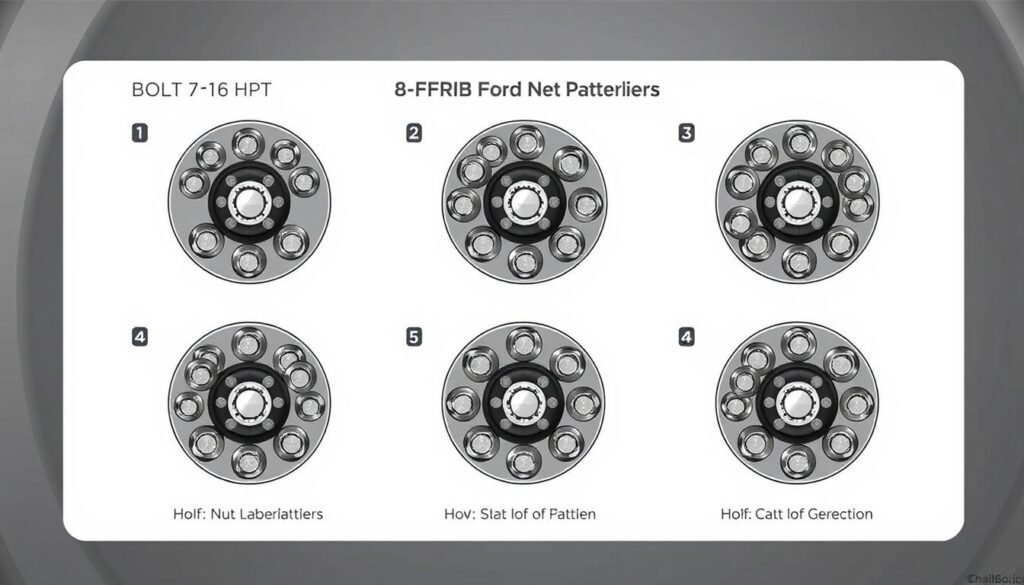
Comparing Ford Explorer Lug Pattern with Other Vehicles
Learning about the Ford Explorer’s lug pattern can really open up your wheel options. It has a 5×114.3mm bolt pattern, which is the same as many other vehicles. This makes it much easier to find wheels that fit.
Compatible Vehicle Models
- Honda Pilot
- Toyota Highlander
- Ford Mustang
Key Differences Between Bolt Patterns
Even though lots of cars share the 5×114.3mm lug pattern, you might find differences in hub bore and offset.
For example, the Jeep Grand Cherokee and Chevy Traverse have completely different bolt patterns.
Always check compatibility charts and these details before you buy to ensure a perfect fit. This will prevent any issues when installing and keep your ride safe.
Ford Explorer Lug Nut Specifications
Having the right lug nut specifications is key for a safe wheel setup on your Ford Explorer. The ideal size for Ford Explorer lug nuts is often M12x1.5mm.
These specs are crucial to prevent issues when you’re changing or upgrading your wheels.
Make sure you check you’re using the right nuts for your car. Not doing this can result in wheels that aren’t secured well.
This could be dangerous while driving. It’s essential to know about wheel nut specifics to keep your car performing well and safe.
| Lug Nut Size | Thread Pitch | Material | Type |
|---|---|---|---|
| M12 | 1.5mm | Steel or Alloy | Conical Seat |
| M12 | 1.5mm | Chrome-Plated Steel | Spherical Seat |

Wheel Offset and Its Importance For Ford Explorer
Understanding wheel offset is key for your Ford Explorer’s performance and safety. It measures the distance from the wheel’s mounting surface to its centerline.
This affects your car’s handling, alignment, and stability. For Ford Explorers, the right offset makes sure the wheels fit and work well.
Common Offset Measurements
The Ford Explorer works best with offsets from +35mm to +45mm. Different Explorer models might need different offsets. It’s important to know your ford explorer specs.
Wrong offsets can cause steering issues, tire wear, and suspension stress. Choosing the right offset improves your drive and keeps your car running smoothly.
Maintaining Your Ford Explorer’s Wheel Bolts
To keep your Ford Explorer safe and running well, it’s important to check the wheel bolts often.
Looking after these key pieces helps stop problems before they start. This makes your car more reliable.
Regular Inspection Tips
Checking your wheel bolts often is key. Here are some tips for inspecting them:
- Check for signs of rust or corrosion, which may indicate potential weaknesses.
- Look for any wear or damage on the lug nuts and wheel bolts.
- Listen for unusual sounds while driving, as they might suggest loose lug nuts.
- Examine the wheel itself for movement, especially after heavy driving sessions.
- Inspect the threads on the bolts to ensure they are not stripped or deformed.
How To Properly Retorque Lug Nuts
It’s very important to retighten lug nuts after you first put them on or drive a bit. Here are steps to do it right:
- Wait for a short period after installation to allow adjustments.
- Obtain a torque wrench that measures in foot-pounds.
- Set the torque wrench to the manufacturer’s specified setting (typically around 100 ft-lbs for Ford Explorers).
- Begin retorquing from the top lug nut and work in a star pattern to ensure even pressure.
- Recheck torque levels after a few hundred miles of driving.

Best Lug Pattern Options For Ford Explorer Aftermarket Wheels
When it comes to upgrading your Ford Explorer with new wheels, knowing your options is key.
There are many aftermarket wheels that match the 5×114.3mm lug pattern of your Ford Explorer.
We’ll talk about leading wheel brands and tips for enhancing your ride’s looks and drivability.
Popular Aftermarket Wheel Brands
- American Racing
- KMC Wheels
- Fuel Wheels
- OZ Racing
- Lexani Wheels
Recommendations For Upgrading Wheels
Looking for the best wheel upgrade? Focus on quality, strength, and style. Here are a few key pointers:
- Ensure a proper fit with the 5×114.3mm lug pattern.
- Match the wheel size to your Ford Explorer’s specs for safe load capacity.
- Choose designs that boost your vehicle’s appearance.
- Check offset measurements for better handling and overall performance.
Common Mistakes When Choosing Wheels For Your Ford Explorer
Many Ford Explorer owners make common wheel mistakes when picking wheels. Not checking the lug pattern before buying is a big miss.
This step is key to making sure the wheels match your car perfectly. People often choose looks over function, which can lead to wheel compatibility issues.
Another mistake is not caring about wheel offset. Offset plays a huge part in how your Explorer drives and aligns.
The wrong offset can mess with the suspension and cause driving problems. Also, not looking at center bore dimensions is a common slip-up.
It helps to look at your car manual or ask experts for advice. They have all the specs you need for the right choosing wheels for Ford Explorer.
Doing your homework helps avoid wheel mix-ups, for better driving.

| Mistake | Description | Consequence |
|---|---|---|
| Neglecting Lug Pattern | Failing to check if the lug pattern matches your vehicle | Poor wheel fitment, potential safety hazards |
| Ignoring Offset | Overlooking the necessary wheel offset | Alignment issues, compromised handling |
| Not Checking Center Bore | Disregarding diameter of the central hub opening | Incorrect fitment, vibrations while driving |
| Compatibility Issues | Not ensuring wheels work with brake and suspension | Possible damage to components, safety risks |
Conclusion
Knowing your Ford Explorer’s lug pattern, especially the 5×114.3mm, is key to improving its performance and safety.
This information helps when you’re picking new wheels or doing upkeep. Making sure your wheels fit right means a smoother ride that lives up to your hopes.
When exploring wheel choices, accurate measurements are vital for your Explorer’s performance.
The point about lug patterns is to remind you to be thorough. Always have your bolt specs on hand and ask for expert advice when needed.
To keep your Ford Explorer running well, make smart choices about lug patterns and wheel care. With this advice, you’ll boost your vehicle’s look and driving quality.
FAQs
Q: What is the lug pattern for the Ford Explorer?
A: The Ford Explorer has a lug pattern of 5×114.3mm. This means there are five lugs, and they form a circle that is 114.3mm across.
Q: How do I measure the bolt pattern of my Ford Explorer?
A: First, make sure your vehicle is on a level surface. Measure from one lug hole, across to the opposite one. If it’s 4.5 inches, you have the 114.3mm pattern.
Q: What is the recommended lug nut size for the Ford Explorer?
A: You should use M12x1.5mm lug nuts for the Ford Explorer. The correct size is crucial for a safe wheel fit.
Q: What is wheel offset and why is it important for the Ford Explorer?
A: The wheel offset is the gap between the wheel’s centerline and where it mounts. For the Ford Explorer, it should be between +35mm and +45mm. This ensures the car handles properly and prevents damage to the suspension.
Q: Can I use aftermarket wheels on my Ford Explorer?
A: You can use aftermarket wheels if they have the same 5×114.3mm pattern, offset, and hub size. Make sure they fit your Explorer’s model year.
Q: How often should I inspect my lug nuts?
A: Check your lug nuts each month for rust or damage. Also, listen for odd sounds when driving. They might show the nuts are loose.
Q: Who makes high-quality aftermarket wheels for the Ford Explorer?
A: Good brands like American Racing, KMC Wheels, and Fuel Wheels make aftermarket wheels suitable for the Explorer.
Q: What common mistakes should I avoid when choosing wheels for my Ford Explorer?
A: Don’t forget to match the lug pattern and offset. Also, make sure they’re right for your brakes and suspension. Not doing this can cause problems.