Ford Escape Common Problems & Reliability Issues
What issues do Ford Escape owners often face? Reports include transmission troubles, ignition misfires, and engine problems.
Learning these can help you make smart choices about your car. This article looks at the most common problems and gives insights for fixing and upkeep.
We’ll also talk about issues past and present owners have faced. This helps you spot possible problems early.
Whether you’re buying your first or you’ve had it for years, knowing these issues can save you time and money.
This guide will teach you how to spot and fix common problems. We’ll cover everything from mechanical issues to electrical faults.
Our goal is to help you take good care of your Ford Escape. Let’s make sure your car stays a dependable travel buddy.
Introduction
Knowing the ford escape common problems is crucial for both current and future owners.
Many have pointed out various issues that harm the SUV’s performance and reliability. Learning about these problems helps you anticipate repairs and make wise choices if buying a used one.
Loads of customer reviews highlight ford escape reliability concerns due to mechanical and maintenance issues.
These problems can affect your experience, introducing unplanned costs and stress. By understanding what troubles other owners have faced, you can take steps to prevent or address them effectively.
Overview of The Ford Escape
The Ford Escape has a story that shows how big it has grown in the car world. It started in 2000 and quickly became a favorite for its mix of smarts and style.
The story of the ford escape talks about different models and engine types it has had, for all kinds of buyers.
As years passed, the Ford Escape changed its look to meet new needs but stayed true as a trusty ride.
It began with a simple four-cylinder engine and then added V6 and hybrid choices for those who think green.
The Escape’s models went from the basic XLS to the fancy Titanium, adding cool safety tech and better entertainment options.
These upgrades made sure the Ford Escape stayed a top choice in the busy SUV market.
Ford Escape Common Problems
The Ford Escape is well-liked for its size and utility. However, it has its fair share of troubles. Knowing these issues will help you get ready for future repairs.
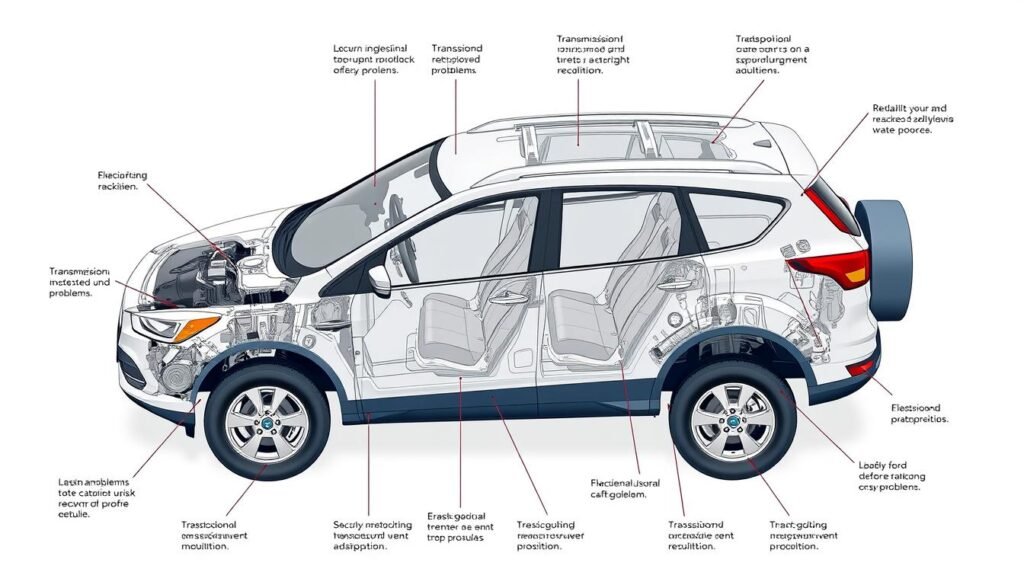
Ford Escape owners often face transmission glitches, ignition misfires, and engine stumbling. These problems can affect how well and reliably the vehicle works.
Transmission Problems
Transmission issues are common, especially in the 2006-2009 and 2014 models. Folks report failures, which can be pricey to fix, costing about $3,400 on average.
These transmission problems might come from bad parts or normal wear and tear. Being aware of these issues can lead you to be more mindful of maintaining your vehicle.
Ignition Misfires
Ignition misfires are frequent with many Ford Escape models. This often leads to the need for replacing ignition coils, setting you back by $150.
Misfires can make your engine run poorly and use more fuel. Getting regular checks can spot these issues early, avoiding further trouble and cost.
Engine Stumbling
Engine stumbling is tied to bad sensors or EGR valves, marking it as a common engine problem.
Fixing this could cost about $250. Catching engine stumbling signs early helps save both time and money, enabling prompt fixes and repairs.
Historical Reliability of The Ford Escape
Since its introduction in 2000, the Ford Escape has changed a lot. Its reliability has had ups and downs.
The early versions had problems, especially with the transmission and electrical systems. But, the newer ones are better, with stronger engines and less upkeep needed.
Owners have had mixed experiences with different years of the Escape. About 15% of the early models had serious issues.
The newest models show a big improvement, making the Escape more reliable.
| Model Year | Owner-Reported Reliability Issues (%) | Notable Problems |
|---|---|---|
| 2001 | 25% | Transmission Failure, Electrical Issues |
| 2008 | 18% | Power Steering, Brake Problems |
| 2015 | 10% | Minor Electrical Problems |
| 2020 | 5% | Fuel System Headaches |
The table reflects a clear decline in problems, thanks to better tech and design. When picking a Ford Escape, consider its past performance but also think about what you need and like.
Common Ford Escape Defects
The Ford Escape has some common issues, just like other cars. Knowing about these can help you prevent big repair bills.
Problems mainly involve the power steering and brakes. By understanding these issues, you can make smart choices about your car’s upkeep.
Power Steering Loss
Power steering issues often happen in Ford Escapes made from 2008 to 2011. Drivers sometimes lose power steering completely, which makes driving tough.
Fixing this usually needs a software update for the steering system. This knowledge can keep you safe on the road and improve how your car drives.
Brakes and Suspension Issues
Brake problems are another issue for Ford Escapes. These issues can cause tires to wear down oddly.
This, along with suspension troubles, might affect how the car handles and stops. Regular checks of your brakes and suspension are key. They help your car perform its best and keep it going longer.
Ford Escape Mechanical Issues
The Ford Escape is popular but has its problems. Owners often face mechanical issues. These problems can affect how the car performs and how happy people are with it.
This part talks about electrical problems and issues with the fuel system and emissions that Ford Escape owners might run into.
Electrical Problems
Having electrical issues with your Ford Escape can be annoying. Some common problems are:
- Infotainment system malfunctions
- Power window failures
- Battery drainage
- Faulty dashboard indicators
These electrical issues can cause headaches. Especially if they mess up your drive or stop things from working right.
Fuel System/Emissions Challenges
Ford Escape’s fuel system also gives owners problems. Some common ones are:
- Faulty oxygen sensors
- Clogged fuel injectors
- Leaking fuel pumps
- Emissions control system failures
These issues can make your car use more fuel and pollute more. That’s bad for both your car’s performance and the environment.
| Issue | Common Symptoms | Potential Costs |
|---|---|---|
| Infotainment System Malfunction | No audio, screen freeze | $200-$600 |
| Faulty Battery | Difficulty starting, warning lights | $100-$300 |
| Oxygen Sensor Failure | Check engine light, poor fuel economy | $150-$300 |
| Clogged Fuel Injector | Engine sputtering, reduced power | $300-$600 |
Year Models with Most Problems
The Ford Escape is a favorite among compact SUVs. However, some ford escape model years with issues have worried owners.
We’ve found that certain models stand out for being troublesome. This part will show you which model years to avoid because of their frequent complaints and reliability issues.
| Model Year | Common Issues | Overall Reliability Rating |
|---|---|---|
| 2001 | Transmission failure, ignition issues | Poor |
| 2005 | Brake problems, power steering loss | Fair |
| 2008 | Engine stalling, suspension issues | Poor |
| 2013 | Fuel system problems, electrical failures | Fair |
| 2014 | Transmission difficulties, safety recalls | Poor |
| 2017 | Braking system faults, engine hesitations | Fair |
When you know about these ford escape model years with issues, you can choose better.
This helps you focus on models that promise more reliability and performance. It helps avoid the traps of less reliable versions.
Ford Escape Reliability Concerns
Looking into what users say about the Ford Escape offers great insight into its reliability.
Many owners post their thoughts online, highlighting common issues and what they like or dislike about the car.
Consumer Reviews and Experiences
Reliability issues often come up in Ford Escape reviews. Drivers share problems that affect their experience with the car.
They mainly talk about a few critical areas:
- Engine performance: Some owners are unhappy with unexpected engine issues and vibrations.
- Transmission problems: Several people have had issues with how the transmission shifts and responds.
- Fuel efficiency: Quite a few reviews point out that the gas mileage isn’t as good as expected.
The feedback on the Ford Escape is mixed. While some enjoy its comfort and features, others highlight reliability issues.
It’s key to weigh these factors against each other when thinking about buying one. This balance affects how people feel about the Ford Escape overall.

Cost of Frequent Repairs
Having a Ford Escape means planning for repair costs. It’s important to know the average expenses for upkeep and sudden fixes.
For example, you might deal with transmission problems, electrical issues, or engine troubles. These can get costly quickly if you ignore them.
The next table shows common repair costs for Ford Escapes:
| Repair Type | Average Cost ($) |
|---|---|
| Transmission Repair | 3,500 – 5,000 |
| Engine Replacement | 4,000 – 7,000 |
| Electrical System Repair | 1,000 – 2,500 |
| Brakes and Suspension | 300 – 1,200 |
| Fuel System Repair | 500 – 1,500 |
Knowing about these average costs can help you budget for potential issues. Keeping up with regular check-ups and fixing problems early can lower these expenses.
This way, your Ford Escape stays in great shape without big, unexpected bills.
Ford Escape Maintenance Challenges
Having a Ford Escape means you have to keep up with its upkeep. Problems can pop up from not doing regular checks or skipping maintenance dates.
It’s important to stay on top of these to keep your car running smoothly. The engine needs constant attention.
Make sure to check the oil levels and change the oil when it’s time. If you ignore this, you might end up with big engine troubles that cost a lot to fix.
The brakes and tires are also key for a safe drive. Checking your brakes regularly helps avoid accidents. And keeping your tires in good shape improves gas mileage and safety on the road.
| Maintenance Task | Recommended Frequency | Common Issues if Neglected |
|---|---|---|
| Engine Oil Change | Every 5,000 to 7,500 miles | Engine wear, loss of performance |
| Brake Inspection | Every 12,000 miles | Brake failure, reduced safety |
| Tire Rotation | Every 6,000 to 8,000 miles | Poor tire wear, reduced fuel efficiency |
| Battery Check | Every 3 months | Electrical issues, starting problems |
Keeping up with these maintenance checks can make your Ford Escape more reliable and fun to drive.
Taking care of maintenance issues right away helps you enjoy a smoother ride and avoid sudden car troubles.
Troubleshooting Tips For Ford Escape Owners
If you own a Ford Escape, you might run into some problems that affect how well it drives. Figuring out these issues quickly can help you save on repair costs.
In this section, we give you useful tips for fixing common problems like ignition misfires and transmission troubles. By using the right methods, you can check your vehicle more effectively.
How To Diagnose Common Issues
Here are some steps to identify issues with your Ford Escape:
- Check Engine Light: If warning lights pop up, it could point to certain problems. You can use an OBD-II scanner to find out what’s wrong through diagnostic trouble codes (DTCs).
- Listen for Unusual Sounds: Keep an ear out for strange noises when you start or drive. Sounds like rattling or grinding could mean there’s a mechanical issue.
- Inspect Fluid Levels: Make sure to regularly check your engine oil, transmission fluid, coolant, and brake fluid. If these are low, your vehicle could have issues.
- Monitor Vehicle Performance: Any sudden changes in how your car accelerates or brakes could show problems with the fuel system or transmission. Watch out for any changes in how your car responds.
- Run Visual Checks: Look underneath your vehicle for any leaks and check belts and hoses for wear and tear. Even small signs could indicate bigger problems.
Below is a table that quickly shows which symptoms might indicate certain issues:
| Symptoms | Potential Issues |
|---|---|
| Engine misfires | Ignition coil failure, spark plug issues |
| Slipping transmission | Low transmission fluid, worn clutch |
| Unexpected noises | Faulty bearings, worn parts |
| Reduced fuel efficiency | Clogged fuel filter, exhaust problems |
Safe Buying Recommendations
When you’re looking to buy a used Ford Escape, it’s crucial to be careful and do your homework.
Using proven tips can really help you to avoid getting a car with problems. Start with a full check of the car, looking out for wear, rust, or any damage.
Checking the car’s history is a must. It can tell you about past accidents, maintenance, and previous owners. Knowing this helps you decide with confidence.
Also, think carefully about the model year, as each one can have different features and possible issues.
To buy a Ford Escape with confidence, follow these tips:
- Know the market price for the model year to get a good deal.
- Get the car inspected by a mechanic you trust for their expert opinion.
- Make sure the ownership records are clear and check for any warranty or recalls.
- Take the car for a test drive to see how it feels on the road.
- Talk to past owners if you can, to learn about their experiences.
By sticking to these steps, you’ll be well on your way to choosing the right used Ford Escape.

Conclusion
In summary, the Ford Escape’s reliability isn’t simple to figure out. We looked at problems like transmission faults, engine misfires, and losing power steering.
These issues can really affect how the car drives. Knowing about them is key, whether you own one or think about buying.
Knowing the common problems helps you make better decisions. Learning about these issues means you can avoid some risks.
Regular checks and maintenance can make the car last longer. Think carefully about the pros and cons before deciding on a Ford Escape. In the end, knowing more helps you the most.
With good knowledge about its mechanical problems, what customers say, and how to take care of it, you can keep your Ford Escape dependable. It helps it stay a trusty car for your journeys.
FAQs
Q: What are the most common problems with the Ford Escape?
A: The Ford Escape often sees issues like transmission failures and engine troubles. This is most common in the 2006-2009 and 2014 models.
Q: How reliable is the Ford Escape?
A: The reliability of the Ford Escape changes with each model year. Some years have more complaints about mechanical issues than others.
Q: What known defects should I be aware of?
A: Watch out for power steering problems in 2008-2011 models. Brakes and suspension issues could also lead to uneven tire wear.
Q: How expensive are repairs for Ford Escapes?
A: Repairing a Ford Escape can cost quite a bit. For example, fixing the transmission might be around ,400. But replacing an ignition coil could be about 0.
Q: What maintenance challenges are common for Ford Escape owners?
A: Escape owners often deal with issues like electrical system problems. Regular inspections and preventive maintenance are key to keeping the car reliable.
Q: How can I troubleshoot issues with my Ford Escape?
A: Start by looking for any warning lights on the dashboard. Strange noises can also signal trouble. Your car’s manual can help guide you.
Q: What should I consider before buying a used Ford Escape?
A: It’s crucial to inspect the car well and look into its maintenance history. Paying attention to model year can help you steer clear of common problems.