Common Ford 6.0 Diesel Problems Better Explained
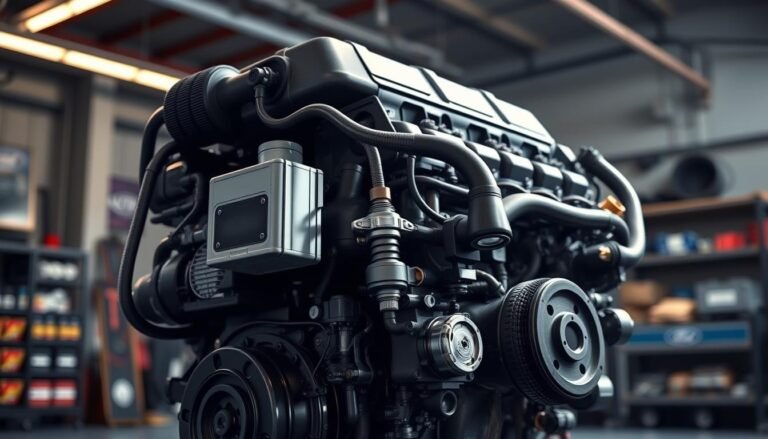
The Ford 6.0 Diesel engine is known for its power but has issues too. It can affect how your truck runs and feels.
This engine has been both praised and criticized from 2003 to 2007. Knowing these problems is key to fixing them right.
We’ll show you the main issues and how to deal with them. You’ll learn the signs, troubleshooting steps, and repair or upgrade options.
We’ll tell you about exhaust problems and fuel module issues. This info will save you money on repairs later.
We’ll also talk about making your engine stronger to avoid these problems. With the correct information, you can keep your Ford 6.0 diesel running well for a long time.
Let’s get into the specifics so you can take good care of your engine!
Introduction to the Ford 6.0L Power Stroke Engine
The Ford 6.0L Power Stroke engine was made to meet new, tough NOx emissions rules from the early 2000s. This engine came after the well-loved 7.3L Power Stroke.
It promised better efficiency and power. Despite these advantages, rushing the engine into production caused reliability issues, as shown in the ford 6.0 diesel engine overview.
One of the big problems was with the injection system. This issue not only hurt the engine’s performance but also led to legal trouble for Ford.
For those who own this engine, it’s really important to understand these basic facts.
Knowing the strengths and weaknesses, as explained in the introduction to ford power stroke, helps owners take care of their engine’s performance and make it last longer.
Learning The Evolution of The 6.0L Turbo Diesel
The story of the ford 6.0 turbo diesel is a milestone in diesel engines’ history. It marks the change from the tough 7.3L Power Stroke.
This change led to big engineering progress, like the variable geometry turbocharger (VGT). The 6.0L Power Stroke was designed to enhance performance.
It achieved an astounding 325 horsepower and 570 pound-feet of torque. These improvements were a significant chapter in the 6.0L Power Stroke’s history.
But, this redesign brought unexpected problems that affected its reliability. The turbocharger and oil cooler, in particular, faced many issues over time.
These challenges led car fans and owners to question the engine’s durability. The differing reliability across models spurred a closer look at the ford 6.0 turbo diesel’s good and bad points.
Common Ford 6.0 Diesel Problems
The Ford 6.0L Power Stroke engine is known for its power. But it also has several reliability issues.
Spotting these common Ford 6.0 diesel problems early can save you lots of trouble and repair costs later.
Many owners have faced ongoing issues, affecting the engine’s performance and lasting value.
Overview of Frequent Issues
Some of the most common problems you might run into include:
- Exhaust manifold failures: These cause a big drop in performance. That’s because leaks in the exhaust system can make the engine less efficient.
- EGR cooler malfunctions: If the EGR cooler fails, it can leak coolant and make the engine overheat, which messes up its normal operation.
- Oil cooler defects: When oil coolers get clogged, oil can’t move around as it should. This often leads to serious engine damage.
Why Reliability Became a Concern
From its launch, the Ford 6.0L Power Stroke faced doubtful views due to its reliability problems.
Issues in manufacturing and flaws in important parts hurt the engine’s reputation. Many owners chose to upgrade their engines.
They hoped to make them more reliable and avoid common Ford 6.0 diesel problems.
| Problem | Symptoms | Consequences |
|---|---|---|
| Exhaust manifold failure | Loss of power, increased exhaust noise | Reduced engine efficiency, potential overheating |
| EGR cooler malfunction | Coolant leaks, engine overheating | Severe engine damage if not fixed |
| Oil cooler defect | Low oil pressure, engine knocking | Big wear and tear, could lead to engine failure |
Exhaust Manifold Issues
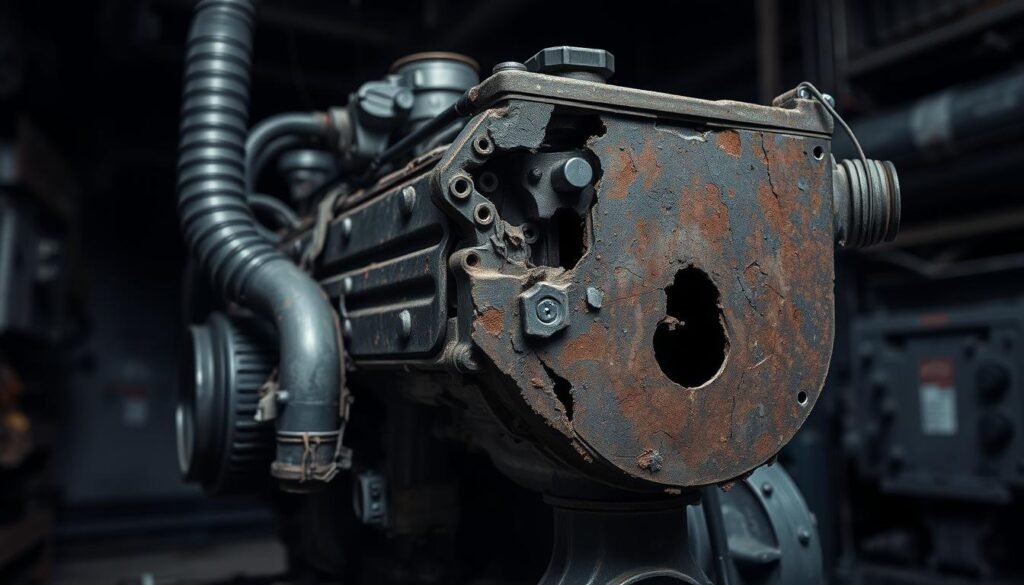
The exhaust manifold plays a key role in your Ford 6.0L diesel engine’s performance. However, it has some common problems that can affect the engine’s efficiency.
Issues usually come from its design and materials, leading to cracks and warping. Fixing these problems is crucial for the engine to work well.
Symptoms of Exhaust Manifold Problems
Knowing the signs of exhaust manifold issues can help stop bigger problems with your vehicle.
Look out for these signs:
- Increased engine noise due to exhaust leaks.
- Decreased power and acceleration.
- Higher exhaust gas temperatures.
- Visible cracks or damage on the manifold.
Recommended Upgrades
If you’re facing exhaust manifold problems, consider upgrading. High-performance manifolds are tougher and improve airflow.
They also help prevent cracks and warping, tackling the main causes of these problems.

Oil Cooler Defects
The oil cooler is vital for keeping your Ford 6.0 diesel engine cool. Problems often occur because it gets clogged with debris.
This can hurt engine performance and its life. Keeping it well-maintained helps prevent these issues.
Impact of Clogging and Restrictions
Contaminants like silicone and sand from making the engine can clog the oil cooler. They block oil flow over time.
This blockage overheats the engine oil, damaging parts like gaskets and O-rings. It can lead to leaks and even engine failure.
To stop this, keep the oil system clean. Regularly clean the cooling system to get rid of harmful stuff. Helpful maintenance tips include:
- Perform routine oil changes
- Flush the cooling system periodically
- Use high-quality oil filters
- Inspect the oil cooler during service intervals
| Symptoms of Oil Cooler Defects | Consequences of Clogging |
|---|---|
| Engine overheating | Increased wear on internal components |
| Oil pressure drops | Potential engine failure |
| Coolant contamination in oil | Higher repair costs |
Problems with The EGR Cooler
The EGR cooler is key in managing exhaust gases in the Ford 6.0 diesel engine. Problems often stem from soot buildup.
Fixing these issues quickly helps avoid bigger problems. Knowing the signs of EGR cooler failures is crucial for your engine’s health.
Signs of EGR Cooler Failure
Several signs point to trouble with the EGR cooler in a ford 6.0 diesel. Watch out for:
- Excessive white smoke from the exhaust
- Frequent overheating of the engine
- Loss of coolant without visible leaks
- Contaminated oil or coolant
Consequences of Soot Buildup
Ignoring failing EGR coolers can cause big problems. Soot buildup may result in:
- Cracks in the EGR cooler, causing coolant leaks
- Higher engine temperatures, harming engine parts
- Engine failure from poor cooling and airflow
Fuel Injector Malfunctions
Many Ford 6.0 diesel engine issues often trace back to fuel injector problems. These injectors use a special system for exact fuel distribution.
But, they can fail due to bad fuel, dirty oil, or injector defects. Staying ahead of these issues can improve your vehicle’s performance and efficiency.
Key Issues Leading to Injector Failure
Fuel injector problems in the Ford 6.0 diesel have several common causes. Keeping up with maintenance and knowing these issues can prevent expensive fixes.
Things to watch include:
- Poor fuel quality can introduce contaminants that clog injectors.
- Dirty or degraded oil affects the overall function and lubrication of the injectors.
- Mechanical failure due to wear and tear can disrupt the injector’s performance.
- Electrical issues within the injector harness can lead to inconsistent fuel delivery.
Regularly checking your vehicle and using clean fuel are key to avoiding injector problems. This leads to better running and cleaner emissions.
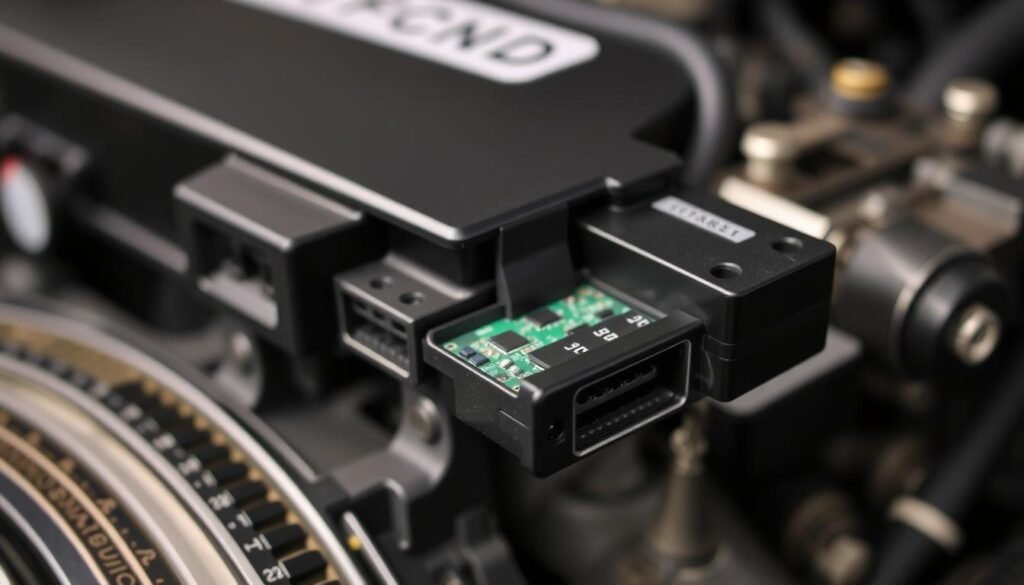
Fuel Injection Control Module (FICM) Concerns
The Fuel Injection Control Module (FICM) is vital for the Ford 6.0 diesel engine. It controls the fuel injection timing.
Problems with the FICM can happen for many reasons, especially due to low battery voltage.
This can lead to a deteriorating FICM and, eventually, engine issues that might not be obvious at first.
It’s crucial to spot FICM issues early to keep the engine running smoothly. Watch out for signs like:
- Poor fuel economy
- Rough idle
- Difficulty starting the engine
- Loss of power while accelerating
These symptoms show the need to fix FICM issues quickly. If you think there’s a problem, check it thoroughly.
Sometimes, you might even need to replace the FICM to get your engine back to its best.
High-Pressure Oil Pump Problems
The high-pressure oil pump (HPOP) is key for your Ford 6.0 diesel engine’s fuel injection system to work right.
If this part has problems, your engine won’t perform at its best. Knowing what signs to look for is vital.
Symptoms of HPOP Failures
If your Ford 6.0 diesel shows HPOP troubles, you’ll see certain warning signs. These include:
- Hard starting or inability to start the engine.
- Loss of power during acceleration or while driving.
- Sudden stalling or uneven engine performance.
- Visible oil leakage around the pump area, often due to O-ring wear.
If you notice these HPOP failure signs early, you can dodge bigger problems and costly fixes. Keep up with inspections and care to stop HPOP issues in your Ford 6.0 diesel.
Turbocharger Complications
Turbo issues are common in Ford 6.0 diesel engines. They impact both performance and reliability a lot. Knowing about turbo lag is key to spotting problems early.
Turbocharger troubles can come from carbon buildup or rust in the vanes. This can lead to stuck vanes, causing too much boost or none at all. This hurts engine efficiency a lot.
Why Turbo Lag Occurs
Turbo lag happens when the turbo spins up slowly due to not enough exhaust flow. A few things cause this delay:
- Not enough throttle
- Wrong turbo size
- Exhaust blockages
- Carbon in the turbo vanes
Learning these issues can help fix turbo problems in ford 6.0 diesel engines. It also improves engine performance.
Common Signs of Turbo Trouble
Knowing the signs of turbo trouble is very important. Look out for these:
- Slower acceleration and less power
- Weird whistling or whining noises
- Smoke from the exhaust (black or blue)
- Check engine light comes on
| Symptoms | Possible Causes | Solutions |
|---|---|---|
| Reduced Acceleration | Turbo lag or failure | Inspect turbo; clean or replace as needed |
| Unusual Noises | Worn bearings or broken vanes | Check the turbo; replace if it’s broken |
| Exhaust Smoke | Oil leak or not fully burned fuel | Check seals and lines; fix any leaks |
| Check Engine Light | Bad sensors or turbo problems | Use a scanner to find out what’s wrong |
Head Gasket and Stud Issues
In the Ford 6.0 diesel, understanding why head gaskets fail is key. The 6.0L Power Stroke engine often sees head gasket problems due to the bolts used.
These bolts don’t hold tight enough and changes in temperature can make things worse, causing big engine troubles.
Knowing Head Gasket Failure
Spotting head gasket failure early can save a lot of money on repairs. You might notice:
- Coolant leaks around the engine
- Engine getting too hot, especially with heavy loads
- Odd exhaust smoke, which might be white or smell sweet
- Coolant in the oil, which means there’s a leak
- Bubbles in the coolant tank, showing gases are getting out
It’s important to watch out for these signs. Taking care of head gasket problems in your Ford 6.0 diesel soon can stop worse damage and keep your vehicle running well.
Steps to Bulletproof Your 6.0 Diesel Engine
Bulletproofing your Ford 6.0 diesel engine involves some crucial upgrades. These changes can boost the engine’s reliability.
They help avoid common problems and enhance performance. Let’s look at the main strategies:
Essential Upgrades for Reliability
- Replace the stock EGR cooler with a better aftermarket version. This move fixes the common issue with the original part.
- Install upgraded head studs to replace factory bolts. This action ensures better sealing and lowers head gasket failure risks.
- Improve the oil cooler for enhanced oil flow and temperature control. A superior cooler makes a big difference.
Performance Enhancements
There are also upgrades to make your engine run better than ever. These improvements not only boost power but also help the engine last longer:
- Think about getting a better turbocharger. A more effective turbo increases power while keeping the engine reliable.
- Improve the fuel injection system for quicker throttle response and more efficiency. This change boosts overall engine performance.
- Add a high-performance air intake system. This upgrade means more air flow for better combustion.
Conclusion
The Ford 6.0 Diesel engine is both innovative and challenging. We’ve learned that managing issues with the Ford 6.0 Diesel is key for your vehicle’s health.
Common problems often involve the fuel injectors and EGR cooler. These can cause expensive repairs if ignored.
To improve your 6.0L Power Stroke’s reliability, it’s important to adopt recommended upgrades. Keep up with maintenance and address issues promptly.
This approach helps handle this engine’s complexities, ensuring it runs well for a long time. In the end, knowing about your Ford 6.0 Diesel is invaluable.
With the right information, you’ll feel confident on the road. You’ll be ready to deal with any problems that come up.
FAQs
Q: What are the most common Ford 6.0 Diesel problems?
A: Common issues are exhaust manifold failures, oil cooler defects, and EGR cooler malfunctions. There are also fuel injector problems and high-pressure oil pump failures.
Q: How can I troubleshoot Ford 6.0 diesel problems?
A: Start by checking for unusual engine noises and overheating. Look for reduced power and coolant leaks too. Use diagnostic tools to read error codes. Inspect the components for damage or blockages.
Q: Are there reliable fixes for Ford 6.0 diesel engine issues?
A: Yes, reliable fixes are available. Upgrading exhaust manifolds and flushing the oil cooler help. Replace the EGR cooler, maintain clean fuel and oil. Use upgraded head studs to stop head gasket failures.
Q: How do I know if my fuel injectors are failing?
A: Failing fuel injectors cause decreased engine performance and higher emissions. You’ll notice hard starts and poor fuel economy. Regular checks can prevent major problems.
Q: What should I do if my EGR cooler fails?
A: Look for excessive white smoke and overheating as signs of EGR cooler failure. Replace the EGR cooler quickly to stop engine damage.
Q: How can I improve the reliability of my 6.0L Power Stroke engine?
A: Improve reliability by bulletproofing your engine. Install a new EGR cooler and reliable head studs. Add performance upgrades to boost engine life.
Q: What are the symptoms of a failing high-pressure oil pump?
A: HPOP failure symptoms include hard starting, loss of engine power, and possible stalling. Regular checks can catch these issues early.
Q: Why does turbo lag occur in the Ford 6.0 diesel?
A: Turbo lag happens due to carbon buildup or rust in the turbocharger vanes, causing them to jam. Regularly inspect and clean the turbo assembly for good engine performance.