Ford P0430 Fault Code Diagnosis & Fixes For Better 7 Idea
The Ford P0430 fault code means your catalytic converter is not working right. This is important to know because it can cause more emissions and lower your car’s performance.
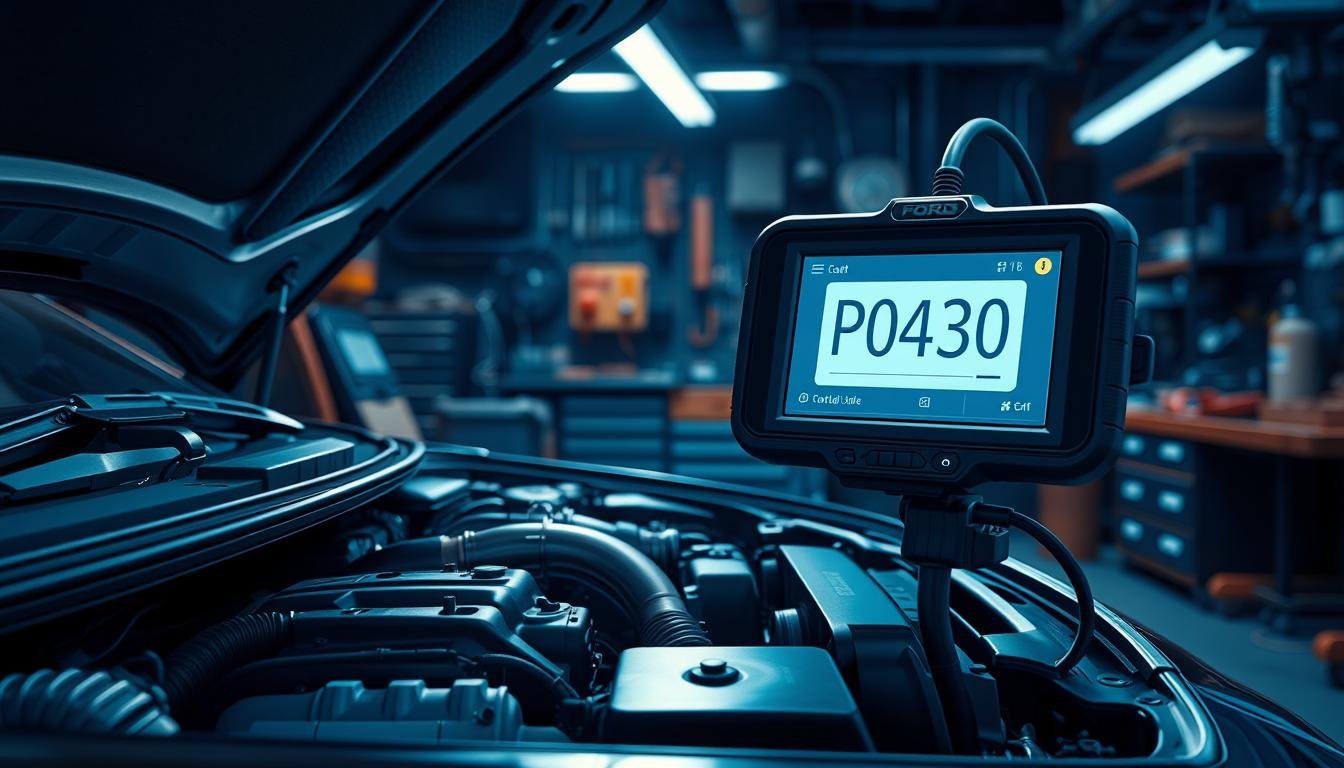
We’re here to help you understand the P0430 error and give you tips to fix it. To diagnose the P0430 error, you’ll need tools like an OBD-II scanner and a multimeter.
We’ll show you how to find the problem and fix it. And we’ll tell you about common mistakes to avoid. This way, you can fix the issue quickly and prevent it from happening again.
Now, let’s get into more details about the Ford P0430 fault code, what it means, and how you can fix it. By taking action, you can keep your vehicle running smoothly.
What is The Ford P0430 Fault Code?
The Ford P0430 fault code is a big deal for car owners. It points to trouble in the catalytic converter, in bank 2.
This code appears when the converter isn’t working as well as it should. This can affect your car’s performance and hurt the environment.
Definition of P0430 and its Implications
The Ford P0430 trouble code means the engine’s control module found a problem with the catalytic converter.
These parts are crucial for cutting down on bad emissions from your car. If they’re not working right, you could harm the environment and face legal issues.
How The P0430 Code Affects Vehicle Performance?
Having the Ford P0430 fault code can lead to issues with how your car runs. You might notice it doesn’t accelerate well, uses more fuel, or the engine misfires.
Ignoring this problem can make things worse, leading to major engine damage and high repair bills.
| Issue | Potential Consequence |
|---|---|
| Decreased Engine Performance | Poor acceleration and power loss |
| Increased Emissions | Failure in emissions testing |
| Check Engine Light Activation | Required diagnostic procedures |
| Possible Engine Damage | Expensive repairs and maintenance |
Causes of The Ford P0430 Fault Code
The Ford P0430 fault code comes from different issues in the car’s system. Knowing these issues can help fix the error well.
The most common reasons for the P0430 error are in key parts of the emissions control system. Knowing them helps you act fast and avoid more problems later.
Common Reasons For The P0430 Error
Several specific conditions can lead to the P0430 code in your Ford:
- Faulty Catalytic Converter: A bad or not working catalytic converter is a main cause of this code. It might not cut down emissions well, leading to the error.
- Malfunctioning Oxygen Sensors: Oxygen sensors are crucial for managing the air-fuel mix. Bad sensors can signal wrong fuel adjustments.
- Damaged Sensor Wiring: Bad wiring can interrupt signals, affecting oxygen sensor function and causing this code.
- Exhaust Leak: Leaks in the exhaust can make oxygen sensors give wrong readings, creating the P0430 error.
Other Contributing Factors To Consider
Aside from the common reasons, other things can cause the p0430 error:
- Fuel Quality: Using low-quality fuel can reduce engine performance and may play a role in the error code.
- Engine Misfires: An engine that misfires can raise emissions problems, triggering the P0430 code.
- Regular Maintenance: Skipping regular check-ups can let small problems get worse, raising the chance of this fault code.
Symptoms Indicating a P0430 Code
Spotting a P0430 code’s symptoms is key for prompt car care. A bad catalytic converter leads to many problems. Look out for certain signs that show you need quick action.
Common Symptoms Associated with A Faulty Catalytic Converter
A P0430 code signals issues, evident through several symptoms. You might see:
- Poor engine performance, like slow acceleration or stalling.
- Reduced fuel efficiency, which means more trips to the gas station.
- Strange exhaust smells, from unburnt fuel or other pollutants.
- Engine misfires, causing vibrations and rough rides.
Additional Warning Signs To Watch For
There are more subtle signs of a P0430 code to watch for:
- Not passing emissions tests, showing the catalytic converter isn’t working right.
- The check engine light turns on, hinting at various engine problems.
- Weird noises, like rattling from the exhaust, suggest converter damage.

How To Diagnose The Ford P0430 Fault Code?
To figure out what’s wrong when you see the Ford P0430 code, you need the correct tools and a step-by-step plan.
By focusing on the right tools for the P0430 issue, it gets easier to understand and fix it. Here are the vital tools and steps you’ll need to address this problem effectively.
Tools Required For Accurate Diagnosis
Start by gathering your tools for a smoother diagnostic process. You should have these tools ready for the P0430 code:
- Carly Universal OBD2 Scanner – This scanner is great because it works with different car brands and models. It’s perfect for checking how the engine runs and its emissions.
- Multimeter – You’ll need this to check electrical signals and make sure parts work right.
- Vacuum Gauge – This helps find pressure issues that might affect the catalytic converter’s work.
- Smoke Machine – It’s used to find leaks in the exhaust system, which can cause emission problems.
Step-by-Step Diagnostic Process
Here’s how to find out what’s causing the P0430 code:
- Connect the OBD2 Scanner: Use your Carly Universal OBD2 Scanner to get the error codes. Look specifically for the P0430 code and note any other related codes.
- Inspect the Exhaust System: Check the exhaust system for damage, leaks, or blockages that might mess up readings.
- Test the O2 Sensors: Test both oxygen sensors with a multimeter to make sure they’re giving correct voltage and responses. This will tell you if they’re working as they should.
- Check Fuel and Air Mixture: Use a vacuum gauge to look for intake system leaks. The right mix is key for the catalytic converter to work well.
- Evaluate the Catalytic Converter: If everything else looks good, check the catalytic converter for clogs or damage that could cause the P0430 error.

Ford P0430 Fault Code Troubleshooting Steps
To fix the P0430 code, start by checking the whole vehicle system, not just the code. This approach helps find the real issues, saving you time and money.
Common Mistakes To Avoid During Troubleshooting
Avoid missing other diagnostic trouble codes (DTCs) when fixing the P0430 code. These codes can show more problems affecting the car’s performance.
Don’t skip checking the ignition system and exhaust temperatures, as this can lead to wrong diagnostics. Make sure to inspect every part of the engine thoroughly.
Holistic Approach To Identifying Underlying Issues
Use a holistic method to solve the P0430 code issue. Begin with all diagnostic data, including any DTCs.
Look into the ignition system, sensors, and fuel supply as these areas, though not always showing clear codes, might cause the P0430 error.
A step-by-step plan helps rule out possible problems while improving your knowledge of the car’s operation. This reduces troubleshooting errors, leading to successful repairs.

Fixing The Ford P0430 Fault Code
The Ford P0430 fault code means there’s a problem needing a targeted fix. It often involves the oxygen sensor and the catalytic converter.
To ensure your car runs well, identify and replace the faulty part. There are specific ways to repair this fault code once you know what’s wrong.
Effective Repair Solutions For O2 Sensors
Fixing the P0430 code often starts with the oxygen sensors. Here’s how to tackle oxygen sensor issues:
- Look for wiring problems or loose connections. Fix any found to get sensors working right.
- Change faulty oxygen sensors before and after the catalytic converter. Make sure they match your car.
- Search for exhaust leaks that might mess with sensor readings and fix them. A sealed exhaust system gives accurate readings.
- After replacing sensors, clear the fault codes and test drive to check the fix.
When To Replace The Catalytic Converter
Sometimes, new oxygen sensors won’t clear the P0430 code. This can mean the catalytic converter is the real issue. Replace the catalytic converter if:
- New oxygen sensors keep failing, pointing to a deeper exhaust system issue.
- The catalytic converter has physical damage, like dents or rust, affecting its function.
- Tests on the downstream O2 sensor readings continually show failure rates above what’s normal.

Cost of Repairs Associated with The P0430 Code
Knowing how much a P0430 code fix might cost helps you plan. It’s smart to understand both the cost of finding the problem and fixing it.
Here’s what you might spend for diagnosis and repair on a Ford with a P0430 code.
Average Cost Estimation For Diagnosis and Repairs
Professional repair shops might charge $60 to $100 just to figure out the problem. This fee pays for the work and skill it takes to find the issue’s source. If repairs are needed, the price could go up based on what parts need work.
For example, fixing oxygen sensors or other important parts can cost a lot. In some cases, the cost can jump to several hundred dollars.
Learning Replacement Costs For Catalytic Converters
The price for new catalytic converters can really vary. It depends on the car’s make and model.
Prices usually go from $300 to $2,500, covering parts and the work to install them. The priciest converters are often for high-performance or specific brands.
Remember, this cost can impact your budget for fixing the P0430 code. So, it’s a good idea to check prices at different shops.
Preventative Measures To Avoid P0430 Code Recurrence
Keeping your car in good shape is key to staying clear of the P0430 code. Regular check-ups not only help your engine run better.
They also make sure parts like the catalytic converter are working right. Taking steps early can keep you from costly repairs later.
Regular Maintenance Tips For Your Vehicle
Here are some tips to avoid the P0430 code:
- Get oil changes when the maker says to keep your engine clean.
- Change air filters often so your engine gets enough air.
- Clean fuel injectors now and then for better fuel burning.
- Use good fuel to stop bad stuff from blocking the catalytic converter.
Using Catalytic Converter Cleaners Effectively
Add catalytic converter cleaners to your care routine to make it last longer. Here’s how to do it right:
- Pick a cleaner that fits your car’s brand and type.
- Put the cleaner in a full tank to mix it well.
- Drive for a while so the cleaner can work on the build-ups.
Conclusion
The Ford P0430 fault code is a key warning about your car’s emission system. It shows problems that might hurt your car’s performance and how it meets environmental standards.
Knowing what the ford p0430 fault code means helps you see why you shouldn’t ignore it. Quick checks and fixes are very important.
Fixing the P0430 error quickly is smart. It can be caused by things like bad oxygen sensors or issues with the catalytic converter.
Knowing the signs and how much repairs might cost helps you make smart choices. This ensures your car stays in great shape.
Keeping your car well-maintained and fixing problems fast help stop the P0430 code from coming back.
Doing things like regular check-ups and using catalytic converter cleaners keeps your car running well.
It also helps the environment. Fixing the P0430 error is key to keeping your car going strong and working efficiently.
FAQs
Q: What does the Ford P0430 fault code indicate?
A: The Ford P0430 fault code means the catalytic converter is not working well enough. It leads to more emissions and worse car performance.
Q: What are common causes of the P0430 error?
A: Common causes include a damaged catalytic converter, bad oxygen sensors, or faulty wiring in the emission system.
Q: What symptoms should I look for if I suspect a P0430 fault code?
A: Look out for weak engine performance, dropping fuel efficiency, strange smells from the exhaust, and failing emission tests.
Q: How can I diagnose the P0430 fault code accurately?
A: Use tools like the Carly Universal OBD2 Scanner. Check all trouble codes and examine the ignition and exhaust systems closely.
Q: What are the common mistakes to avoid when troubleshooting the P0430 code?
A: Avoid just focusing on the P0430 code. Make sure to check other errors and the car’s ignition system too.
Q: What are effective repair solutions for fixing the P0430 error?
A: Fixing it usually means replacing bad oxygen sensors or sometimes the catalytic converter. Check that all parts are right and installed properly.
Q: How much does it typically cost to diagnose and repair the P0430 code?
A: Diagnosis usually costs between and 0. The price for repairs varies a lot, depending on what parts and work are needed.
Q: How can I prevent the P0430 code from recurring?
A: Keeping up with regular car maintenance, like oil changes and air filter changes, helps. Use good quality fuel to keep the catalytic converter running well.