Engine Coolant Over Temperature Ford Fusion Better 7 Fix Tips
If your Ford Fusion’s engine coolant temperature is too high, it means your engine is overheating. This can cause serious damage if you don’t fix it quickly.
This guide will show you how to spot the coolant warning light, understand common problems, and fix them.
You’ll learn how to keep your Ford Fusion running well and for a long time. Knowing how to keep the engine temperature and coolant levels right is key.
This will help you know what to do if your Ford Fusion starts to overheat. With this article, you’ll have the knowledge and steps to keep your car in top shape.
What is Engine Coolant Over Temperature Issues?
When your Ford Fusion heats up more than it should, it’s often because the cooling system can’t manage the heat well.
Knowing how the cooling system works is key to finding issues. Problems can arise from driving too fast or system malfunctions.
If a high temperature is detected, you need to act fast to avoid big damage. The engine coolant temperature sensor is crucial for keeping an eye on cooling.
If this sensor breaks or gives wrong data, your car might overheat. Ignoring these signs could result in expensive repairs or major engine harm.
So, it’s important to fix overheating problems quickly. Looking after your car can prevent many issues.
Make sure to check the coolant level often, make sure the temperature sensor is working right, and know the signs of overheating.
This knowledge can help avoid costly repairs later. Stay informed about your cooling system to spot problems early.
Signs of Overheating in Your Ford Fusion
It’s vital to know when your Ford Fusion is overheating to protect your engine. You might see dashboard lights or notice your engine acting odd. Keep an eye out for these signs to avoid damage.
Red Engine Temperature Warning Light
The red light on your dashboard is a clear sign your engine is too hot. Don’t ignore this alert. It means you need to check your engine right away.
Temperature Gauge Readings
Keep watch on your temperature gauge for early signs of heat trouble. If the gauge hits the red zone, you need to take action. This step can prevent serious engine damage.
Steam and Unusual Smells
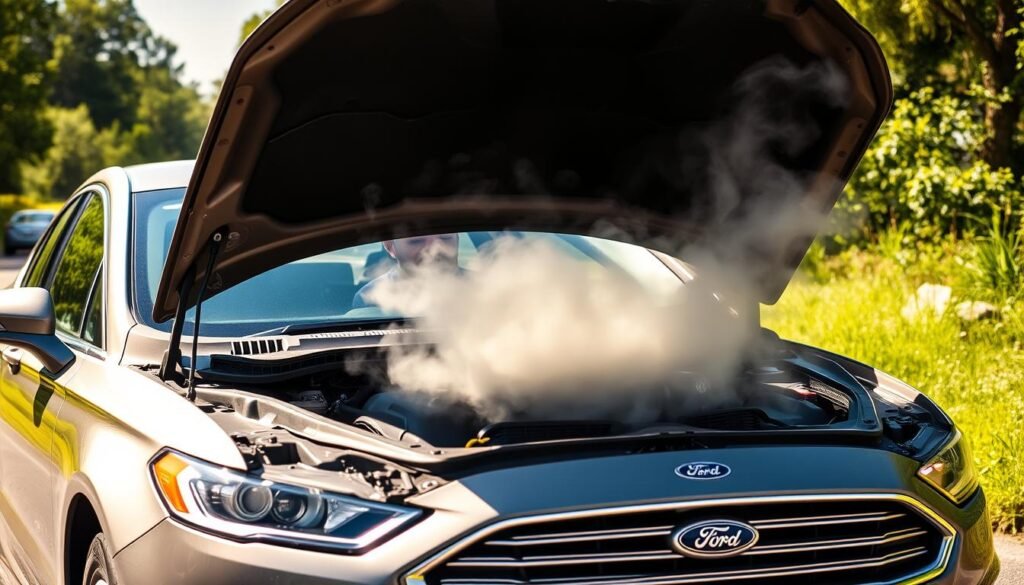
If you see steam or smell something odd, it could mean your coolant is boiling or parts are burning.
These are major signs your Ford Fusion is overheating, and you should act fast.
Common Causes of Engine Overheating
Engines can overheat for many reasons. Knowing these causes helps fix Ford Fusion overheating issues.
Catching the problem early can stop major damage and keep your car running well.
Low Coolant Levels
Low coolant levels might be the first clue of overheating. This can happen from leaks or not filling up the coolant.
It’s vital to keep the coolant at the right level to cool the engine efficiently.
Faulty Thermostats
A broken thermostat can mess up coolant flow, making the engine too hot. If the thermostat doesn’t open or closes too soon, it’s time to check the Ford Fusion’s cooling system.
This is because it stops the coolant from moving as it should.
Radiator Malfunctions
Problems with the radiator can come from blockages or a bad fan. These issues stop heat from leaving the engine properly.
Keeping the radiator in good shape is key to controlling the engine’s temperature.
Water Pump Issues
The water pump is crucial for moving coolant through the engine. A failing pump can seriously limit this flow, leading to overheating.
Regularly checking the pump can prevent this problem from getting worse.
| Cause | Description | Signs |
|---|---|---|
| Low Coolant Levels | Insufficient coolant from leaks or neglect. | Check the coolant reservoir; low levels indicate a problem. |
| Faulty Thermostats | Thermostat blockage prevents proper coolant flow. | Engine temperature fluctuates unexpectedly. |
| Radiator Malfunctions | Clogs or fan failure restricts cooling capacity. | Overheating despite adequate coolant levels. |
| Water Pump Issues | Defective pump reduces coolant circulation. | Overheating even when coolant levels are checked. |
Engine Coolant Over Temperature Ford Fusion Fix
If your Ford Fusion shows an engine coolant over temperature warning, act fast. Quick actions can stop more damage to your engine. By following important steps, you can keep your car running well.
Turning on the Heater
Turn your heater to full blast right after seeing the warning. This move takes hot air from the engine area to your car’s inside, helping cool the engine. It’s a quick way to cool down until you can check the problem.
Pulling Over Safely
When the warning light stays on, pull over carefully. Don’t shut off your engine right away. Let it run briefly to cool down.
Find a safe, flat place away from traffic to let your car cool slowly. Watch the temperature.
Checking Coolant Levels
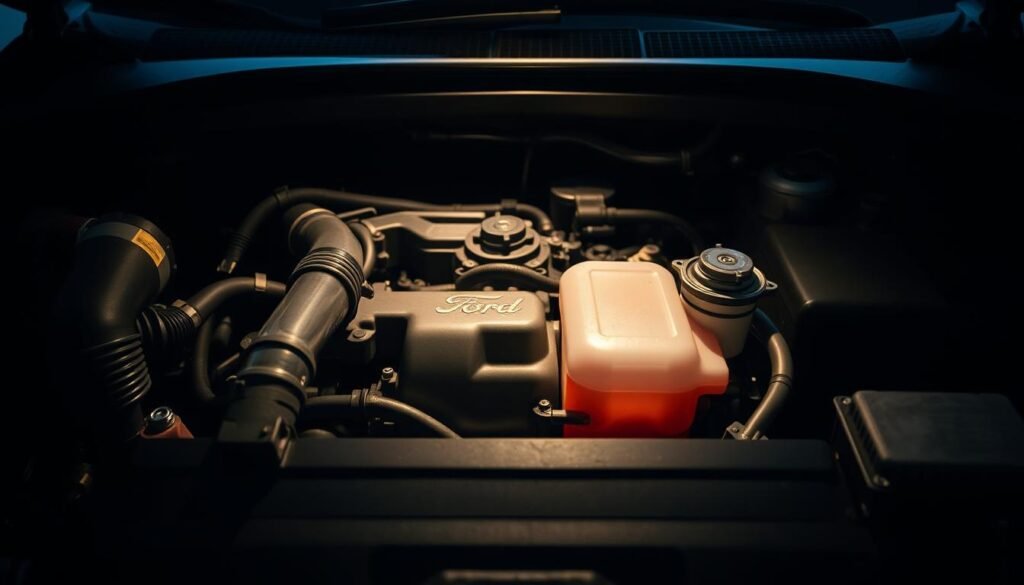
Once safe, check your coolant. Open the hood carefully and look at the coolant container. If it’s low, refill it with the correct coolant.
Regular checks and maintenance of your Ford Fusion’s coolant system can avoid this issue later.
| Step | Description |
|---|---|
| Turn on the Heater | Diverts heat from the engine, cooling it temporarily. |
| Pull Over Safely | Find a safe spot to prevent engine damage. |
| Check Coolant Levels | Assess and replenish coolant as needed. |
Coolant System Maintenance For Ford Fusion
Keeping your Ford Fusion’s coolant system in top shape is key to its best performance and a long life.
Checking it regularly and taking early action can greatly lower the chance of your car overheating.
Focus on these important parts of coolant system care to ensure your vehicle stays in perfect condition.
Regular Coolant Checks
Checking the coolant level often can spot issues before they get worse. Make sure the coolant reservoir is at the right level.
If the coolant is low, your car could overheat or face serious engine problems.
Flushing the Radiator
Flush your radiator as a part of your routine maintenance. This gets rid of dirt and buildup that can block coolant flow.
A clean radiator keeps temperatures steady and boosts cooling effectiveness.
Monitoring for Leaks
It’s important to always be on the lookout for leaks. Even small leaks can lead to big problems with your cooling system.
Regularly check hoses, connections, and the radiator for coolant leaks. Quick repairs can stop overheating and save your engine from damage.
| Maintenance Task | Frequency | Importance |
|---|---|---|
| Coolant Level Check | Monthly | Prevents Overheating |
| Radiator Flush | Every 2 Years | Maintains Efficiency |
| Leak Inspection | Every Service | Prevents Serious Damage |
Troubleshooting Ford Fusion Overheating
When your Ford Fusion starts to overheat, it’s important to check its cooling system. Look for signs like unusual temperature changes or steam from the engine.
These signs help find what part of the system might be failing.
Diagnosing Cooling System Problems
First, take a look at the dashboard’s temperature gauge. If the readings jump around, there might be a problem.
High temperatures usually mean the coolant is low or there’s a blockage. By examining the system, you can spot leaks or damage to hoses.
Signs of A Failed Thermostat
A failing thermostat can cause your Fusion to overheat. It’s a problem if the temperature gauge reads too high or too low.
You might also hear noises like clicking, suggesting it’s broken. Check around the thermostat for leaks, too.
Identifying Radiator Issues
Next, take a good look at your radiator. Issues like leaks or poor cooling are common.
Look for damage or anything blocking airflow. Make sure the cap fits right to keep pressure steady.
Emergency Procedures For Overheating
Knowing what to do when your car overheats is key to keeping your Ford Fusion safe from damage.
Seeing signs that your car is getting too hot means you need to act fast. Slow down and turn up the car’s heater to pull heat from the engine.
How To React When Overheating Occurs
Do the following if your car starts to overheat:
- Slow down to manage the engine’s heat.
- Use the heater to take away extra heat.
- Find a safe spot to stop if needed.
- Shut off the car and let the engine cool.
- Check for coolant leaks under the car.
When To Call For Roadside Assistance
If your car keeps overheating or there’s a coolant leak, it’s smart to get help. Driving further could make things worse. Your safety and keeping the car in good shape is most important.
Long-term Solutions For Engine Cooling Issues
Keeping your Ford Fusion’s engine healthy needs a proactive plan. A regular maintenance schedule helps avoid coolant system issues.
Key steps include checking coolant regularly, flushing the radiator, and inspecting the cooling system.
Regular Maintenance Schedules
- Perform coolant checks every 30,000 miles or as your owner’s manual suggests.
- Flush the radiator every two years to stop sludge from forming.
- Check hoses and connections for leaks or wear when you get an oil change.
Investing in Quality Parts
Choosing top-quality parts for your Ford Fusion makes a big difference. High-grade hoses, thermostats, and radiators lower the risk of your car overheating.
Let’s compare standard parts to high-quality ones:
| Component | Standard Parts | Quality Parts |
|---|---|---|
| Hoses | They may wear out fast and cause leaks. | They’re made to last longer and can handle heat better. |
| Thermostat | It might fail, leading to your engine getting too hot. | It keeps the temperature just right and is reliable. |
| Radiator | Can rust, making cooling less effective. | Made of materials that stop rust and keep air flowing well. |
Taking good care of your Ford Fusion’s cooling system and choosing quality parts ensures it runs well for longer.
This approach solves cooling problems now and keeps your car in shape for the future.
Learning The Role of The Coolant Temperature Sensor
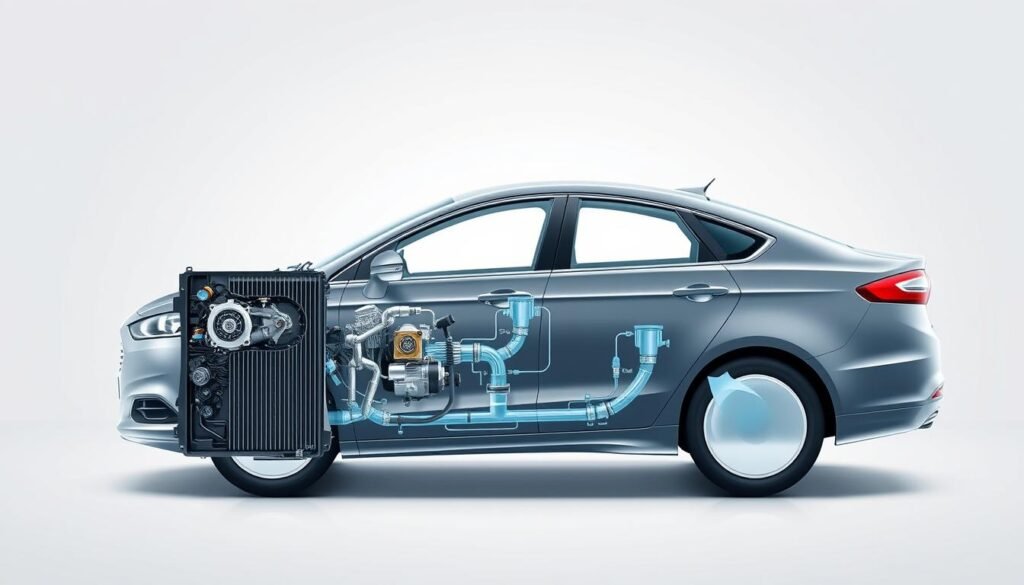
The ford fusion coolant temperature sensor is critical in your car’s cooling system. It tracks engine coolant temperature and sends this data to the engine control module (ECM).
The ECM then uses this information to fine-tune heating and cooling to keep the engine running right.
How The Sensor Works
The sensor measures the engine coolant’s temperature as it moves through the engine. If the coolant gets hot, the sensor signals the ECM.
The ECM might then change how the radiator fan or the thermostat works. This is key to stop the engine coolant from getting too hot in a ford fusion.
Symptoms of A Malfunctioning Sensor
Knowing when the coolant temperature sensor is not working right is essential for your engine. Watch for these signs:
- Erratic gauge readings on the dashboard
- Persistent engine coolant over temperature warnings
- Poor fuel economy due to incorrect temperature readings
- Engine running too hot or too cold
Fixing coolant temperature sensor problems early is crucial. It stops bigger engine issues and makes your car more dependable.
The Importance of Timely Repairs
It’s vital to fix ford fusion overheating problems as soon as they appear. If you don’t, your car could suffer much damage.
This damage can get expensive to fix. Fixing cooling problems early helps keep your car running well and saves money.
Preventing Engine Damage
Overheating can cause lots of car troubles. Blown gaskets and bent cylinder heads can happen if it’s ignored.
Fixing cooling issues quickly prevents worse engine problems. This can save you from needing a new engine or costly repairs.
Costs of Ignoring Overheating Issues
Overlooking engine problems can get very costly. Small fixes can turn into big expenses quickly. For example, fixing blown gaskets can cost between $1,000 and $2,500.
Regular check-ups and fixing issues quickly can save a lot of money. This protects the money you’ve spent on your Ford Fusion.
Expert Tips For Maintaining Your Ford Fusion
Keeping your Ford Fusion in top shape is key, especially the coolant system. Proper care of the coolant system helps keep the engine at the right temperature.
Follow these tips to keep your car running well and avoid overheating.
Choosing The Right Coolant
It’s important to pick the right coolant. Check your owner’s manual for the type your Ford Fusion needs.
A high-quality coolant improves heat transfer and fights corrosion. This makes your engine run cooler.
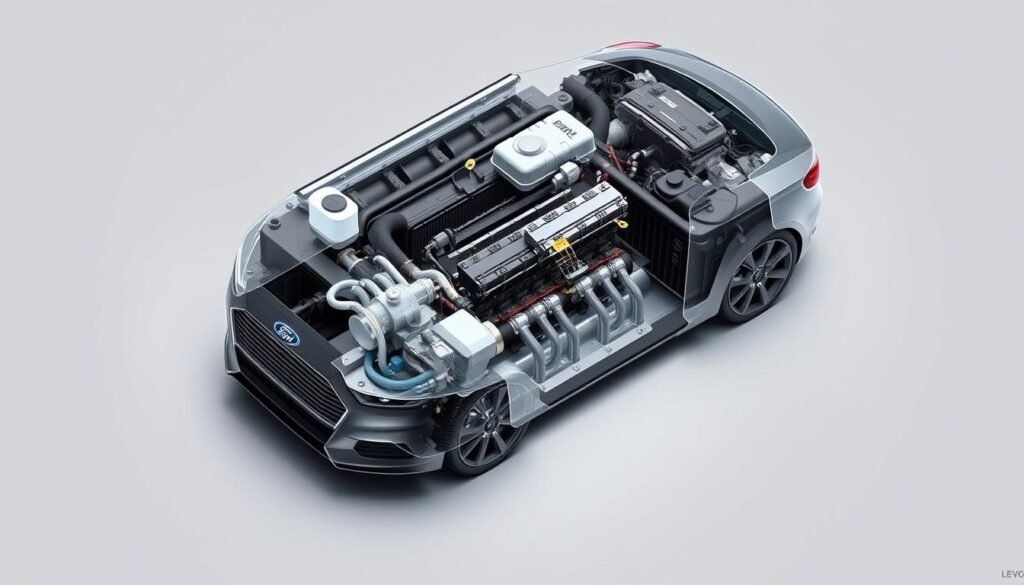
Compromise The Cooling System Layout
Knowing how your car’s cooling system is set up is helpful. Learn about the radiator, water pump, and thermostat.
Check these parts often to find leaks or blockages. This helps your Ford Fusion’s coolant system work right.
| Coolant Type | Description | Recommended Use |
|---|---|---|
| Ethylene Glycol | A common antifreeze that provides excellent freezing and boiling point protection. | General use for most Ford vehicles. |
| Propylene Glycol | Less toxic option than ethylene glycol, good for consumer safety. | Recommended for vehicles in family-oriented environments. |
| Organic Acid Technology (OAT) | Long-lasting protection against rust and corrosion with extended life. | For modern Ford Fusion models, particularly for enhanced durability. |
By following these tips, your Ford Fusion’s cooling system will perform better. This leads to a smooth and dependable drive.
Conclusion
Keeping your Ford Fusion running well means paying attention to engine temperature issues.
It’s crucial to spot overheating signs early, do regular coolant checks, and know what to do if your car overheats.
Taking these steps not only prevents major engine damage but also saves money on repairs.
Following the maintenance tips for the Ford Fusion we discussed will help you look after your car better.
This includes keeping an eye on the coolant level and learning about the cooling system. By doing this, you can make sure your driving experience is both safe and enjoyable.
FAQs
Q: What should I do if my Ford Fusion’s coolant warning light comes on?
A: If your Ford Fusion’s coolant light turns on, pull over when safe and stop the engine. Let the engine cool, then check and add coolant if it’s low.
Q: How can I tell if my engine coolant is leaking?
A: Spot puddles or wet spots under your car? That’s a sign. A quick drop in coolant without a clear reason also points to a leak.
Q: What causes engine overheating in Ford Fusion models?
A: Overheating can happen for several reasons, like low coolant, a bad thermostat, or radiator issues. A broken water pump can also cause trouble.
Q: How can I perform regular maintenance on my Ford Fusion’s cooling system?
A: For upkeep, check and refill coolant regularly, flush the radiator, and check for leaks. Staying ahead with maintenance is key.
Q: What are the symptoms of a faulty coolant temperature sensor?
A: If your coolant temperature sensor isn’t working, you’ll see odd temp gauge readings. And you might get overheating alerts too. Get it checked and replaced if it’s faulty.
Q: What should I do if I experience steam coming from my engine?
A: Seeing steam? It means your engine is too hot or your coolant’s boiling. Pull over, turn off the engine, and wait for it to cool. Don’t drive until you’ve fixed the problem.
Q: How often should I flush my Ford Fusion’s radiator?
A: You should flush the radiator every 30,000 miles or as your manual suggests. Flushing keeps coolant flowing right and prevents blockages.
Q: Can aggressive driving cause overheating in my Ford Fusion?
A: Yes, driving hard makes your engine work more, which can heat it up fast. Smooth driving helps keep the engine at a good temperature.