How To Solve Honda Pilot Emissions System Problem? Better 9 Explained
Is your Honda Pilot’s emissions system causing trouble? Fixing these issues quickly is key to keeping your car efficient and eco-friendly.
The emissions system helps cut down pollution and keeps your engine healthy. Yet, any problems can cause big performance drops or a failed emissions test.
Let’s explore common issues, how to find them, and ways to fix your Honda Pilot’s emissions system.
This guide will show you how to spot symptoms of a bad emissions system. You’ll learn what causes these problems and how to pinpoint them.
From checking sensors, inspecting wires, or getting professional advice, this guide has you covered.
Follow these steps to keep your Honda Pilot running well and environmentally friendly.
What is Honda Pilot Emissions System Problem?
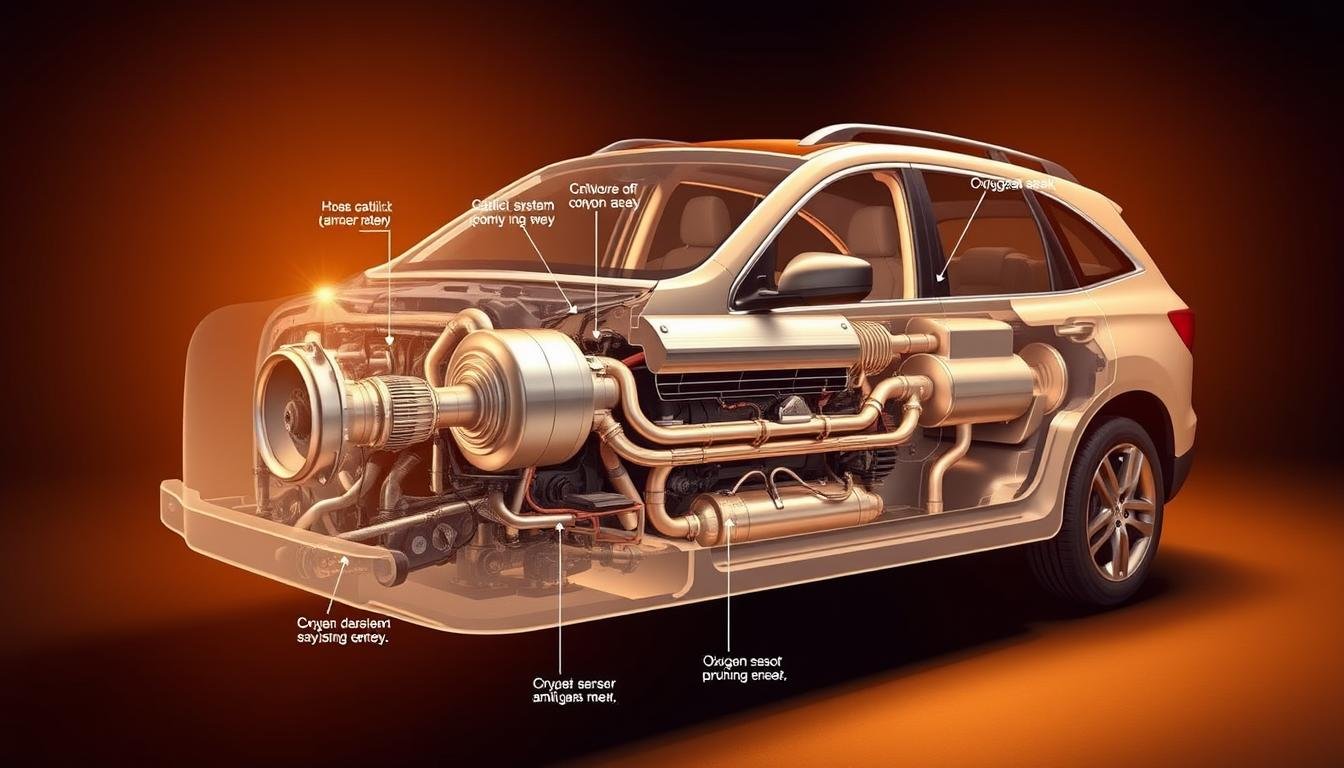
The emissions control system in your Honda Pilot is very important. It keeps harmful substances from getting into the air.
When something goes wrong, a warning light on your dashboard turns on. This light tells you there’s an issue with your vehicle’s emissions control system.
If you ignore these warnings, you might face bigger problems. Your Honda Pilot could start performing poorly and pollute more, leading to a possible failure of the emission system.
It’s crucial to watch out for any signs of trouble with your Honda Pilot’s emissions. Each model might show different types of issues, especially with complex features like the Variable Cylinder Control (VCM).
Knowing about these can help you fix small problems before they become expensive to repair.
Common Honda Pilot Emissions Issues
The Honda Pilot can have emissions issues that impact its performance and fuel efficiency.
Identifying these problems early can make fixing them easier. Here are some common issues you might encounter with your Honda Pilot’s emissions.
Defective Oxygen Sensors
One common problem is a bad oxygen sensor. This sensor checks the oxygen in the exhaust gases.
If it’s not working right, your car might use more fuel and pollute more. Keeping an eye on these sensors is a good idea.
Failing Catalytic Converters
The catalytic converter turns harmful gases into safer emissions. A bad converter can cause more pollution and lower your car’s power.
If your car makes odd sounds or loses power, the converter might be the problem.
Cylinder Deactivation Faults
Sometimes, a Honda Pilot’s emissions system might have cylinder deactivation issues. This feature saves fuel by turning off some cylinders when they’re not needed.
But if it doesn’t work right, your car can perform poorly and pollute more. Fixing any issues right away is key.
| Issue | Symptoms | Impact |
|---|---|---|
| Defective Oxygen Sensors | Poor fuel economy, increased emissions | Higher operational costs |
| Failing Catalytic Converters | Unusual noises, decreased engine efficiency | Increased harmful emissions |
| Cylinder Deactivation Faults | Performance irregularities, reduced fuel efficiency | Deteriorated engine performance |
Signs of A Failing Emission Control System
Spotting signs of trouble with your Honda Pilot’s emission control system early is crucial. It can prevent big problems and expensive fixes later.
Keep an eye out for these important signs:
- Warning Lights: The “Check Emission System” light on your dashboard may turn on. This is a clear sign that your car needs a check-up right away.
- Decreased Fuel Efficiency: If your car isn’t going as far on a tank of gas as it used to, your emission control system might be to blame.
- Rough Idling: A Honda Pilot that idles roughly is often a sign of emission control issues.
- Unusual Exhaust Sounds: Any odd noises from the exhaust should be taken as a sign that the emission system isn’t working right.
Don’t ignore these signs. If you do, you might face worse problems. Your car could pollute more and even have bigger mechanical troubles.
What Causes Problems with The Emissions System on A Honda Pilot?
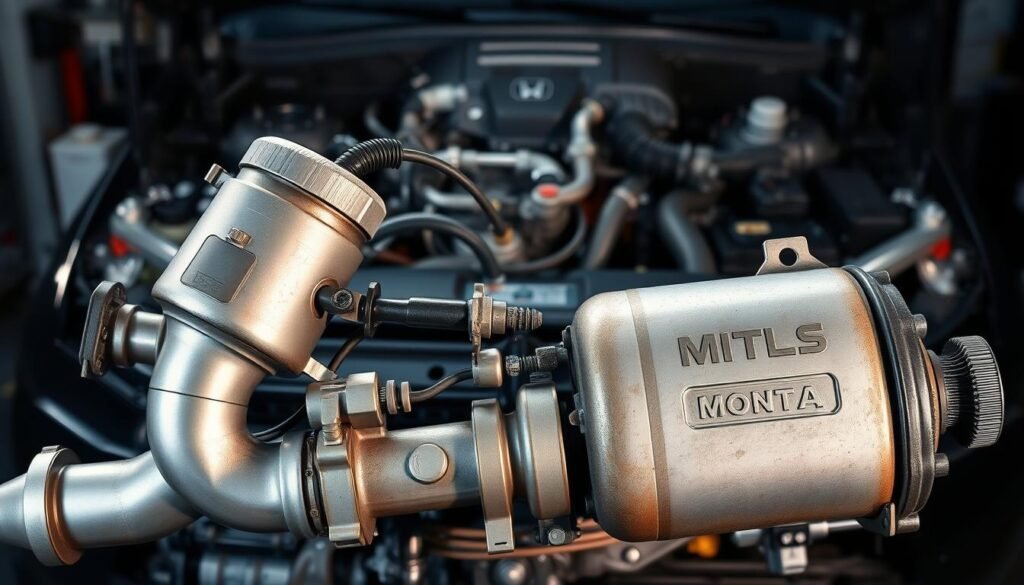
Several parts can cause issues in the Honda Pilot’s emission system. A big problem is often bad oxygen sensors.
These sensors are crucial for checking the exhaust gases’ oxygen levels. If they don’t work right, the fuel doesn’t burn efficiently, and emissions go up.
The performance of the emissions system can also suffer from failing catalytic converters. These converters change harmful gases into less dangerous emissions.
If they fail, it’s harder for the car to meet emissions standards. Problems can also come from the cylinder deactivation system.
This system is supposed to save fuel but can cause trouble if it breaks down. Also, starting with the 2016 models, some have issues with their direct fuel injection systems.
These problems can make it hard to control emissions. Even the environment and normal use can wear down the emissions system over time.
This can lead to parts working poorly or failing. Knowing these issues can help you spot and fix them fast.
| Emission System Component | Common Issues | Impact on Emissions |
|---|---|---|
| Oxygen Sensors | Defective or faulty | Increases emissions and reduces efficiency |
| Catalytic Converters | Failing or clogged | Fails to convert harmful gases, increasing pollution |
| Cylinder Deactivation System | Malfunctioning components | Can lead to inefficient fuel usage and higher emissions |
| Direct Fuel Injection | Potential defects in newer models | Might contribute to higher emissions if not functioning properly |
Honda Pilot Emissions System Problem Troubleshooting
Troubleshooting the Honda Pilot emissions system needs the right tools and know-how.
An OBD-II scanner is key for spotting errors by reading codes linked to the emissions system. These codes help fix specific issues fast.
It’s also important to watch for dashboard warning lights that hint at emissions trouble. Here are steps for using both methods:
Utilizing OBD-II Scanners
OBD-II scanners are crucial for finding out what’s wrong with your Honda Pilot’s emission system. They hook up to your car’s computer and pull up important error codes.
Just follow these simple steps:
- Locate the OBD-II port under your steering column.
- Connect the OBD-II scanner and turn on the ignition.
- Access the error codes displayed on the scanner.
- Refer to the user manual for your scanner to understand the codes.
- Document the codes for reference when making repairs.
Checking Warning Lights
Keeping an eye on dashboard warning lights is key for catching problems early in your Honda Pilot’s emission system.
If your check engine light comes on, it could mean different issues with emissions. To figure out what’s wrong, do the following:
- Observe the dashboard for any illuminated warning lights, especially the check engine light.
- Note if the light is steady or blinking; a blinking light means a bigger problem.
- Use the OBD-II scanner to connect and obtain error codes related to the warning light.
- Cross-reference the codes with possible emission system issues.
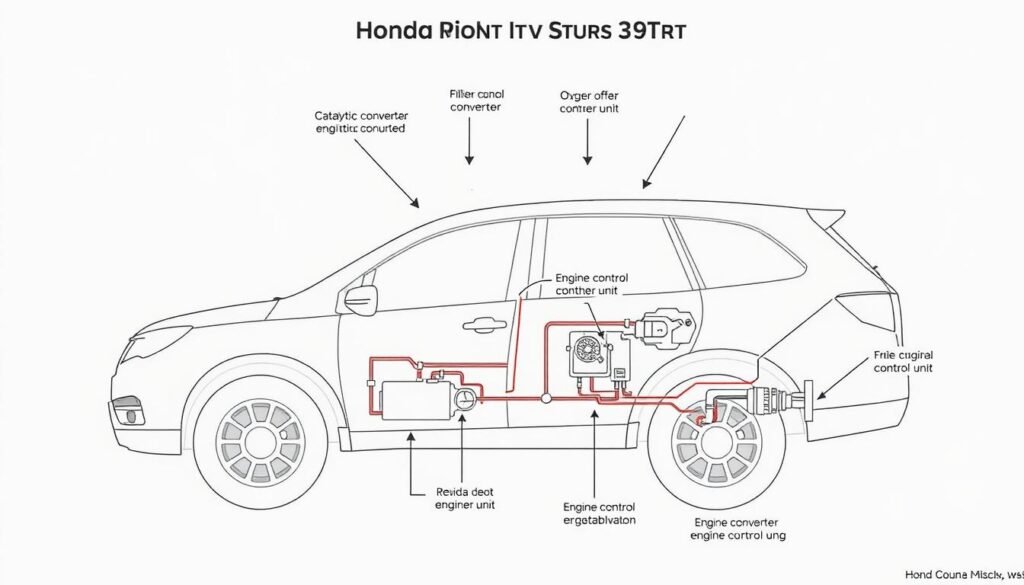
When To Seek Professional Help
If you’re struggling to fix emission problems on your Honda Pilot, it’s time to call in experts.
Some issues, like VCM failures or troubles with the high-pressure fuel pump, need special tools and knowledge.
If you notice warning lights that won’t go off, your car misfiring, or a drop in how it performs, see a mechanic who knows Honda Pilot issues well.
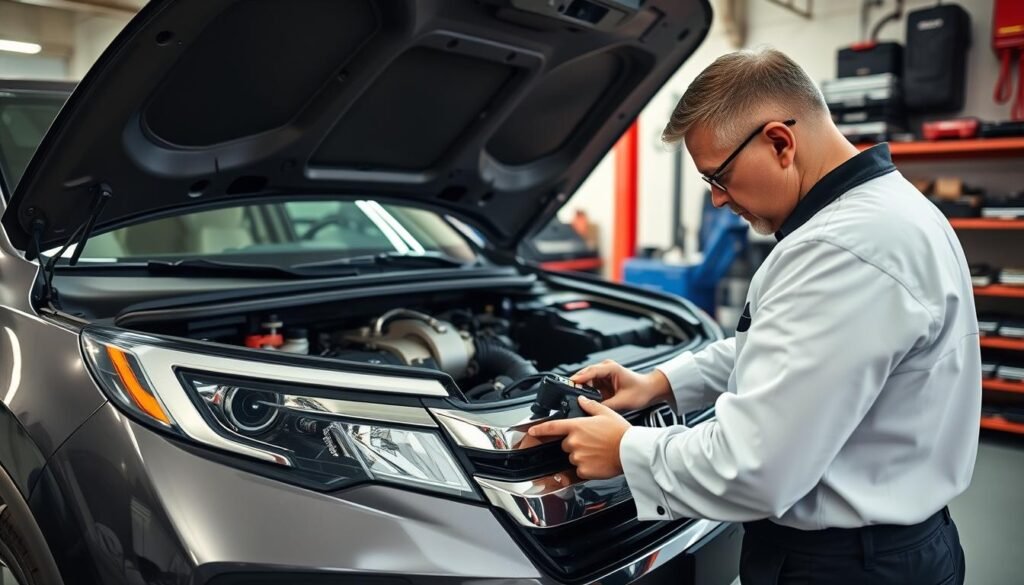
Getting help quickly can stop bigger problems and save you time and money. Expert mechanics know exactly how to fix your car’s emission system. They make sure the job is done right.
How To Fix Emission System Issues in A Honda Pilot?
Fixing emission problems in your Honda Pilot can be straightforward. First, check the sensors and actuators since they often cause issues.
With the right tools and some guidance, fixing your honda pilot’s emission system is doable.
Checking Sensors and Actuators
Start by examining the oxygen sensors. They play a key role in controlling emissions but can fail as time goes by. For many, replacing old oxygen sensors is a doable project.
Here’s what to do:
- Find parts that match your Honda Pilot.
- Use a trustworthy guide or video for help.
- Make sure everything is installed correctly to avoid problems later.
Assessing the Wiring Harness
Now, look at the wiring harness for the sensors and actuators. If the harness is damaged, it can mess up the communication between parts, causing more emissions. To check it properly:
- Look over the wiring for damage or wear.
- Test the connections with a multimeter.
- If there’s damage, fix or replace that part of the wiring.
By methodically going through these steps, you can find what’s wrong with your Honda Pilot’s emission system.
Doing this will make your vehicle run better and keep it within emission standards.
| Component | Common Issues | Repair Options |
|---|---|---|
| Oxygen Sensors | Defective or malfunctioning | Replace with compatible sensors |
| Actuators | Improper functioning | Repair or replace as needed |
| Wiring Harness | Frayed or damaged wires | Repair or replace damaged sections |
Costs Associated with Honda Pilot Emission System Repair
Knowing the honda pilot emission system repair costs helps you make wise choices for your car. Costs differ greatly, depending on the problem and where you fix it.
Changing simple parts like oxygen sensors may cost about $125. Bigger issues, especially those with Variable Cylinder Management (VCM), can cost a lot more.
They can run from $550 to more than $3,000, depending on how bad the issue is. Getting a clear estimate from your repair shop is key.
This way, you’ll know exactly what the honda pilot emission system repair costs will be for your car’s issues.
| Component | Estimated Cost |
|---|---|
| Oxygen Sensors | $125 |
| Catalytic Converter | $1,000 to $2,500 |
| VCM Issues | $550 to $3,000 |
Preventive Maintenance For Emission System Problems
Taking care of your Honda Pilot’s emission system is critical. Regular checks ensure it works well and avoids expensive fixes.
Make sure to inspect and service the main parts that impact emissions regularly.
Regular Inspection Tips
It’s important to look over your vehicle often to catch issues early. For better emission system upkeep, consider these tips:
- Check the oxygen sensors for proper operation.
- Inspect the catalytic converter for signs of damage.
- Monitor fluid levels, including engine oil and coolant.
- Examine the hoses and gaskets for leaks or wear.
- Ensure exhaust components are intact and functioning.
Keeping Up with Servicing
Keeping your Honda Pilot serviced is crucial for the emissions system. Good habits include:
- Schedule oil changes as recommended by the manufacturer.
- Replace air filters routinely to enhance engine efficiency.
- Use quality fuel to reduce the buildup of deposits in the emission system.
- Stay informed about recalls or service bulletins that may affect your vehicle.
Conclusion
It is key to understand and fix emissions system issues in your Honda Pilot. This helps keep your car working well.
We’ve covered common problems, how to spot them, and ways to fix them. Knowing this lets you take good care of your car.
Doing regular checks and services for your Pilot is vital. It keeps it in line with emission laws. Notice signs of issues early to save both time and dollars. This ensures your vehicle runs well.
This guide aims to make you confident in handling emissions problems. Keep up with your car’s care. Then, your Honda Pilot will serve you well for a long time.
FAQs
Q: What are the common symptoms of Honda Pilot emissions system problems?
A: Warning lights on the dashboard, especially the “Check Emission System” light, are common signs. You might also notice your car is using more gas, idling roughly, or making strange noises from the exhaust.
Q: How can I diagnose Honda Pilot emissions issues?
A: Use an OBD-II scanner to find out what’s wrong. It shows error codes that reveal specific emissions problems.
Q: What causes the Honda Pilot emissions system failure?
A: Failures often come from bad oxygen sensors or catalytic converters. Problems with the cylinder shut-off system are also common in models from 2016 and later.
Q: When should I seek professional help for emissions system issues?
A: If warning lights stay on, or if your car keeps misfiring or loses power, see a mechanic. Choose one who knows about emissions systems.
Q: How much does it cost to repair the emissions system in a Honda Pilot?
A: Costs depend on the problem. Replacing oxygen sensors might cost about 5. But fixing more complicated issues, like VCM problems, could be 0 to more than ,000.
Q: What maintenance can I perform to prevent emissions problems?
A: Keep your car in check. Regular checks, watching fluid levels, and examining exhaust parts can spot and stop issues early on. This keeps your car running smoothly.
Q: What should I do if my Honda Pilot’s emissions system warning light comes on?
A: If the emissions light turns on, use an OBD-II scanner to find out what’s wrong. Fixing any found problems quickly can stop bigger damage.