Is Honda Cvt Reliable? Insider Insights 7 Facts
Is the Honda CVT reliable? Yes, it usually is. Honda’s CVT is known for being trustworthy and providing a smooth ride.
This article will help you understand Honda CVT’s reliability, focusing on what matters to you as a Honda owner.
We’ll cover its long-term performance, how to take care of it, and compare it with others.
By looking at what customers and experts say, you’ll learn how to judge its reliability yourself.
We’re going to look at how Honda’s CVT works, its strong points, and possible issues.
You’ll also see how it does against other brands, common problems, and how to keep it in good shape.
Keep reading to learn all about keeping your Honda CVT dependable and working well.
Learning Honda’s Continuously Variable Transmission (CVT)
Honda’s CVT is a big step forward in car engineering. It leaves behind the usual gear changes for a smoother, more efficient way to drive.
This cool tech uses a belt and pulley system, allowing gear ratios to change without limit. This means cars using it need less fuel and give you a smoother ride.
Many who drive Hondas like this smooth power shift, a highlight of Honda cvt tech.
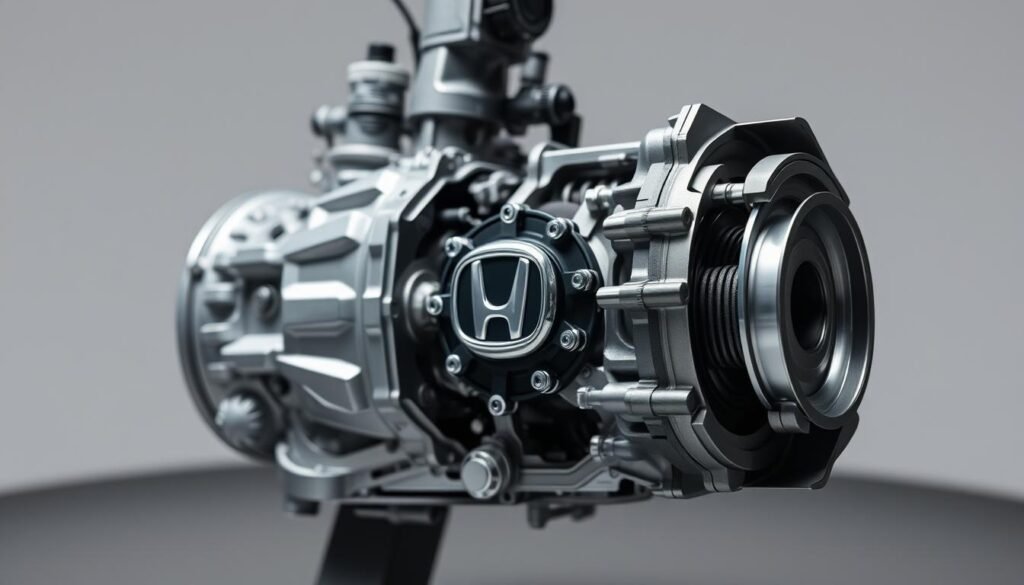
To really get what makes Honda’s CVT tick, you gotta understand the belt and pulley system. It changes the pulleys’ size to adjust gear ratios instantly.
This lets the car adjust its performance for different driving situations. It makes the engine work better and use less fuel.
With Honda cvt, you get quick acceleration without the rough shifts seen in old-school transmissions. The benefits of Honda’s CVT go beyond just saving gas.
Because it doesn’t have the usual gears, there’s less that can go wrong, which could mean cheaper maintenance costs.
Honda’s focus on quality makes their CVT a key part in making cars work better and keeping drivers happy.
Honda CVT Technology Overview
Honda has led the way in continuously variable transmission (CVT) technology since 1996, starting with the Civic HX.
This innovation boosts the driving experience in many models, like the CR-V and Accord.
Honda’s CVT shines by keeping the engine running at the best speed, enhancing both performance and fuel efficiency.
It’s important to understand how Honda’s CVT works to appreciate its dependability and maintenance needs.
Looking into this technology reveals how it works with the engine’s power. This affects how you feel driving your vehicle.
| Feature | Benefit |
|---|---|
| Seamless Transition | Makes driving smoother by removing the usual gear changes |
| Fuel Efficiency | Keeps the engine running perfectly, saving gas |
| Lightweight Design | Makes the car lighter, improving how it drives |
| Responsive Performance | Adjusts quickly to changes, making driving more fun |
Taking care of your Honda’s CVT is key to keeping its advanced performance features.
Regular maintenance and careful use help keep your car’s transmission reliable. This way, you can fully enjoy what your car can do.
Is Honda CVT Reliable? A Comprehensive Analysis
Honda’s CVT is a hot topic for car fans. Owners often praise how well their cars run and last with this transmission.
Many Honda vehicles with CVTs can go over 300,000 miles with good care, showing how reliable they are.
Issues with Honda CVTs do happen but they’re usually small problems. Leaks and getting too hot are common but can be fixed with regular checks and maintenance.
Keeping an eye on fluid levels and wear helps keep the transmission going strong without big repairs.
These facts help us understand Honda CVTs’ great performance. People love them because they run smoothly and rarely break down.
This makes Honda a top pick for drivers who want a dependable car.
Comparative Reliability of Honda CVT vs. Competitors
When we compare Honda’s continuously variable transmission (CVT) to brands like Nissan and Subaru, we learn a lot.
Honda is often seen as more reliable, which many drivers appreciate. The company’s CVTs have fewer issues than those of its rivals, thanks to its superior engineering.
Subaru’s Lineartronic CVTs come with all-wheel drive (AWD) but haven’t been around as long as Honda’s.
Honda’s experience leads to fewer problems, showing better performance and lasting longer.
Also, fixing a Honda CVT usually costs less than fixing Nissan’s, which means Honda owners save money on repairs.
Below is a comparative overview illustrating reliability metrics and associated costs:
| Brand | Reliability Score | Common Problems | Average Repair Cost |
|---|---|---|---|
| Honda | 9/10 | Minimal | $1,500 |
| Nissan | 7/10 | Frequent | $2,200 |
| Subaru | 8/10 | Moderate | $1,800 |

Common Honda CVT Problems and Solutions
Honda CVTs are well-made but can have issues needing attention. They can overheat or leak fluid. Overheating often comes from not enough fluid or not taking care of the fluid.
It’s important to keep an eye on fluid levels and keep them healthy. Leaking can happen when seals wear out or aren’t put in right.
You should fix leaks fast to avoid big damage. Knowing about the ‘limp home’ mode is important too.
This mode lets your car keep going, but with limited power, to get you safely to a shop. To stay ahead of Honda CVT problems, here are some smart steps:
- Regularly check fluid levels and overall condition
- Address leaks promptly to prevent damage
- Utilize the ‘limp home’ mode if experiencing issues
- Schedule routine maintenance with a qualified technician
| Problem | Description | Solution |
|---|---|---|
| Overheating | Occurs due to low fluid levels or insufficient maintenance. | Regularly monitor fluid levels and change transmission fluid as recommended. |
| Fluid Leaks | Can happen from worn seals or improper installation. | Inspect seals and address any leaks immediately to prevent further damage. |
| Limp Home Mode | Allows limited driving capabilities to prevent further damage during issues. | Understand how to activate it and drive safely to a repair shop. |
The Importance of Honda CVT Maintenance
Keeping your Honda’s continuously variable transmission (CVT) in great shape is key. It’s important to do regular maintenance.
Honda suggests changing the CVT fluid between 25,000 and 40,000 miles. This is especially true if you drive a lot or in tough conditions.
It helps prevent too much wear and keeps the transmission working well. The Maintenance Minder system is a smart way to keep up with your CVT’s needs.
It gives service reminders based on how you drive. Keeping the fluid at the right level and swapping out old fluid can make your CVT last longer. It also cuts down on the chance of expensive fixes later.

In short, taking good care of your Honda’s CVT is crucial for its reliability. Regular fluid changes and following maintenance schedules protect your car’s performance.
Honda CVT Lifespan and Warranty Considerations
The Honda CVT lifespan is impressive. Many cars last over 200,000 miles with the right care. This durability is great for owners.
It offers them peace of mind from having a reliable vehicle. Honda’s CVT warranty typically covers the drivetrain.
This can include the CVT for certain models and years. Basic warranty coverage usually lasts three years or 36,000 miles.
Powertrain warranties might go up to five years or 60,000 miles. Knowing what your warranty covers is key. It helps you get ready for repairs as your car gets older.
Below is a summary of key warranty details that can impact your ownership experience:
| Warranty Type | Duration | Details |
|---|---|---|
| Basic Warranty | 3 years / 36,000 miles | Covers most vehicle components |
| Powertrain Warranty | 5 years / 60,000 miles | Covers the engine, transmission, and more, potentially including CVT |
| Corrosion Warranty | 5 years / Unlimited miles | Covers rust and corrosion on the body |
Getting to know these warranty details is vital. It helps you make the most of your Honda CVT’s lifespan. And, it prepares you to address any problems during your car’s life.
Real-World Performance: Success Stories
Many Honda owners have seen their cars last a long time because of CVTs. It’s common to hear about Hondas reaching over 300,000 miles.
This proves how reliable Honda cars like the Civic, Accord, and CR-V are, especially with good care. People love to talk about how well their Hondas hold up.
One 2006 Honda Civic even reached 350,000 miles. It got there with regular oil and transmission fluid changes.
Customers often say how well these cars perform, especially the CR-V. This trust in Honda shows they are committed to making quality, long-lasting vehicles.

Driving Habits That Enhance CVT Reliability
Your driving habits play a big role in how long your Honda CVT lasts. It’s key to start smoothly to avoid putting extra stress on the transmission.
If you start too fast, it could cause early problems, making honda cvt issues more likely. Gentle braking is also important for keeping your CVT in good shape.
Stopping suddenly makes the transmission work too hard, which might cause problems later. Try to stop gradually to keep everything running smoothly.
Adapting your driving style can help your CVT work better and last longer. For instance, using cruise control on the highway keeps your speed even.
This makes the transmission run more efficiently. Following these tips makes honda cvt issues less likely to happen. Here are a few more driving tips to remember:
- Maintain steady speeds during trips.
- Avoid excessive idling, which can strain the CVT.
- Regularly monitor tire pressure for optimal handling.
- Limit heavy loads to reduce transmission strain.
Insights From Industry Experts and Consumers
Industry experts praise Honda for its focus on quality with continuously variable transmissions (CVT).
This commitment makes Honda stand out in talks about honda cvt transmission reliability.
People who buy these cars often say they’re really happy. They like how smoothly the cars drive, thanks to Honda’s CVTs.
Many car owners talk about how much they trust Honda’s CVT for its reliability and consistent performance.
This trust helps people feel good about buying a Honda. It’s smart to look at the facts that support this trust:
- Experts point out the high-tech engineering in Honda’s CVT design.
- Many buyers say they hardly have any problems, showing Honda’s CVT works great over time.
- Lots of happy customers talk about how reliable Honda’s transmission system is and how it saves on maintenance costs.
Listening to what experts and car owners say helps you see why Honda’s CVT is so valuable. It makes it easier to decide if this kind of car is right for you.
Future of Honda CVT Technology
Honda is looking ahead and planning to make its continuously variable transmission technology even better. They want to make their cars more reliable and perform better.
These improvements will likely aim to make cars more efficient and use advanced materials to lower the chance of parts wearing out.
Honda is working on making its CVT systems even better by fixing known problems. This shows how much they care about making cars that last a long time and drive well.
They want to reassure their customers that their cars are a good investment.
Here are some areas Honda is focusing on:
- Implementing smarter algorithms for smoother power delivery.
- Using better materials to make their cars last longer.
- Improving how cars handle heat to prevent overheating.
- Listening to what customers say to make cars better and more reliable.
Conclusion
Honda CVTs are known for being reliable. This is because of Honda’s commitment to quality engineering and innovative tech.
So, when asking if Honda’s CVT is reliable, the answer is yes. These transmissions have proven to be durable and efficient over time.
Keeping up with regular maintenance is key to keeping your Honda CVT in top shape.
By knowing how to look after your CVT and spotting potential problems early, you can keep it running smoothly for many miles.
This way, Honda’s CVT reliability guarantees a safe and pleasant drive. Honda’s continuously variable transmission is a leader in car tech innovation and reliability.
Whether you’ve been driving Hondas for years or are thinking about buying one, understanding the Honda CVT’s advantages can give you more trust in your vehicle choice.
FAQs
Q: Is Honda CVT reliable?
A: Yes, the Honda CVT is known for being reliable. Many owners say they’re happy with its performance. They note it can last more than 300,000 miles with the right care.
Q: What are some common Honda CVT problems?
A: Some issues are overheating and leaks. But you can often fix these with regular check-ups and keeping an eye on the fluid.
Q: What is the recommended maintenance for Honda CVT?
A: Honda suggests changing the CVT fluid every 25,000 to 40,000 miles. This is more important if you drive a lot. The Maintenance Minder system can remind you when it’s time for service.
Q: How long does a Honda CVT typically last?
A: If you take good care of it, a Honda CVT can last over 200,000 miles. Some even reach 300,000 miles.
Q: Does Honda offer a warranty for the CVT?
A: Yes, Honda gives warranty coverage for the CVT. But it depends on the model and year. Always check your vehicle’s specific warranty info.
Q: How does Honda’s CVT compare to competitors?
A: Honda’s CVT scores better on reliability and repair costs than Nissan and Subaru. This makes Honda a safer pick for buyers.
Q: What type of fluid is used in Honda CVTs?
A: Honda advises using their special CVT fluid. It keeps your transmission running smoothly for a longer time.
Q: How can my driving habits affect the CVT’s longevity?
A: Driving smoothly and braking gently can lower stress on the CVT. This helps your transmission last longer and stay reliable.
Q: What signs indicate a potential issue with my Honda CVT?
A: Be on the lookout for odd noises, slipping, overheating, or warning lights. These signs mean you should get your CVT checked quickly to avoid more problems.